
Get ready: new laboratory for technical process analytics
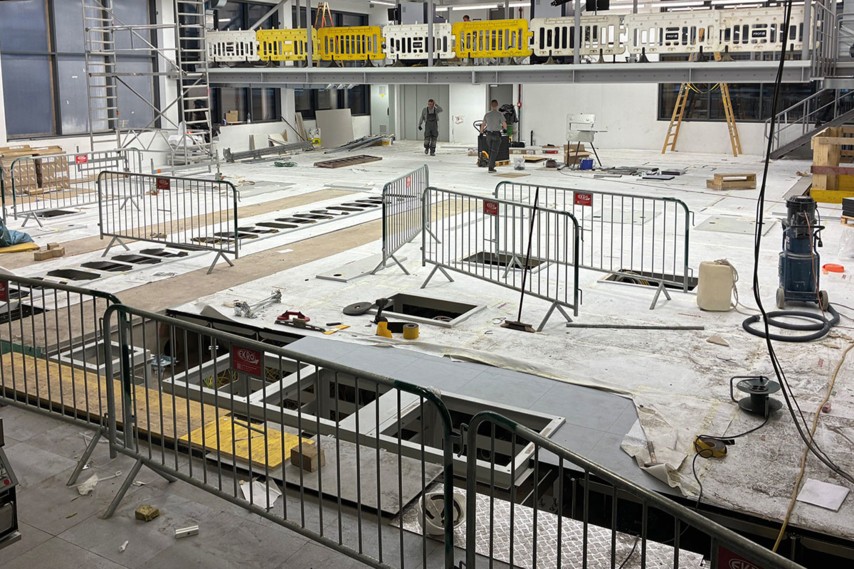
To accommodate everything and create the right environment, extensive solid and steel construction work was carried out to install floors, doors, substructures and walls for the new process technology lab. The former eastern exterior wall and a portion of the northern side of the building were demolished to create a seamless connection between the existing structure and the expansion.
Establishing the necessary infrastructure
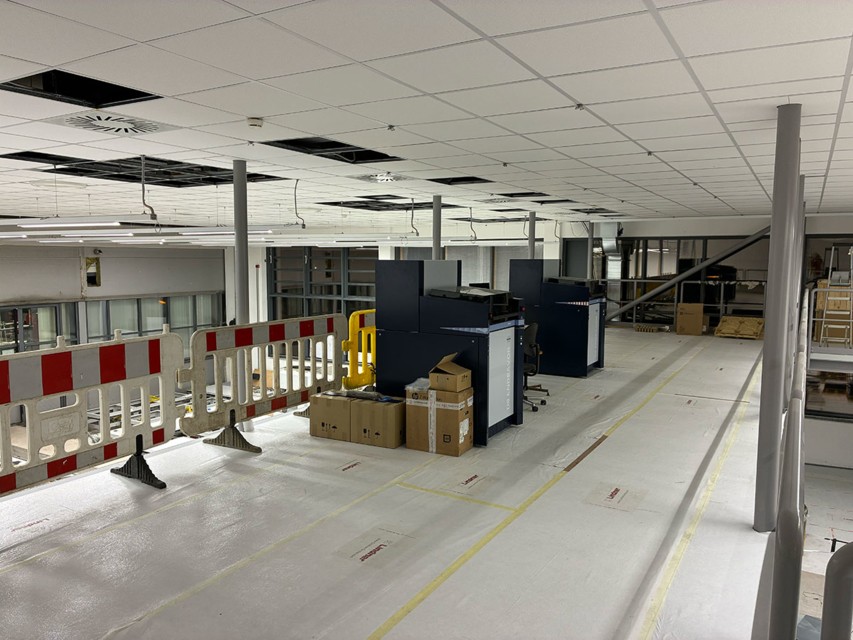
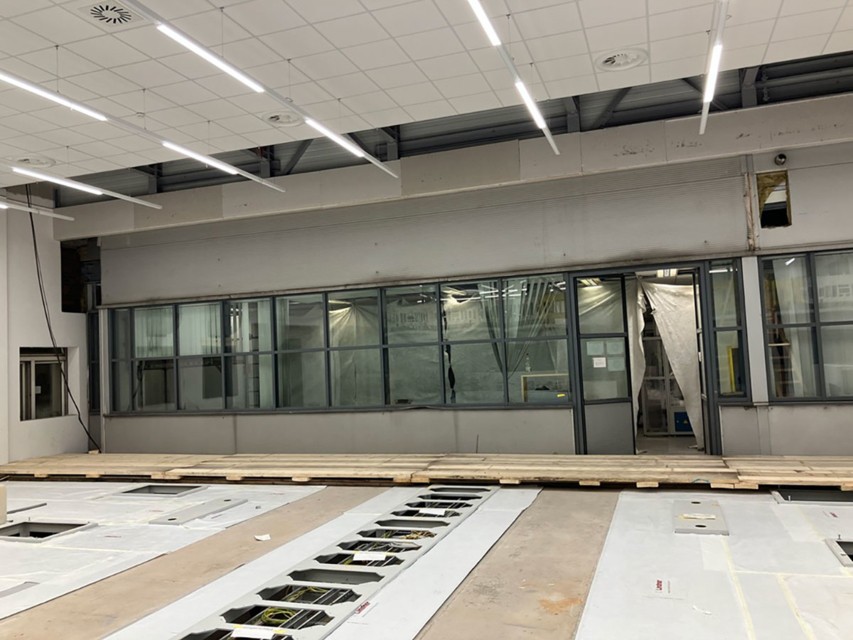
New media lines—including those for high-purity analytical gases and compressed air—were installed, as were extraction lines for highly abrasive materials. The existing compressor and dust extraction systems were replaced with new units; the current laboratory is already being supplied with compressed air via the two new compressors. Cooling and wastewater lines, essential for laboratory operations, were also installed according to future requirements. However, as of a few days ago, these countless lines are almost entirely out of sight. In the new upper floor area of the future fully automated process lab, they are hidden beneath a newly installed raised floor to ensure maximum space for the equipment and actual operations.
Perfect temperature conditions
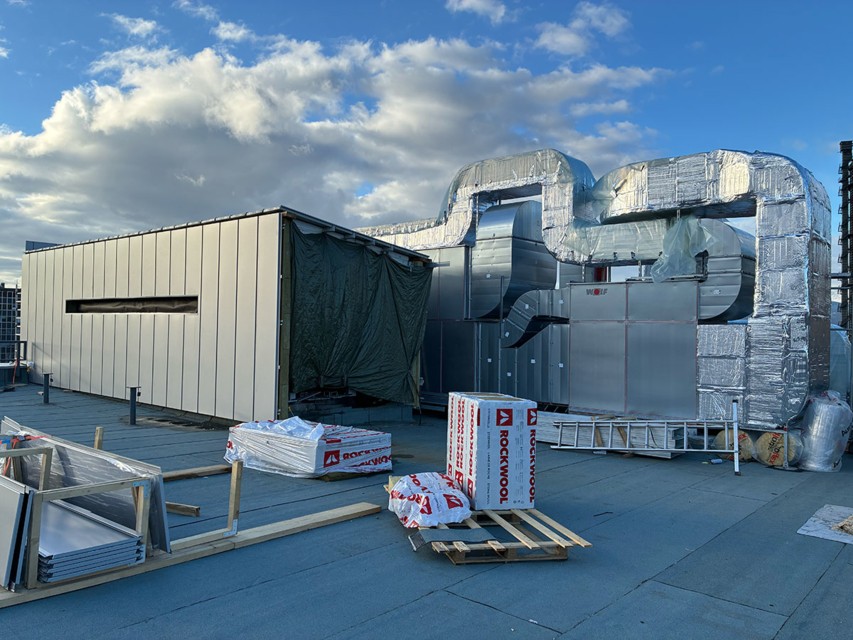
Two identical systems have already been set up and connected on the analysis platform and are currently in test operation. Because a very consistent room temperature is vital in the analysis area, a large ventilation and air conditioning system was installed on the roof of the building. The complete combined refrigeration system (CRS), including heat recovery from the dust extraction exhaust air, will go into operation in May.
Next steps
The phased delivery and assembly of the new process equipment will take place in March 2025. First, the two pneumatic tube robot tracks—each with a total length of approximately 9 meters—will be brought in and installed. These will be followed by the analytical robot axis, which has a total length of approximately 16 meters and weighs nearly 4 tons. In addition to sample conveyor belts, preparation systems will also be delivered, installed, connected and commissioned. Furthermore, the integration of all pneumatic tube lines into the new process lab via the rooftop maintenance room will begin in March. On November 25, 2026, the existing laboratory will be decommissioned. Following the necessary final adjustments and connections, the new, fully automated process laboratory will go live. The expansion of the process lab is a vital component of our transformation toward green steel production and a key building block for greentec steel.
To greentec steel
The greentec steel project of voestalpine is an ambitious step-by-step plan that makes a valuable contribution to the achievement of the climate goals. As a first step, the voestalpine Group plans to replace two blast furnaces with two electric arc furnaces (EAFs) by the year 2027. The investment volume amounts to roughly 1.5 billion euros.
Carbon emissions can be reduced by up to 30% as early as 2029 by making this switch from the blast furnace to the EAF. This corresponds to a savings of nearly 4 million tons of CO2 per year, amounting to nearly 5% of the carbon emissions in Austria. This makes greentec steel the largest climate protection program in Austria.
The two electric-arc furnaces will enable voestalpine to produce roughly 2.5 million tons of carbon-reduced steel by the year 2027, roughly 1.6 million tons in Linz and 850,000 tons in Donawitz. Learn more about greentec steel here.