News

News
Step by step, the infrastructure of the new EAF unit is taking shape: While the material-handling tower is being clad, modern facilities for the storage, transport, and dosing of alloying agents are being built inside and next to it. These facilities form the foundation for flexible, high-quality steel production.
As construction work on the new electric arc furnace unit progresses, more and more key components of the facility are becoming visible. An important area for future steel production is materials and alloy management.
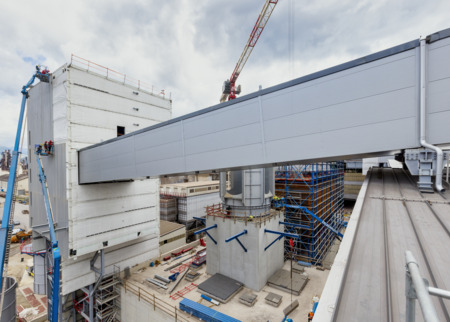
The next visible stages of construction can currently be observed at the materials handling tower. Currently, the facade elements of the building are being installed. What looks like narrow strips from the ground are actually large individual components, approximately 2 meters wide and 6 meters long—whose installation requires the utmost concentration. To do this, our colleagues spend an entire workday in the basket of a boom lift to precisely secure the elements in their intended positions. With each facade section installed, the material-handling tower takes on a more defined shape.
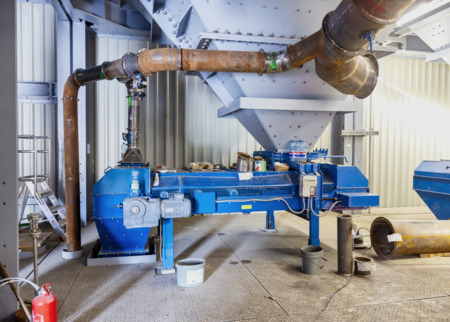
The EAF unit at voestalpine’s Donawitz site consists of two electric arc furnaces and is designed for the precise and flexible addition of alloying elements and additives. The path of these materials begins in the material-handling tower and proceeds via Bridge 1 and Bridge 2 to the material-handling hall, into the bunkers assigned to each material. Directly below is the charging and conveying level. From here, the additives can be charged with pinpoint accuracy for use in the electric arc furnace.
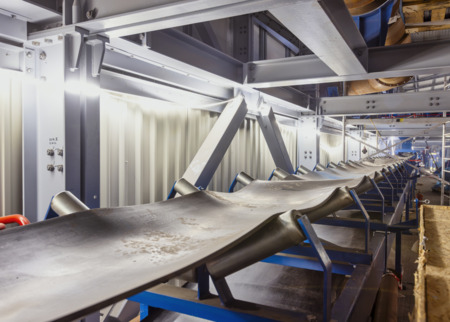
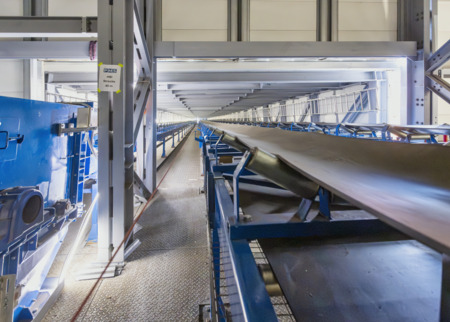
In the bridges, three conveyor belts transport the materials to the required height and on to the bunkers of the EAF plant. There, they are temporarily stored and made available for the subsequent production process. Depending on the steel grade and quality requirements, the necessary additives can then be fed into the furnace in a targeted manner and according to demand. This individual dosing of the alloying elements is an important prerequisite for the production of high-quality premium steel.
In the alloying hall itself, a total of 32 different alloying materials will be stored in the future. In addition, a dedicated carbon bunker is available. The wide variety of available additives makes it possible to produce a wide range of steel grades with precisely tailored chemical properties. The dimensions of the alloying hall are particularly striking. Its extraordinary height serves a very practical purpose: Should a unit or plant component need to be serviced or replaced in the future, it can be lifted using the overhead crane and transported out of the building through appropriate openings on the north or south side of the hall. Great importance was placed on efficient maintenance right from the planning stage.
Important plant components are also already visible on the electric arc furnace itself. On the left side of the EAF, the so-called rotary tower is taking shape. With every step forward in construction, it becomes clearer how the individual components of the EAF unit interlock and, step by step, lay the groundwork for the future production of premium steel.