
Energy Management

Energy Management
Our overarching aim is to constantly improve the energy efficiency and effectiveness of our systems and processes
in order to reduce specific energy consumption and sustainably conserve resources. This is achieved by:
The steel production process in a conventional furnace or using the LD steelworks route is highly energy‑intensive.
Coke, coal and natural gas are used as primary sources of energy, along with purchased electricity where necessary.
The carbon in the coke and coal is required for the metallurgical work (to reduce the iron oxides to iron) as well
as to generate the reaction temperature that is needed in the process. Natural gas is used for purposes including
steam generation, for heating and to keep aggregates warm, as well as for the ignition and cutting processes.
ISO 50001 Energy Management Systems is a globally applicable standard that supports companies and organizations in establishing systematic energy management.
The document was first published in 2011 and revised in 2018. It specifies the requirements for introducing, implementing, maintaining, and improving an energy management system. A systematic approach and the establishment of appropriate processes and systems are intended to continuously improve energy-related performance.
The aim of this standard is to increase energy efficiency, i.e. to reduce energy consumption, lower energy costs, and reduce the impact of energy consumption on the environment, for example through the emission of greenhouse gases such as CO2.
The term “energy” encompasses electricity, fuels, steam, heat, compressed air, and renewable energies. The term “energy use” is to be understood in a comprehensive sense and includes lighting, ventilation, heating, cooling, process heat, transport, processes, and production lines.

ISO 50001 aims to reduce energy consumption, increase energy efficiency, and reduce greenhouse gas emissions. This also directly reduces energy costs, which in turn increases profits.
ISO 50001 follows the High Level Structure, or HLS for short:
| 1. Scope | 6. Planning |
| 2. Normative references | 7. Support |
| 3. Terms and definitions | 8. Operations |
| 4. Context of organization | 9. Performance and evaluation |
| 5. Leadership | 10. Improvements |
Energy planning process, including the definition of energy indicators and energy baseline
Identification of relevant influencing factors, including normalization Creation of action plans
Training – i.e., competence of persons who have an influence on the use and consumption of significant energy sources
Continuous improvement of the energy management system and energy-related performance
Definition of energy efficiency criteria in the procurement and design of facilities
Integration into business processes
Systematic energy management helps organizations to better organize their energy consumption and processes, thereby improving their own productivity.
An energy management system (EnMS) involves the development and implementation of an energy policy, as well as targets, energy objectives, and action plans to improve the organization's energy-related performance, energy consumption, and energy efficiency while meeting applicable legal and other requirements.
An EnMS enables an organization to set and achieve objectives and energy targets, take the necessary measures to improve energy-related performance, and demonstrate the system's conformity with the requirements of the ISO 50001 standard.
Like other ISO management system standards, ISO 50001 follows the PDCA (Plan-Do-Check-Act) process for continuous improvement.
When applying an energy management system, energy flows are recorded at a specific point in time as part of the energy assessment, the relevant energy aspects are identified, and measures for improving efficiency are identified.
The implementation of the measures depends on company-specific decisions. To check whether the system is still functioning optimally and to be able to react quickly in the event of deviations, the analysis of energy consumption must be carried out regularly. This means that even if the measures are already taking effect, the PDCA cycle comes into play.
The standard also forms the basis for the certification of energy management systems.
EU Energy Efficiency Directive (EED)
The European Climate Law stipulates that the EU should become climate neutral by 2050. An interim target on the way to achieving this is to reduce net greenhouse gas emissions in the EU by at least 55% by 2030. As part of the so-called “Fit for 55” package, a number of EU laws are being introduced or existing laws revised to bring them into line with the more ambitious 2030 target.
Part of the package is also the revision of the EU Energy Efficiency Directive (EED III). The aim of the directive is to improve energy efficiency by 32.5% by 2030.
Federal Energy Efficiency Act (EEffG)
The Energy Efficiency Act implements the EED of the Republic of Austria and was first published in the Federal Law Gazette (BGBl. I No. 72/2014) in 2014. On June 15, 2023, the simple amendment (BGBl. I No. 59/2023) came into force. On April 17, 2024, parts of the EEffG were amended by the Federal Law Gazette (BGBl. I No. 29/2024).
Energy Efficiency Regulations
The implementation of energy audits and the establishment of recognized management systems must be documented by means of standardized short reports at least every four years. The detailed provisions on the minimum requirements are set out in Annex I to Section 42 EEffG, while the format, structure, and layout of these standardized short reports are specified by E-Control by ordinance in accordance with Section 43(3) EEffG.
The Energy Efficiency Standardized Short Reports Regulation (EEff-SKV) came into force on August 19, 2023.
Energy efficiency measures are those measures that are being or have been implemented at the Donawitz site in order to significantly improve and increase efficiency in the individual sub-areas.
In 2023, optimizations to cold wind generation were completed, reducing internal electricity consumption by around 0.95 GWh/year. For the first time, the inspection interval for power plant unit 01 was extended to two years. This measure led to an increase in internal electricity generation of 12.8 GWh in 2023. Additional optimizations in power plant unit 01 (increased mixed gas preheating, etc.) increased internal electricity generation by an additional 2 GWh/year.
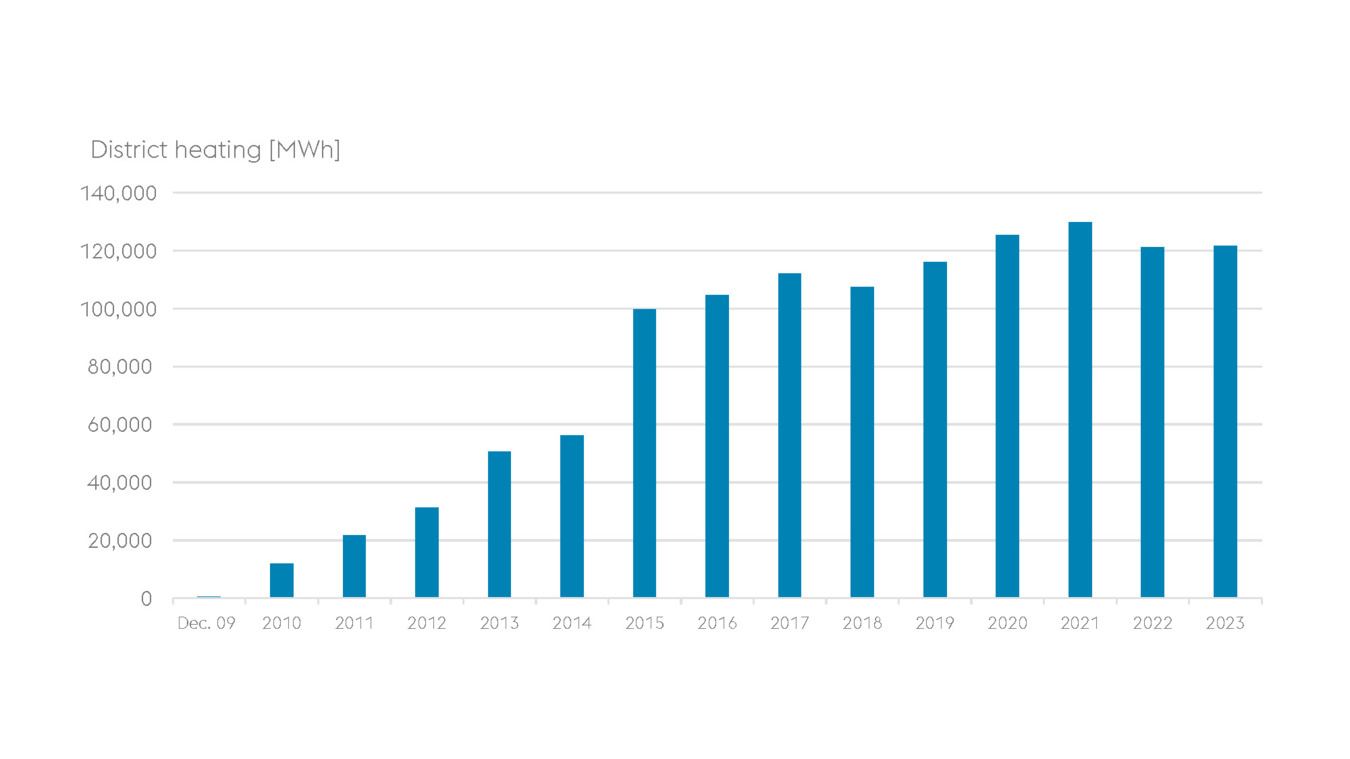
| Fact Box district heating | |
|---|---|
| Supply performance | 50 MWth |
| Supply quantity | 150 GWh/a |
| Supply capacity | approx. 10.000 Households |
| Natural gas savings | rd. 15.000.000 Nm3/a |
| CO2 savings | rd. 30.000 t/a |
| Origin | 100% waste heat |
As already mentioned, steel production is an energy-intensive process. A significant portion of this energy is released again in the form of waste heat. This is transferred to aggregates and cooling systems as radiant and convective heat from the molten pig iron, crude steel, and slag.
In compact steelworks, most of the production is placed in a walking beam furnace immediately after casting while still hot. This prevents significant heat loss and saves energy. The thermal and chemical energy potential of process exhaust gases is used in various ways. For example, the blast furnace gas produced during pig iron production in the blast furnace is used as fuel gas in the wind heaters and, together with the crucible gas from the LD process (both low-calorific fuel gases), in various power plants to generate electricity, steam, and heat.
In addition, the exhaust gas produced in the LD process is discharged via a cooling stack, which also functions as a saturated steam generator. The saturated steam produced is used for regenerative feed water preheating in the power plant area.
In the sintering plant, the waste heat from the hot sintering exhaust gas is fed back into the process. In the walking beam furnace of the compact steelworks, the hot flue gas is used to preheat the combustion air, while the heat dissipated during the cooling of the supporting systems is fed into an existing hot water network to supply the plant with heat.
| Topic | Aim | Measure | Responsibility | Deadline | Status |
|---|---|---|---|---|---|
| Increase of in-house power generation from metallurgical gases | Power generation from metallurgical gases (whole plant): Goal for fiscal year 2023/24: 305 kWH/t RST | Plant optimization | Energy and Logistics | 31.03.2024 | fulfilled |
| Reducing natural gas use | process related use of natural gas < 36 GWh/a Ho (taking into account the CO2-reduced Production method | Plant optimization | Energy and Logistics | 31.03.2024 | fulfilled |
| Reducing the energy consumption of blast furnaces | Optimization of energy consumption for cooler pumps and water supply Savings: 1.27 MWhel/a |
Conversion of the cooler pumps to speed control. . Water supply for Theisen disintegrators via low-pressure cooling water network |
Blast furnace operations | 31.03.2024 | 95% fulfilled, still ongoing |
The following facts and figures provide an overview of energy consumption at the Donawitz site and serve as a guide for further improvement and efficiency measures.
Blast furnace gas and converter gas (process exhaust gases) are used to generate electricity in the company's own power plant. A new power plant unit was built back in 2008 to increase the utilization of by-product gas and thus also increase the company's own electricity generation.
In 2023, optimizations to cold wind generation were completed, reducing the company's own electricity consumption by around 0.95 GWh/year. For the first time, the inspection interval for power plant unit 01 was extended to two years. This measure led to an increase in internal electricity generation of 12.8 GWh in 2023. Additional optimizations in power plant unit 01 (increase in mixed gas preheating, etc.) increased internal electricity generation.
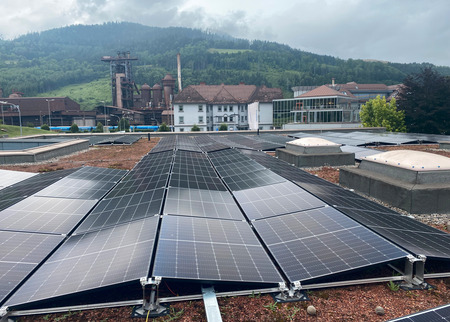
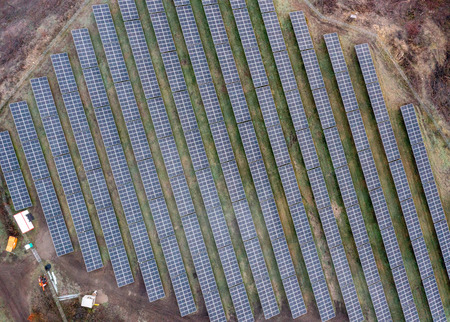
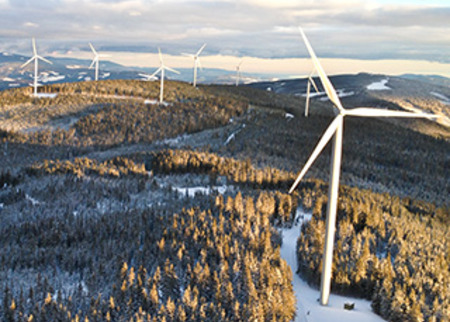
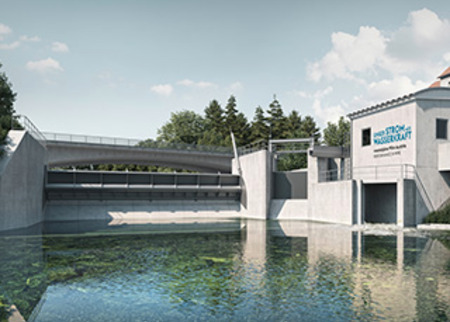
76% of electricity requirements are covered by in-house generation and 24% by electricity purchased from 100% renewable energy sources. Around 35% of the electricity purchased was covered by direct supply contracts with Styrian generation plants.
In-house generation is achieved by utilizing the smelting gases produced (blast furnace gas and crucible gas) and using natural gas and extra-light heating oil in the company's own power plant, as well as by converting the cooling water return into electricity.
| In-house production | 76 % |
|---|---|
| of which electricity from metallurgical gases | 94 % |
| of which electricity from hydropower | 2 % |
| of which electricity from natural gas and heating oil extra light | 4 % |
| Purchased electricity | 76 % |
|---|---|
| from Styrian wind turbines | 7 % |
| from Styrian hydroelectric power plants | 25 % |
| from Styrian photovoltaic systems | 3 % |
|
Remaining supply from the public grid |
65 % |


