MedTech
PVD Coating
Reading time: 14 minutes
Importance of PVD Coatings for Medical Injection Molds

This article explores the importance of PVD coatings for medical injection molds. It highlights how these coatings enhance tool durability, product quality, biocompatibility, and efficiency. It also examines key coating properties, processes, and their applications, and how they enable the production of high-quality, safe, and cost-effective medical components.
Physical Vapor Deposition (PVD) coating is a thin-film process in which a solid material is vaporized in a vacuum and deposited onto a surface, such as injection molds. Common deposition techniques include magnetron sputtering and cathodic arc evaporation. PVD coatings play a crucial role in the case of medical injection molds that are used to produce plastic syringes, plastic test tubes, petri dishes, inhalers, surgical instrument housings, cap and closures, and vial components. They enhance performance, quality and improve manufacturing efficiency. The challenges associated with medical injection molds are effectively addressed through the use of thin‑film PVD coatings, which provide a hard, wear‑resistant layer typically ranging from 1 to 4 microns in thickness. The coatings provide microhardness in the range of 1200–4000 HV (Vickers, 0.05 kgf) and are deposited at temperatures between 200 °C and 450 °C to prevent substrate distortion. In addition to protecting the mold surface, PVD coating enhances the molding performance of abrasive or chemically aggressive medical‑grade polymers..
Benefits of PVD coating





Enhanced durability and wear resistance
One of the biggest advantages of PVD coatings for medical injection molds is their ability to significantly extend tool life. Medical molding typically involves high-volume production using abrasive resins containing fillers like glass fibres or minerals (e.g., up to 30% glass-filled). These can quickly wear down uncoated molds through abrasive erosion and adhesive galling, resulting in defects and dimensional errors. PVD coatings, such as Aluminium Chromium Titanium Nitride (AlCrTiN) with a hardness of 3300 ± 300 HV, Titanium Nitride (TiN) at 2300 ± 200 HV, Zirconium Nitride (ZrN) at 2800 ± 200 HV and Multilayer Chromium Nitride (CrN) at 2000 ± 200 HV, create an ultra-hard, micro-thin barrier that is resistant to abrasion from molten plastic flow.By reducing the need for replacements, cutting down on downtime in cleanroom settings, and guaranteeing consistent part quality over millions of cycles (e.g., >1 million shots for high-precision molds), PVD coatings can extend mold life by two to five times. It minimizes routine maintenance requirements and extends the service life of consumable mold elements.
Additionally, PVD coatings provide corrosion and chemical resistance against gas/fumes released during plastic injection molding (e.g., hydrogen chloride from PVC decomposition at 140–220°C). Coatings multilayer CrN act as an inert barrier with low porosity, protecting the steel mold (e.g., P20 or H13 tool steel) from chemical degradation and preventing residue build-up, which would otherwise lead to part defects and require costly cleaning. In a case study involving glass fibre-reinforced plastics, multilayer CrN/AlCrTiN coatings showed superior wear resistance compared to monolithic TiAlN, reducing erosion by 50–70% in high-abrasion environments.
Improved part release and reduced cycle time
PVD coatings enhance the surface properties of injection molds, resulting in higher-quality molded medical components. Their smooth, low-friction surface allows molten plastic to flow more evenly into intricate mold cavities, thereby reducing defects like streaks, burns, scratches, drag marks, or deformities under high injection pressures (100–200 MPa). This is particularly important in medical molding, where components must have flawless surfaces to prevent contamination risks or functional failures. Examples of such components include the smooth barrel of a syringe for precise dosage or cap closures for perfect seals.
Ejection of molded parts also improves with PVD coatings, as their reduced adhesion and friction prevent sticking or “galling”, leading to fewer rejected parts. Coatings with low coefficients of friction against steel (dry), such as TiN-ultrafine (0.4-0.6) and Diamond-Like Carbon (DLC) (<0.1), provide inherent lubricity that eliminates the need for external mold release agents or sprays. This not only lowers costs and keeps the final product cleaner but also shortens production cycles by 10–30% through faster melt filling and quicker ejection forces, while avoiding maintenance during regular process cycle. In one application, PVD-coated molds for plastic injection showed reduced adhesive wear and deposit build-up, improving flow behavior and part aesthetics.
Preservation of tight tolerances
Medical plastic parts, such as bottle closures and vial components, often feature intricate designs and require very tight tolerances to ensure functionality, such as perfect seals. The PVD coating process deposits an extremely thin film (typically 1-6 μm thick) without altering the mold’s geometry. Its uniform conformal coverage, via ion-assisted deposition, preserves the mold’s precise dimensions, micro-features (e.g., textures with 1–10 μm depth), and fine textures after coating, ensuring consistent production of high-precision parts without degradation. Studies combining laser structuring with PVD (e.g., chromium-based nitride via magnetron sputtering) have shown improved replication ratios by enhancing surface energy and fillability.
Biocompatibility
Biocompatibility is a cornerstone of medical device manufacturing, and PVD coatings excel in this area. They are chemically inert and non-toxic, providing a barrier that prevents metal ions from leaching into molded plastics, which could cause adverse reactions in patients. Many PVD coatings meet testing standards such as ISO 10993 for cytotoxicity testing, making them suitable for molds used to produce implantable or contact-based devices, including those exposed to bodily fluids, tissues, or blood. Their smooth, dense surfaces make mold cavities easier to clean, preventing plastic residue and contaminant build-up.
In broader medical applications, PVD coatings on components such as implants, surgical tools, and stents offer additional functional benefits. The wear resistance and hardness provided by the coatings keep tools sharp and durable (e.g., edge retention improved by 3x), while low-friction options like DLC ensure smoother movement in devices with moving parts, reducing galling or jamming and preventing tissue sticking during surgery.
Operational efficiency and environmental benefits
Beyond technical advantages, PVD coatings can streamline operations in medical injection molding. Due to their low adhesion and chemically inert surfaces, these coatings reduce polymer sticking and material build‑up on mold cavities, thereby decreasing or eliminating the need for mold release agents and external lubricants. As a result, molds require less frequent cleaning, enabling faster and more efficient changeovers between production runs. This is particularly beneficial during colour changes or multi‑material molding of medical components, where contamination control is critical. Overall, reduced downtime, simplified maintenance, and lower consumption of auxiliary process materials contribute to measurable reductions in labor effort and operational costs of up to 20%.
From an environmental perspective, PVD is a dry, vacuum-based process that produces no hazardous waste, unlike electroplating, making it an eco-friendly choice for sustainable medical manufacturing.
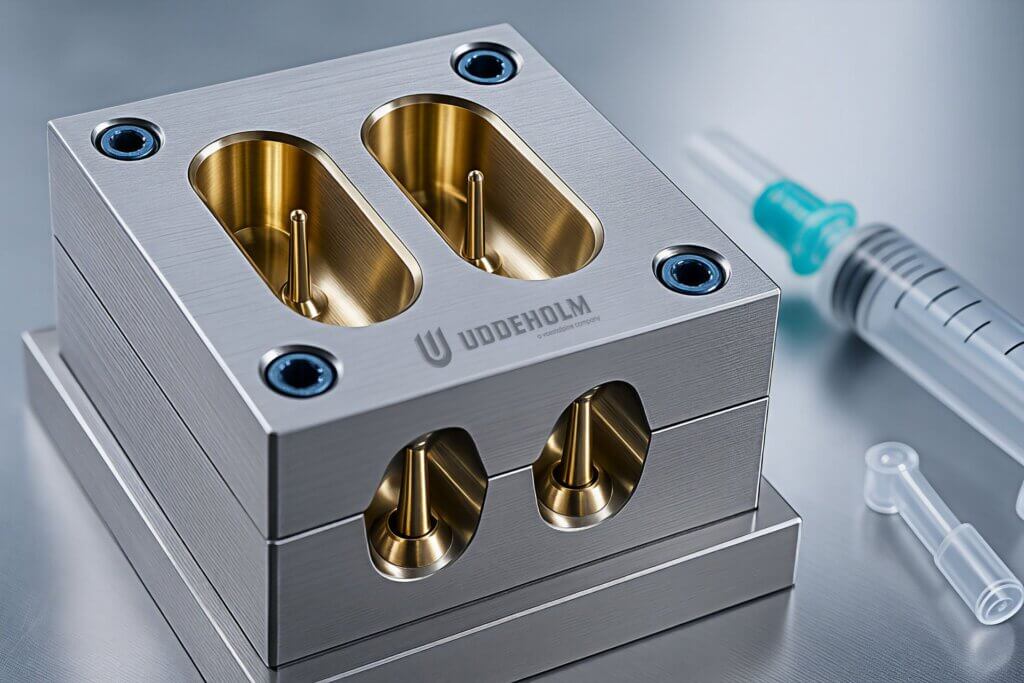
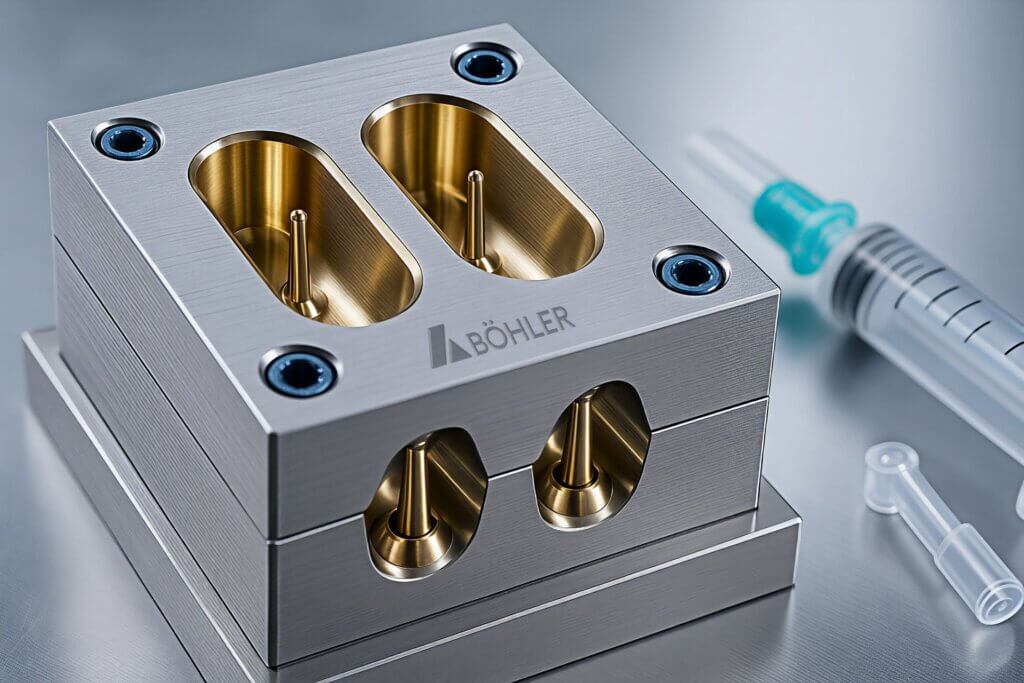
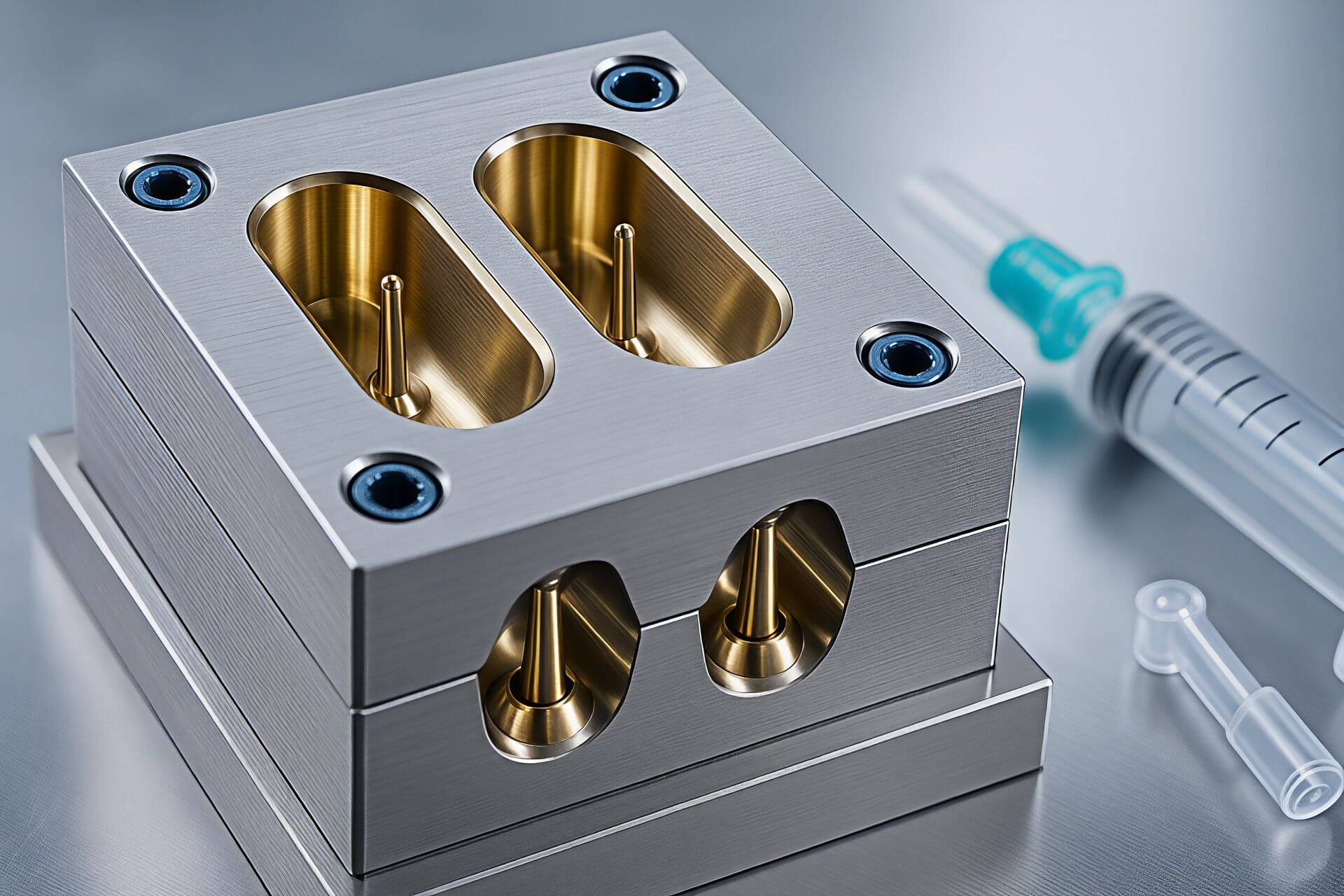
Medical injection molding, two premium tool steel solutions: BÖHLER and Uddeholm — under the voestalpine umbrella, supporting reliable, clean, and high‑volume medical production.
| Benefit Category | Key Technical Properties | Impact |
|---|---|---|
Durability & Wear Resistance |
|
|
Part Release & Cycle Time |
|
|
Tolerance Maintenance |
|
|
Biocompatibility |
|
|
Efficiency & Environmental |
|
|
Conclusion
PVD coatings play a critical role in modern medical injection molding by enhancing mold durability, process stability, and product quality while supporting strict cleanliness and biocompatibility requirements. Their wear resistance, low friction, chemical inertness, and thin, conformal nature help maintain tight tolerances, improve part release, reduce contamination risks, and increase operational efficiency. By extending tool life, minimizing downtime, and reducing reliance on release agents and maintenance, PVD coatings enable the reliable, cost‑effective, and sustainable production of high‑quality medical components.
Here you can get a clearer picture of why PVD coating is crucial for medical injection molds
| Metric | Coated Mold | Uncoated Mold |
|---|---|---|
Hardness (HV) | ~2500 HV | ~800 HV |
Mold Life | ~1.5 million cycles | ~0.5 million cycles |
Cycle Time Reduction | 25% faster | No improvement |
Ejection Force Reduction | Up to 50% | No reduction |
Have a specific challenge in medical injection molding?
Our experts are available to discuss how PVD coatings can support your application.