News

News
With the construction of the new electric arc furnace (EAF) unit, the core element of the future production line is taking shape in Donawitz. The facility will consist of two furnaces, EAF 1 and EAF 2, and will form the basis for modern, resource-efficient steel production.
.jpg)
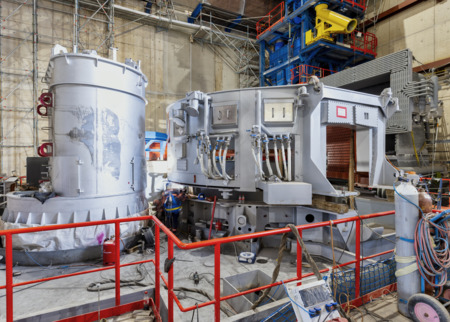
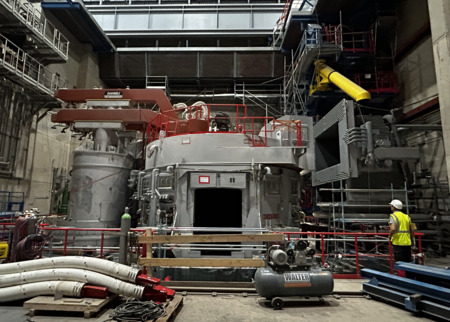
With every component installed, the overall picture of the new production line becomes clearer. The two electric arc furnaces have now taken on a distinct shape. If you look closely, you can already make out the electrode support arms of the furnaces.
What exactly is their function?
Extremely high currents enable the electric arc furnace to melt the feedstock. Three large graphite electrodes generate an electric arc that reaches temperatures of up to fifteen thousand degrees Celsius. The electrodes are powered by the three phases of the electrical grid and together form the furnace’s central melting system. The energy generated in this process efficiently liquefies the feedstock and prepares it for further processing.
Which materials are melted in the EAF using the electrode support arms and enormous amounts of electricity?
The furnace itself consists of a multitude of complex components. The central components of the electric arc furnace—including the lower vessel, upper vessel, and furnace cover—have already been installed. The heavy-duty assembly of the rotating towers, including the lifting cylinders and electrode arms on both electric arc furnaces, has also been successfully completed. As essential parts of the plant, these components will perform key functions in the melting process and, together, form the central melting unit of the new production line.
Work has also been underway on the scrap transfer cars, where a variety of welding tasks have been carried out. Once the plant is operational, these cars will transport the scrap from the scrap yard to the EAF unit. The scrap is transported in scrap baskets via an underground conveyor system all the way to the furnace hall. The scrap baskets intended for this purpose have already been fully assembled and positioned on the scrap transfer cars. This marks the completion of another important step toward the future material supply for the electric arc furnaces.