Premium & Industrial Tool Steel Solutions
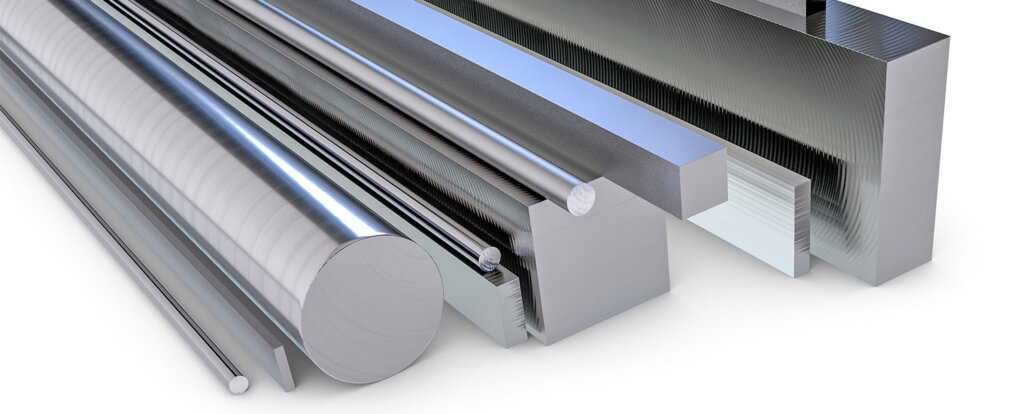
Plastic molding requires unique properties from the tool material. With the outstanding knowledge provided by our tool steel experts at BÖHLER and Uddeholm we are able to support you facing the challenges accross the entirety of the plastic molding value chain. Every tool has its own specific requirements – especially when it comes to the highly differentiated processing of plastics. Depending on requirements, various classic tool steels and remelted or powder metallurgically produced high-performance materials are used. Our brands offer the plastics industry a range of tool steels, proven and tested in practice and customised for the respective application. These guarantee high tool life, maximum precision during processing and perfect quality of the plastic surfaces.
BÖHLER and Uddeholm plastic mold steels are used for tools and tool parts in numerous plastics processing methods, e.g. injection molding and extrusion. Above all, we are the market leader in the most versatile, stainless material programme for the plastics processing industry.
Our materials meet the special requirements for mold materials in plastics processing, including, but not limited to:
- Supreme wear resistance, hardness when processing certain plastics (GRP) and at temperatures up to approx. 400°C
- High corrosion resistance when processing certain plastics (e.g. PVC) and under critical cooling conditions
- High mechanical strength and toughness (fracture resistance and resistance to plastic deformation)
- Tools almost always need to be cooled
- Partly very large dimensions
- High Polishability
Our Top Products
This group of steels is specially designed for use as corrosion-resistant tool steels in plastics processing when corrosion and wear resistance are of primary importance, as is the case, for example, when processing fibre-reinforced and heavily filled, aggressive plastics. Experience shows that corrosion-resistant tool steels with hardnesses of over 50 HRC are then required. Under particularly critical operating conditions, however, steels with a higher carbide content and hardnesses above 60 HRC are often essential.
Steels in this product group are usually selected hardenable, martensitic stainless steels with approx. 13 to 20 % Cr , alloyed with Mo , W and V and a C content of approx. 0.40 to over 2%.
In general, the production of these steels with regard to purity, homogeneity and analytical balance takes special account of the needs of plastics processing with regard to polishability and corrosion resistance, and high-purity steels are frequently produced by remelting processes, e.g. electroslag (ESR), or extremely homogeneous, high-alloy steels are produced by powder metallurgy.
A special category of hardenable corrosion resistant steels are High Nitrogen Steels (HNS). In such steels the high Carbon (C)- content present usually in steels of this group is reduced and part of the Carbon is replaced by Nitrogen(N). This results in a hardness of approx. 58 HRC together with the best corrosion resistance and optimum homogeneity and prevents the excessive bonding of Chromium in the form of carbides. Usually remelting of this steel takes place in the special Pressure Electroslag Remelting Process (PESR).
Related Products
-
- Plastic Mold
- AISI ~420
- EN X40Cr14
- JIS ~SUS420J2
- SEL ~1.2083
- EN ISO 4957
- Others AFNOR Z40C14
BÖHLER M310 ISOPLAST is a corrosion-resistant, martensitic chromium steel which, through electroslag remelting and optimization of the chemical composition, has a good homogeneity and a balanced hardness-toughness-corrosion resistance ratio.
Read More -
- Plastic Mold
BÖHLER M390 MICROCLEAN is a corrosion-resistant, martensitic chromium steel produced by powder metallurgy. Due to its alloy design, this steel has very high wear resistance and good corrosion resistance. In addition, BÖHLER M390 MICROCLEAN is approved for food and beverage contact.
Read More -
- Plastic Mold
BÖHLER M398 MICROCLEAN is a corrosion-resistant, martensitic chromium steel produced by powder metallurgy. Due to its alloy design, this steel has good corrosion resistance and higher wear resistance compared to BÖHLER M390 MICROCLEAN.
Read More -
- Plastic Mold
- EN X105CrCoMo18-2
- SEL 1.4528
BÖHLER N690 is a corrosion-resistant, martensitic chromium steel with a high carbon content and the addition of cobalt, molybdenum and vanadium. BÖHLER N690 is also approved for food and beverage contact.
Read More -
- Plastic Mold
- AISI 440C
- EN X105CrMo17
- SEL 1.4125
BÖHLER N695 is a corrosion-resistant, martensitic chromium steel with a high carbon content and added molybdenum.
Read More -
- Plastic Mold
Uddeholm Tyrax ESR combines best in class toughness, corrosion and wear resistance. This grade was developed for molding of high performance plastics often filled with glass fiber reinforcements and additives like flame retardants. This matrix- based microstructure is designed to achieve a high-gloss surface by only a few polishing steps, dramatically reducing the tool lead time and enabling production of top quality plastic parts. Uddeholm Tyrax ESR can achieve a high hardness (up to 58 HRC) and is a suitable upgrade from AISI 420 ESR, AISI S7 and AISI 440C. Benefits good dimensional stability at heat treatment and in service even microstructure and small grain size good hardenability Uddeholm Tyrax is also available for Additive Manufacturing, powder for processing Laser Powder Bed Fusion (LPBF) and Laser Metal Deposition (LMD).
Read More
This group of steels is specifically intended for use as corrosion-resistant tool steel in plastics processing.
Pre-tempered steels are steels that are already quenched and tempered by the steel supplier, usually with hardnesses of 30 to 40 HRC, and are then delivered to tool production in this condition. By omitting the heat treatment in the course of tool production, the economic efficiency can be significantly improved. With the delivery hardness in the range of approx. 30 to approx. 40 HRC, there is a good compromise between machinability and wear resistance or compressive strength (edge stability), which is sufficient for many applications in plastics processing.
Steels in this product group are usually selected martensitic stainless steels with approx. 13 to 17 % Cr , alloyed with Mo and Ni and a C content of approx. 0.30 to 0.40%.
In the production of these steels, special consideration is given to the needs of plastics processing with regard to polishability and corrosion resistance in terms of purity, homogeneity and analytical balance.
In special cases, the microstructure is specifically optimised by a special analytical balance, and sulphur is added in small proportions (0.10 to approx. 0.20%) to improve machinability. However, due to the addition of sulphur, losses in corrosion resistance and polishability have to be taken into account.
Related Products
-
- Plastic Mold
RoyAlloy is a high-performance stainless mold base tool steel designed to deliver exceptional durability and efficiency in demanding tooling environments. It is developed to meet the requirements of mould bases and molds where demands on surface finish, service life, and corrosion resistance are more moderate. The material offers an attractive balance between performance, machinability, and cost, making it a competitive option for standard applications in the plastics industry. Benefits Unlike conventional stainless steels, RoyAlloy is supplied in a pre-hardened condition of approximately 30 HRC, eliminating the need for additional heat treatment. This significantly reduces lead times and production costs while ensuring dimensional stability throughout machining and finishing processes. RoyAlloy’s superior corrosion resistance sets it apart in applications where moisture or humid environments can compromise tool life. By minimizing rust and surface degradation, it ensures longer service intervals and reduced maintenance costs. The material’s homogeneous structure and stable mechanical properties provide good dimensional stability and sufficient strength for applications involving short to medium production runs or less demanding plastics. The steel’s weldability and repairability further enhance its value, allowing easy maintenance and extending tool lifespan.
Read More
Steels in this group are specially designed for use as tool steels in plastics processing.
Quenched and tempered steel is low-alloy stainless steel that achieves high tensile and fatigue strength combined with good toughness through quenching and tempering. In most cases, these steels are supplied by the steel supplier already pre-tempered and then used in this condition in tool production. By eliminating further heat treatment steps in the course of tool production, the cost-effectiveness and logistics in toolmaking can be significantly improved. The supplied hardness of approx. 30 to approx. 40 HRC is a good compromise between machinability, wear resistance and compressive strength (edge stability), which is sufficient for many applications in plastics processing. Higher tempering strengths are also used in special cases.
The carbon content is approximately between 0.3 and 0.4 %. The different alloy contents of chromium, manganese, molybdenum and nickel are very precisely matched to the respective application and have a particular influence on larger cross-sections. The weldability of these steels is limited. Coordinated sulphur contents are used on a case-by-case basis to improve machinability.
In the production of these steels, particular consideration is given to the requirements of plastics processing with regard to polishability and corrosion resistance in terms of purity, homogeneity and analysis balance.
Precipitation hardening steels in this group are special steels with alloying additions of Cu and Al, with excellent properties, in particular high toughness and good dimensional stability and good weldability. This group of steels achieves a martensitic microstructure with a higher Ni content combined with a low C content. Alloying elements such as Cu and Al are used to achieve hardenable alloy systems, whereby an increase in strength up to max. 44 HRC is achieved through the precipitation of intermetallic compounds from the martensite during heat treatment. The heat treatment of these steels is simple and minimises distortion and consists of a solution heat treatment with a final hardening treatment at temperatures in the region of approx. 500°C. Such steels are supplied pre-hardened or solution-annealed.
Related Products
-
- Plastic Mold
- EN X13NiCuAl4-1-1
BÖHLER M261 is a precipitation-hardenable steel for plastic molds that exhibits very good machinability in the as-delivered condition – solution-annealed and aged. Compared to 1.2312, BÖHLER M261 has a higher resistance to pressure and wear. By eliminating the need for additional heat treatment, the throughput time can also be significantly reduced.
Read More
Talk to an Expert
Please fill out this contact form for further information.
Fields marked with * are mandatory: