Event
Racing
Reading time: 10 minutes
Inside PRI 2025: Insights from voestalpine HPM’s global racing team

Situated at the Indiana Convention Center in Indianapolis, PRI is the world’s largest motorsports show. With more than 1,100 exhibitors and 40,000 visitors from 70 countries, the three‑day event brings together engine builders, manufacturers, suppliers, and teams across the global racing landscape.
PRI 2025 was our fourth appearance at the show—and our first under the unified voestalpine High Performance Metals brand. With colleagues from BÖHLER, Uddeholm, and teams across North America, the UK, Europe, and beyond working together at the booth, we were able to showcase what truly sets us apart: materials expertise, coatings, and additive manufacturing capabilities delivered by one global team. Find out more about voestalpine HPM Racing here.
What stood out immediately: scale and openness
Over a career that began as a college Physics professor and progressed through several commercial roles in industrial materials, I have exhibited at and attended a wide range of conferences and trade shows. PRI is unique among these because of the openness and technical focus of conversations. Visitors and exhibitors alike are ready to discuss real engineering challenges. This year more than ever, our unified products and services portfolio was well positioned to meet those challenges.
Our UK colleagues Mark Atkins and Stephen Price saw the same trend. PRI felt dramatically larger than typical European motorsport shows—“five times the scale,” as Mark put it—and the crowd came ready for substantive discussions. Teams weren’t just browsing; they were eager to talk through real engineering problems and explore alternatives.
“What really struck me at PRI was how eager visitors were to explore solutions beyond the standard grades they’ve always used. This openness creates a real opportunity for us to educate prospective customers and help them discover materials that can genuinely improve performance.” – Mark Atkins
“I was extremely impressed with the scale of the show and the enthusiasm for the industry from everybody I had the pleasure of speaking to. From hobbyists to engineers everybody seemed happy to discuss materials, market developments and generally all things motorsport. ” – Stephen Price
The search for technological advantages is a common thread at PRI, and the racing community understands that small improvements in material properties can have meaningful effects on performance. In the months leading up to the show, our voestalpine HPM Racing core team worked diligently to develop web pages, literature and messaging to demonstrate why certain grades are used in key racing applications. Judging by the quality of the discussions we had and leads we gained, the effort was well-received.
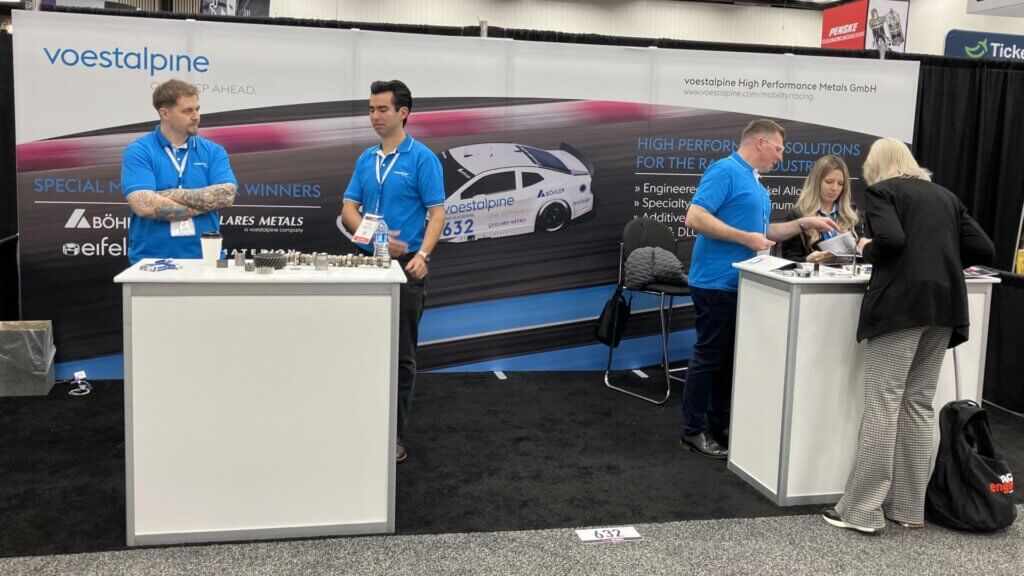
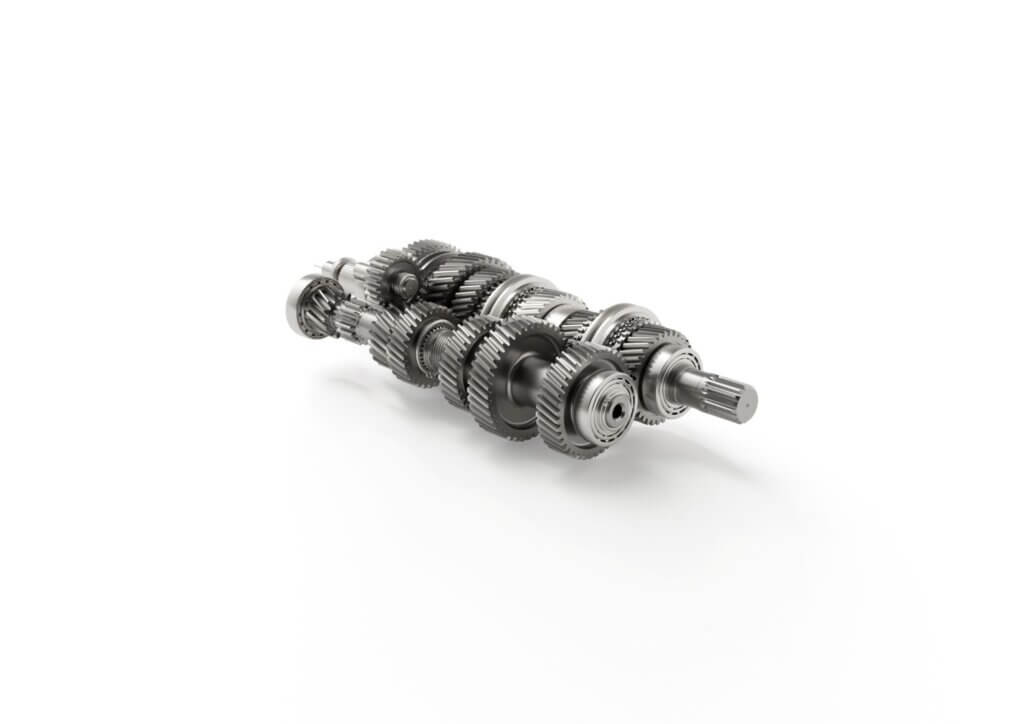
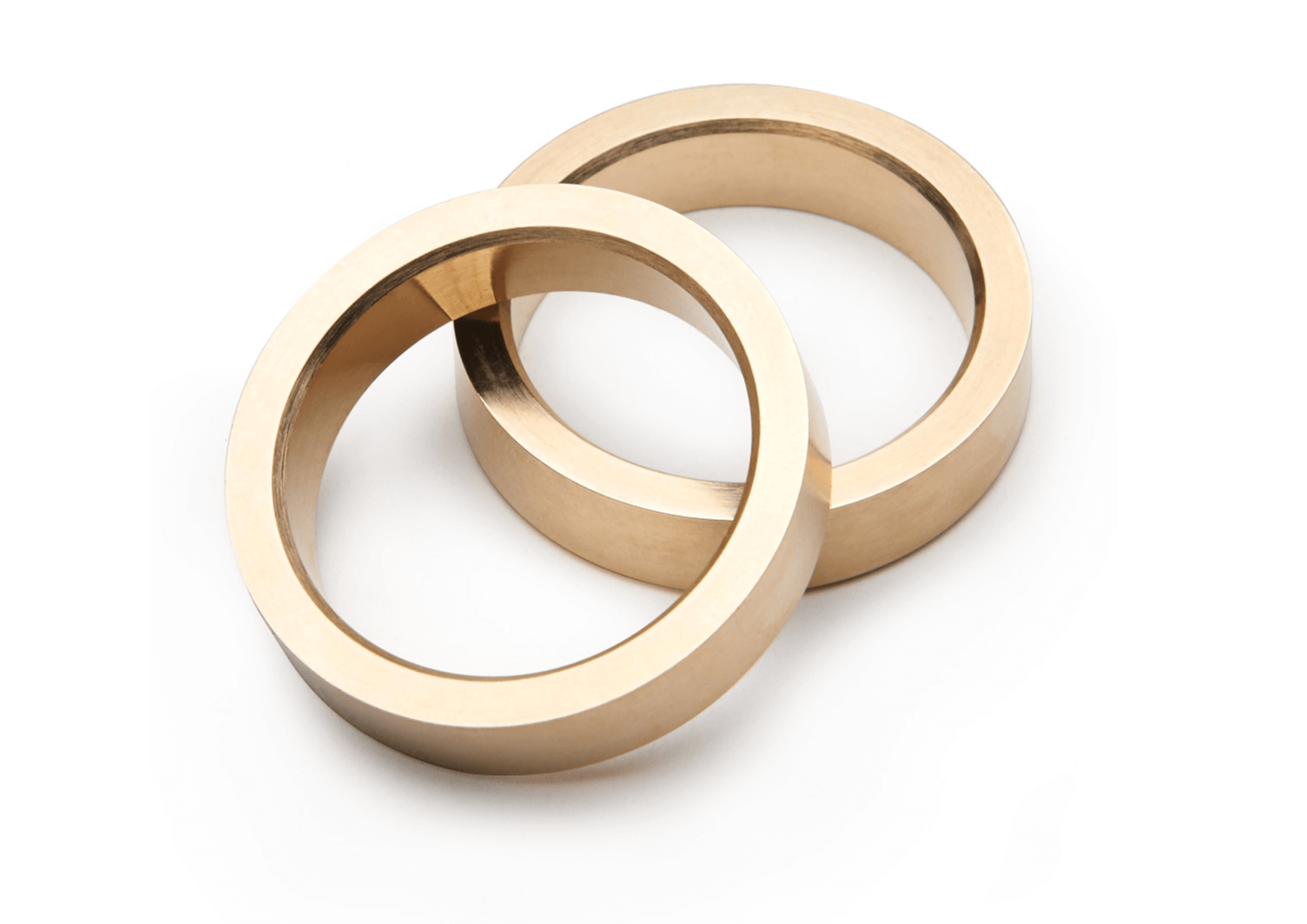
Some of the voestalpine HPM racing applications and materials on display at PRI
Standard grades dominate—but teams want more
Across the many cars, engines, and components on display, it became clear that the US racing market has a different approach to materials than what our colleagues see in the UK and Europe. Traditional steels still form the backbone of much of the US industry: for example, 4340 remains the go‑to for many engine parts, 300M is the typical upgrade, and 8620 and 9310 continue to dominate gear applications. Many teams also acknowledged that they lack access to specialized materials expertise and often rely on long‑standing supplier relationships to guide decisions.
At the same time, visitors were increasingly aware of the limits of these standard grades—and showed real interest in what comes next. Many were surprised by the breadth of our own offering, including proven high‑performance grades such as Vanadis 4, Caldie, Vancron SuperClean, S693 and W360, all of which are already established in demanding racing environments.
North America remains the largest region in the €375 million global racing‑parts market, with 4–5% expected growth in the coming years. PRI reinforced that appetite for smarter, more durable materials solutions is rising.
Where our booth lit up: AM exhaust and gear expertise
Our additively manufactured exhaust components in BÖHLER L625 AMPO drew steady attention throughout the show. More teams now see AM as a true design tool—an opportunity to optimize flow, heat management, and packaging first, and then build the part around those performance priorities.
Having our UK colleagues at the booth elevated engagements with gear and gearbox manufacturers. Their long-standing experience in motorsport gear applications allowed us to go much deeper than surface-level conversations and explore real alternatives to the standard 8620 and 9310 solutions many teams rely on today.
A special thank you goes to Mark Atkins, Stephen Price, Tiffany Nistovic, Tyler McQuown, Matt Juarez and the wider team across regions
A key challenge ahead: 750 HP, same engine allocations
A major topic in conversations with NASCAR Cup engine builders was the upcoming 2026 rule change: an increase in the horsepower limit from 670 to 750 HP for road courses and ovals shorter than 1.5 miles—a shift that applies to 17 of the 36 races. Crucially, this added power comes without any additional engine allocations, putting durability squarely in the spotlight. Tool‑steel upgrades, innovations in gear materials, coatings, and AM‑enabled designs will all play an essential role in helping teams manage the higher loads without compromising reliability.
And with our global materials expertise and cross‑regional engineering support, we’re well positioned to help teams navigate those challenges with confidence
What comes next
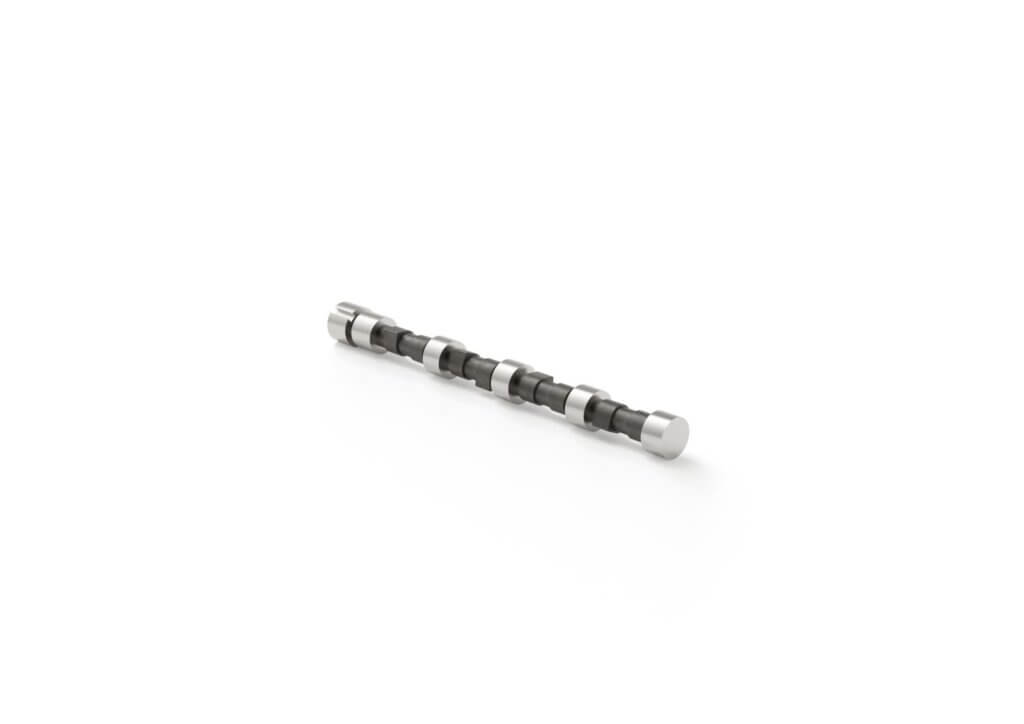
Our takeaways from PRI are clear. Teams are actively looking beyond standard grades and increasingly want technology partners, not just material suppliers. The high value placed on performance continues to create space for value optimized solutions, and the strength of our cross regional collaboration was evident throughout the show. Our next steps include focusing on key applications including camshafts, gears, and AM exhaust components; strengthening our global racing network; following up on many new leads; and developing case studies and application tests to support ongoing discussions.
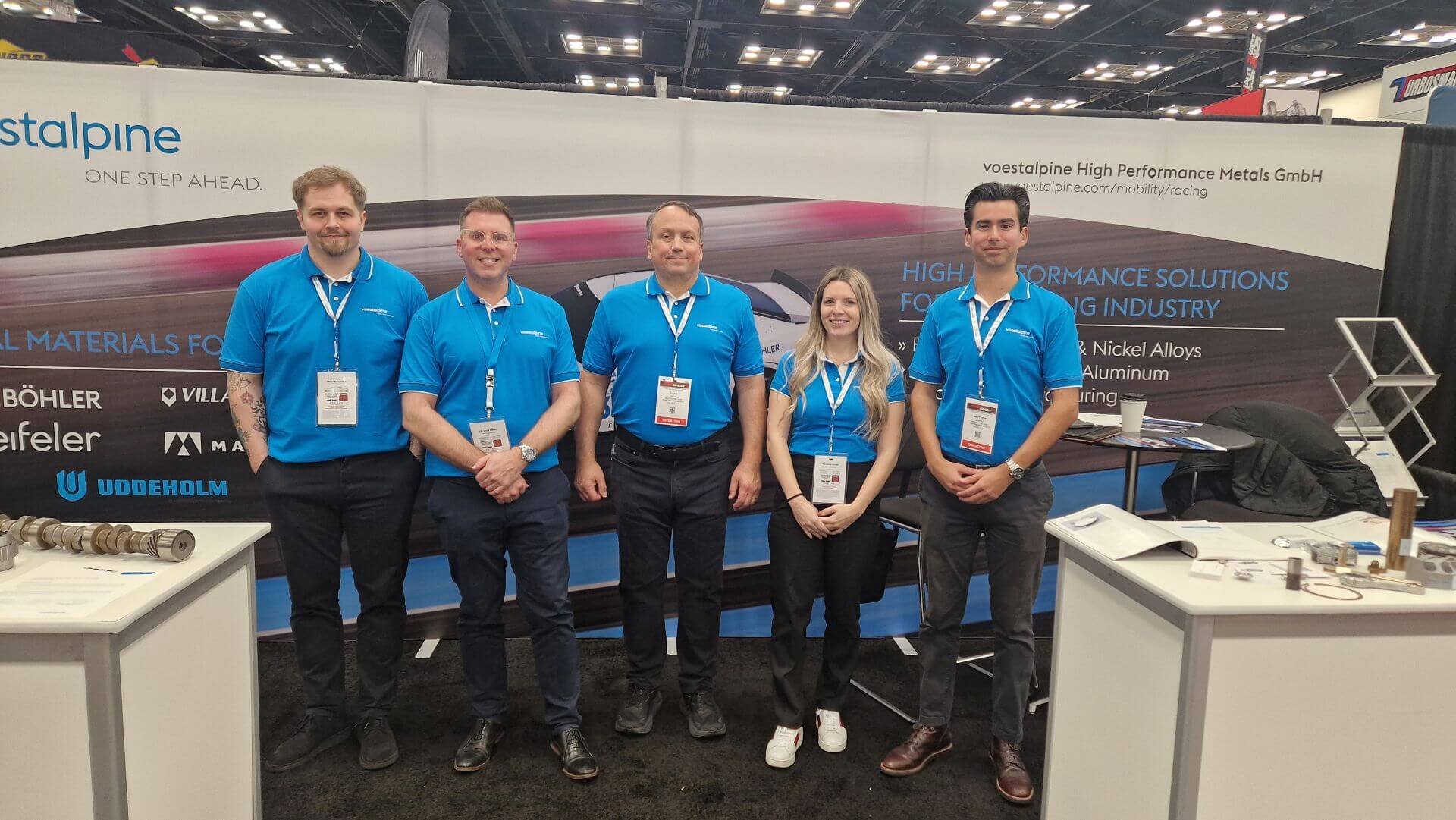
Featured image top: Stephen Price, Mark Atkins, Dave Krus, Tiffany Nistovic, Matthew Juarez.
Let’s talk about your next challenge
If you’re exploring materials upgrades, AM options, or durability improvements, we’d be glad to support your next steps.