Blow Molding
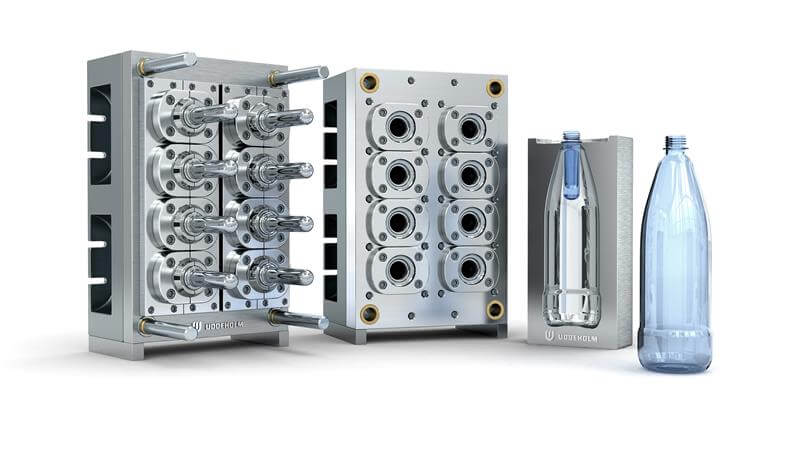
The Importance of Blow Molding
Blow molding is a widely used manufacturing process for producing hollow plastic parts such as bottles, containers, tanks, and ducts. It plays a vital role in packaging, automotive, consumer goods, and industrial applications.
The advantages of blow molding include:
• High-volume production of lightweight, hollow parts
• Cost-efficient tooling for medium to large runs
• Design flexibility for complex shapes and integrated features
• Fast cycle times for packaging and structural components
Why Blow Molding Tool Steel Selection Matters
Blow molding tooling, such as molds, neck inserts, and cutting components, must perform reliably in environments where abrasion, heat, and corrosive gases are common. The choice of tool steel directly impacts:
• Mold durability and longevity
• Surface finish and product consistency
• Resistance to wear and erosion
• Downtime and tool maintenance costs
What Makes an Excellent Blow Molding Tool Steel?
Whether from Uddeholm or BÖHLER, blow molding tool steels must balance mechanical performance with resistance to wear and corrosion. Ideal properties include:
• Abrasion resistance for filled or recycled plastics
• Corrosion resistance to handle aggressive polymers and gases (e.g., PVC, halogenated compounds)
• High toughness to withstand impact and pressure from the molding process
• Thermal conductivity to support efficient cooling
• Good machinability for ease of mold fabrication and repair
• Surface finish quality suitable for consumer and industrial-grade products
Available in large block sizes and custom configurations for mold frames, inserts, and ancillary tooling:
- Uddeholm Corrax
- Uddeholm Mirrax 40
- Uddeholm Stavax ESR
- BÖHLER M310 ISOPLAST
- BÖHLER M303 ISOPLAST
- BÖHLER M333 ISOPLAST
Contact us for general inquiries
Fields marked with * are mandatory.