inSPire
Reading time: 8 minutes
Driving Circular Economy at HPM: Understanding the Key Metric
Numbers are clear and unambiguous—right? When it comes to “recycled content” as an important sustainability indicator, there is plenty of room for interpretation due to different calculation methods. In this article, we explain why numbers are not always what they seem and how we at HPM validate the proportion of recycled material in our products.
The reuse of materials plays an essential role in sustainability. Raw materials should be kept in circulation for as long as possible in order to conserve resources, avoid waste, and reduce emissions. An important indicator to measure this is commonly referred to as “recycled content,” which represents the proportion of recycled materials in a product. Recycling is also one of our central sustainability goals in the context of inSPire, our framework sustainability concept at HPM. We have therefore been working together with our production companies voestalpine BÖHLER Edelstahl GmbH & Co KG, Uddeholms AB, and Villares Metals S.A. to develop a standardized calculation method for measuring recycled content at the corporate level.

Systematic, transparent, unambiguous
At HPM, we are noticing growing demand from customers for verified figures on the recycled content of steel products. This is because verified metrics provide greater clarity and make it easier for all stakeholders to understand exactly what lies behind these figures. We have therefore developed our calculation methodology in accordance with the ISO 14021:2016 and EN 45557:2020 standards. This enables us to carry out a systematic and transparent assessment of the average annual recycled content at company level. We share this value with our customers and other stakeholders to support informed environmental decisions and to raise awareness about circular economy principles and responsible resource use.
Achieving Comparability: ISO-Based and Externally Verified Method
Even though internally defined KPIs are essential for steering our own sustainability efforts, externally verified figures also remain important for ensuring comparability across the industry. Even if a figure is claimed to be based on an ISO standard, it only becomes truly reliable once it has been verified by an independent third party. Therefore, to ensure highest possible transparency and clarity, we have undertaken an external review of our calculation methodology in accordance with the ISO 14021 and EN 45557 standards. Following an extensive evaluation process by the sustainability experts at Daxner & Merl, voestalpine High Performance Metals GmbH and its three subsidiaries, voestalpine BÖHLER Edelstahl GmbH & Co KG, Uddeholms AB, and Villares Metals S.A., received the external review statement in November 2025. This statement marks the successful completion of the assessment of our calculation methodology.
Method 1: ISO and EN-based recycled content
Our calculations are based on the recycled metallic materials used in our products. While other materials such as coke or slag binders are also part of our processes, the calculation of recycled content focuses exclusively on the metallic input materials in our products. In accordance with ISO 14021:2016 and EN 45557:2020, the following input materials are considered in the calculation of the recycled content:
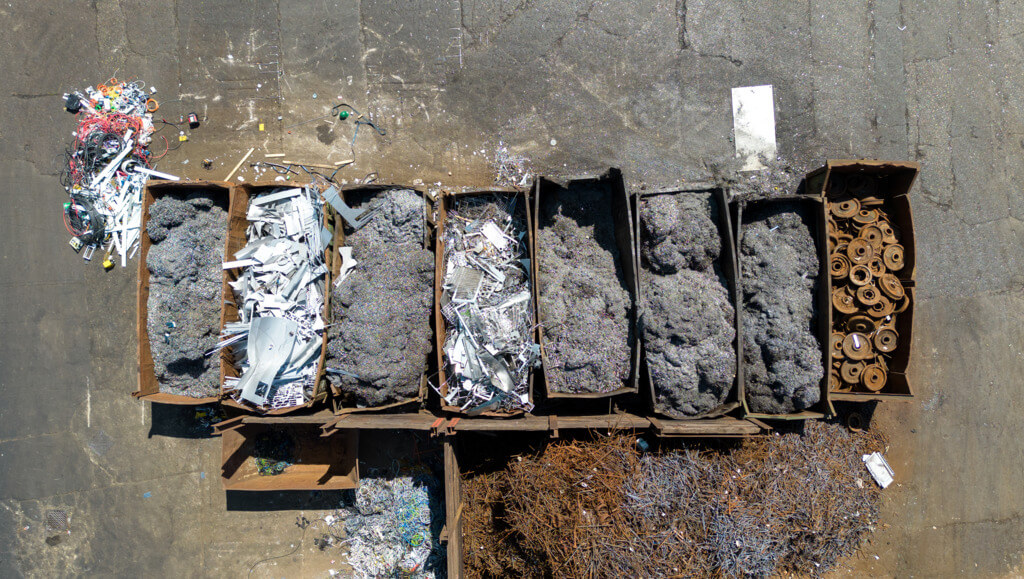
- Pre-consumer scrap: Material from downstream manufacturing processes. e.g., material generated during cutting or finishing
- Post-consumer scrap: Material from downstream end users of the product that can no longer be used for its intended purpose, e.g., steel tools (or parts thereof) from HPM returned for recycling.
- Secondary raw materials: Such as grinding sludge, are also used as recycled components in the product.
Internal scrap, as defined by ISO, is excluded from classification as recycled material. ISO standards describe this as scrap produced during manufacturing up to the point where the liquid metal solidifies and then remains as a solid. Since this material can be remelted in the same production process without any pre-treatment, it is not considered recycled content according to the ISO requirements.
Although the EN 45557 standard was originally developed for energy-related products, most of its principles also apply to non-energy related products for the assessment of recycled content. We therefore use the EN 45557 standard as a supplement to the ISO 14021 guidelines for self-declared environmental claims to ensure that our methodology is transparent and complies with recognized European and international standards for circular economy and material efficiency.
Method 2: Recycling rate based on recycled scrap and other secondary raw materials
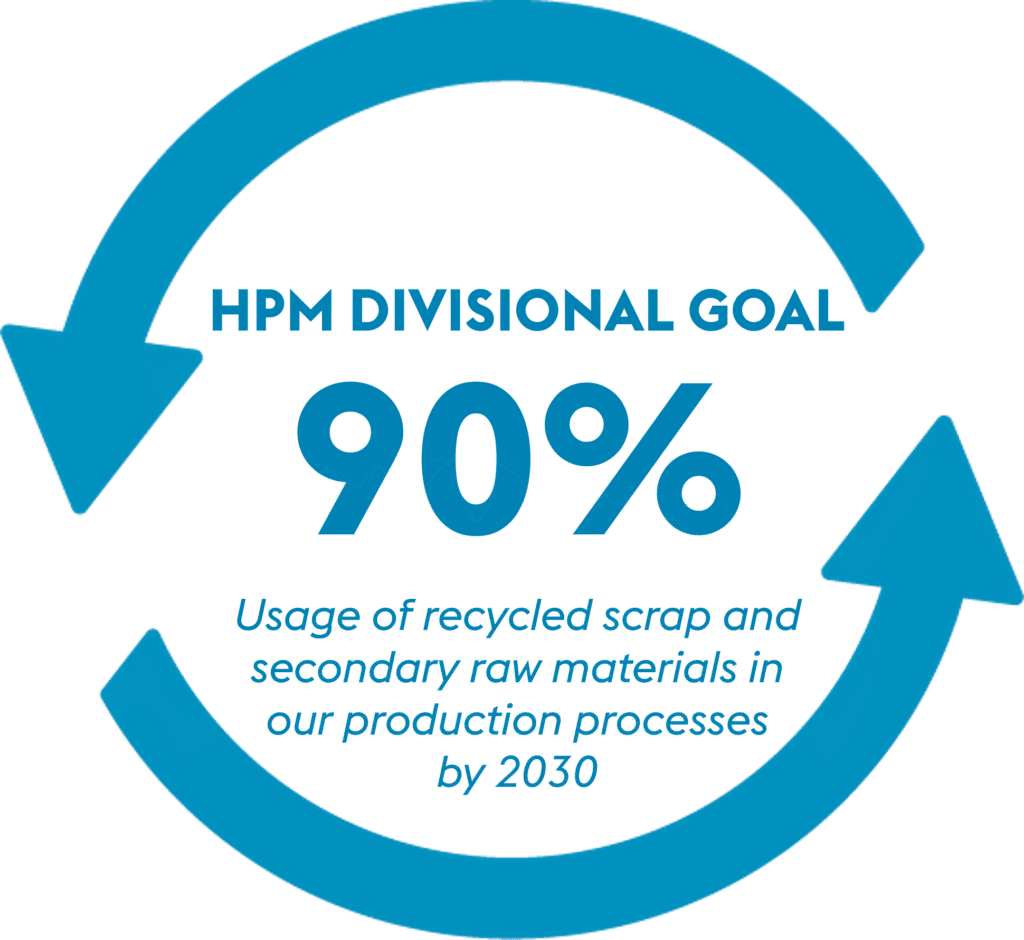
While the ISO-based calculation provides comparable figures, it does not account for internal scrap, which remains an important component of our sustainable production processes guided by circular economy principles. To reflect a more holistic view of our initiatives, we apply a second calculation method at HPM “Use of Recycled Scrap and Secondary Raw Materials”. In addition to the materials considered in the ISO-based calculation, this methodology also includes the utilization of internal scrap. We have set ourselves the ambitious goal of using more than 90% recycled scrap and secondary raw materials in our production processes division-wide by 2030. In doing so, we aim to conserve resources and reduce our dependence on new primary materials in our production processes. This will reduce the carbon footprint of our products and improve security of supply in the supply chain.
The rule of thumb: higher complexity, lower recycled content
A key factor influencing the proportion of recycled content is the material composition: the more complex and specialized a product, the harder it is to recycle. For example, in glass manufacturing, mixing colored glass with clear glass prevents producing pure white glass. Similarly, each of our high-performance materials relies on a carefully balanced mix of alloying elements that ensures optimum performance but adds complexity to recycling. Steel with lower alloy content can incorporate more recycled material than high-alloyed steels. Another limitation is the availability of clean and well-sorted scrap to meet technical specifications. Therefore, the achievable recycled content of a product depends on both scrap availability and technical quality requirements. As a rule, high-quality specialty products tend to have a lower recycled content than low-alloy products, and figures may also vary by production site and specialization. At HPM, we have set ourselves the clear goal of gradually increasing the recycled content of all products up to the technical limits.
The goal: to continue to inspire
We attach great importance to communicating our sustainability initiatives transparently. Our ISO-based and externally validated calculation method for our recycled content brings even more comparability, clarity, and transparency to our figures. The calculation method currently available at the company level will therefore be rolled out at the product level in the next steps. In this way, we want to work with our suppliers and partners to play an even more targeted role in shaping today’s important transformation processes.
