
ABP Surface Treatment
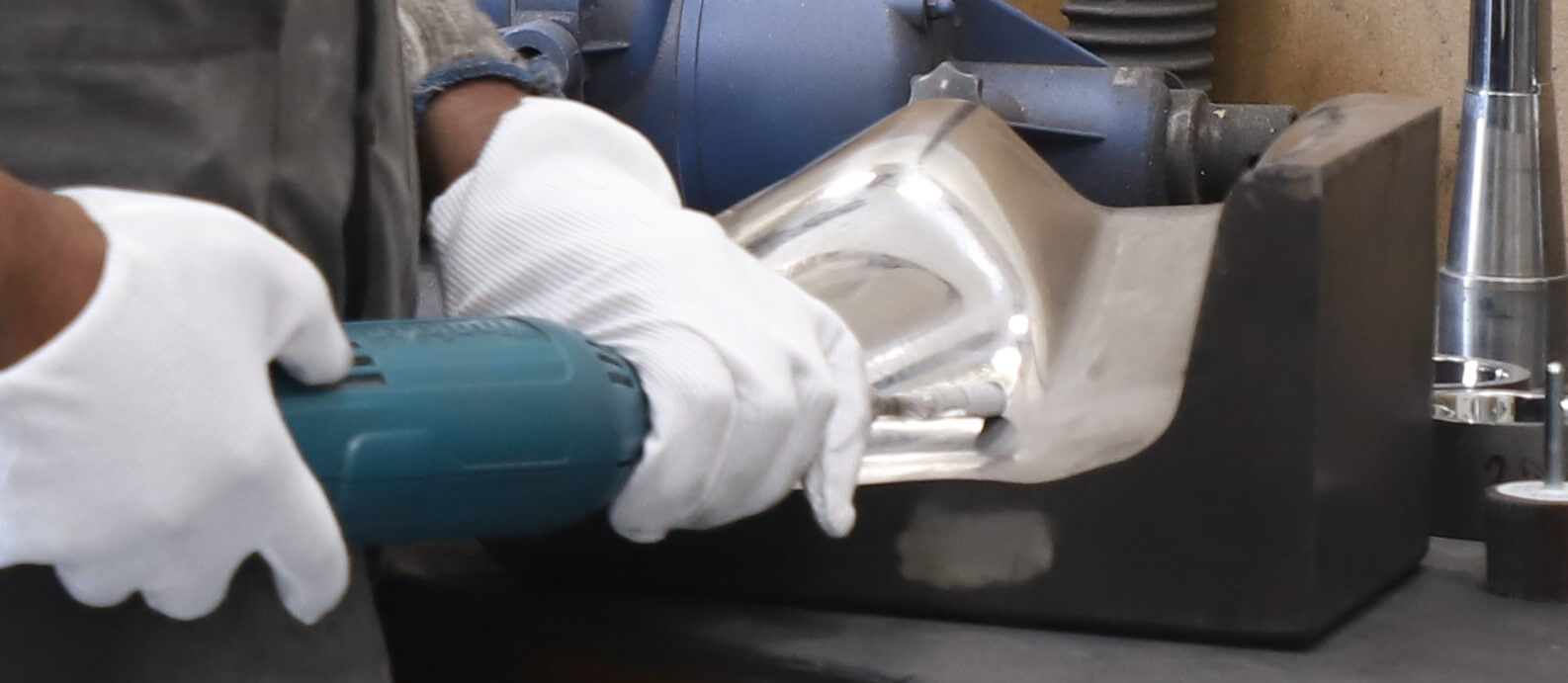
Surface Polishing
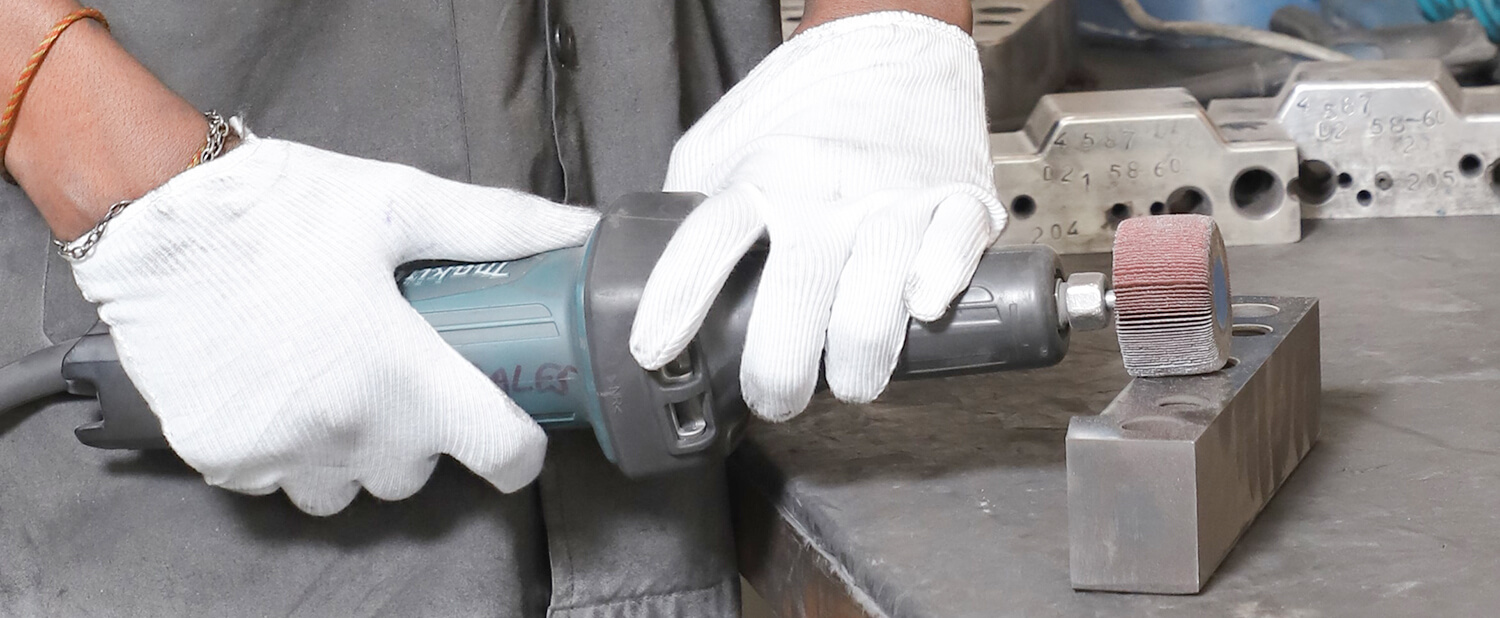
Surface Polishing
ABP and Polishing

ABP Surface Treatment
Our ABP surface provides our customers the best possible solution to overcome premature failures as a result limiting fatigue factors. Our ABP surface treatment process will improve the surface properties by increasing
- fatigue resistance
- surface hardness
- delayed heat checking
- good surface finish and
- resist stress corrosion cracking.
The principle of ABP surface treatment is the induction of compressive stresses by impinging tool steel surface with steels shots. As a result, it creates good surface engineering properties on the profile of the dies.
These compressive stresses will work with the higher fatigue limit and later nullify and progress to the tensional mode.
Duration of this raised stress on the negative side with high yield proportionality of the surface will be beneficial in terms of life cycle increase.
We are proud of taking responsibility of our customers production process and becoming an integral part of their production cycle. The ABP surface treatment is also provided by our esteemed brand BÖHLER and Uddeholm.
These compressive stresses created through ABP will work with the higher fatigue limit and later the normal progression to the tension mode. Due to the time delay it will give the opportunity to operate complex profiles having high thermal gradient which cannot be controlled even by the optimum design of internal cooling.
Duration of this stress at the negative side with high proportional yield of the surface will be beneficial in terms of life cycle increase.
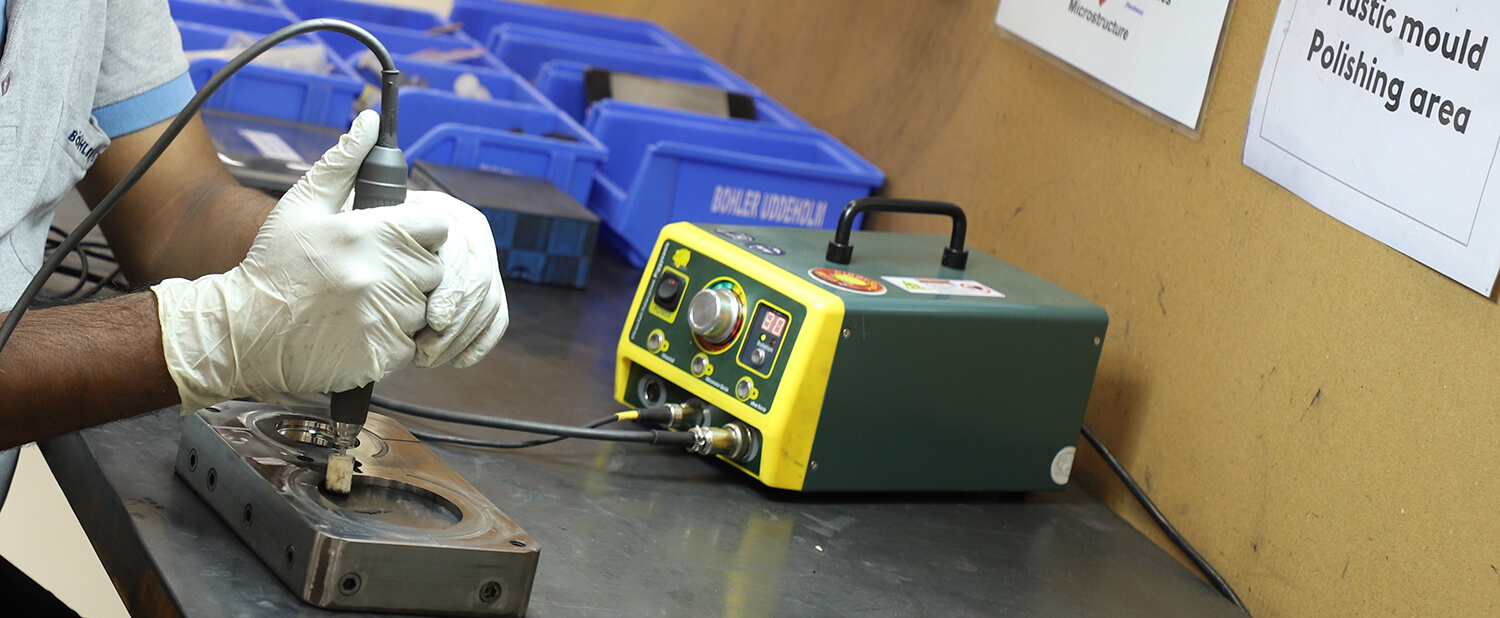
Surface Polishing
Polishing
Surfaces polishes are a coating-preliminary work which are carried out in our own polishing departments.
Innovative technologies and processes within our Polishing departments are associated with the standard for achieving the highest quality results.
Polishing Methods
Depending on the application and requirements we can distinguish between two types of surface finishing methods
- High Gloss
- Functional
High Gloss Finish
Tools for plastic molding do require a high surface finish especially when extreme transparency and / or high gloss are aimed for.
As a result it, less the risk of local corrosion and cracking or cracking due to temporary over loading our pure fatigue.
The high surface finish tool also has an impact on productivity as in case of injection molding.

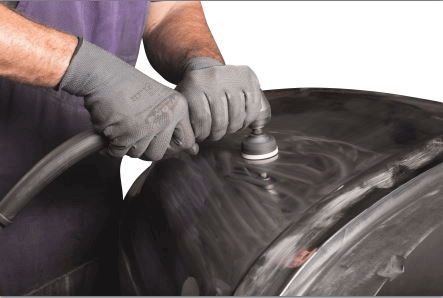
Functional Finish
Most cold work applications do not need high gloss polished tool surfaces, but it is always advantageous to create functional surfaces for an extended tool life.
Frequently Asked Questions About Our Surface Engineering Services
1. Why should I choose PVD coating for plastic injection moulds?
PVD coating for plastic injection moulds significantly improves wear resistance, corrosion resistance, and release properties. It reduces friction, minimizes maintenance, and extends mould life, making it an ideal solution for manufacturers seeking higher productivity and lower tooling costs. voestalpine offers advanced PVD coating solutions for a wide range of plastic mould applications.
2. What are the benefits of Duplex Treatment for plastic mould tooling?
Duplex Treatment combines plasma nitriding with PVD coating to create a harder, more durable mould surface. This process enhances load-bearing capacity, reduces wear, improves corrosion resistance, and increases mould life, especially for high-volume plastic injection moulding applications.
3. Which industries benefit from surface engineering services for plastic moulds?
Surface engineering solutions are widely used in automotive, medical devices, packaging, consumer goods, electronics, food processing, and home appliance manufacturing. These industries rely on coated moulds to achieve superior surface finish, longer tool life, and consistent production quality.
4. How does mould polishing improve plastic injection mould performance?
Professional mould polishing reduces surface roughness, improves part release, enhances product appearance, and minimizes production defects. High-quality polishing is especially important for transparent, high-gloss, and precision plastic components used in automotive, medical, and consumer applications.
5. How do I select the right surface engineering solution for my plastic mould?
The ideal surface engineering solution depends on factors such as mould steel grade, plastic material, production volume, operating conditions, and wear requirements. Experts evaluate your application to recommend the most suitable solution, including PVD coating, Duplex Treatment, or polishing, for maximum tool performance and durability.
6. Where can I get professional surface engineering services for plastic injection moulds in India?
voestalpine High Performance Metals India provides comprehensive surface engineering services, including PVD coating, Duplex Treatment, ABP, and mould polishing for plastic injection moulds. These value-added services help manufacturers improve tool performance, reduce downtime, and increase production efficiency through a single trusted partner.
CONTACT US FOR MORE INFORMATION: