Sustainable: travel well with voestalpine
- 5
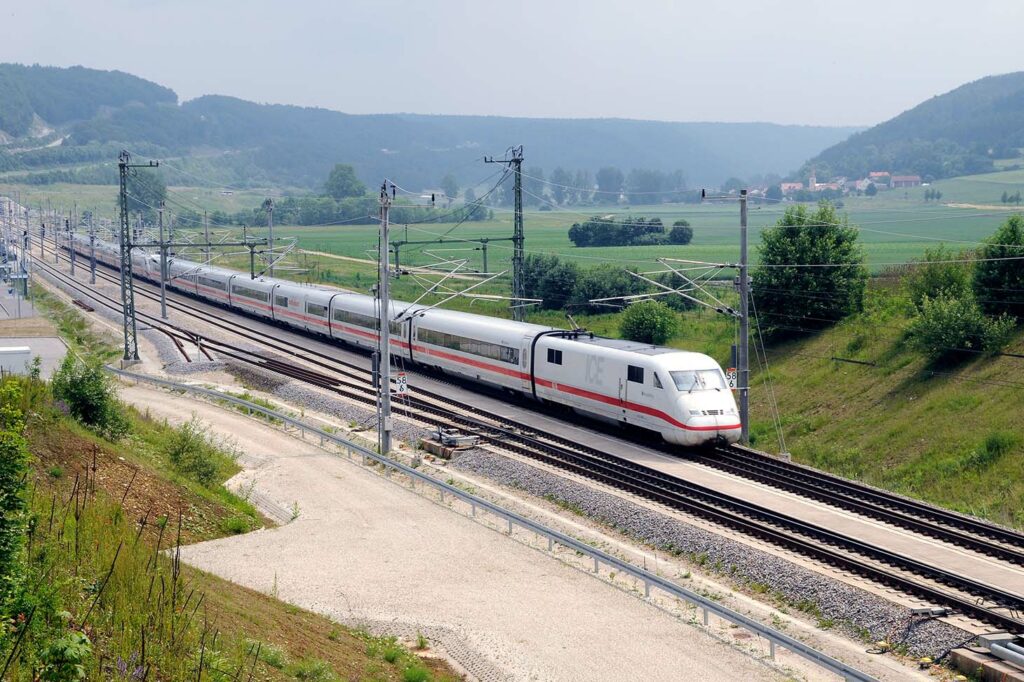
Vacation to Venice? For a one-way trip from the voestalpine site in Linz to the lagoon city, the ÖBB ticket provides the following information: “Your CO2 savings: 116.1 kg”. CO2 emissions are avoided with every kilometer of railway travel, making the railways the clear winner when it comes to the sustainable transport of both passengers and goods.
The Austrian Federal Environment Agency has calculated the environmental savings for every kilometer of domestic railway travel:
With its Rail Technology, Turnout Technology, and Signaling profit centers, as well as its Track Solutions Competence Center, the voestalpine Railway Systems Group ensures that railway services always have the operational technology they need. And with their global footprint, the Group supplies the premium rails, turnout structures, signaling technology for infrastructure and rolling stock, and services needed for the provision of reliable railway services.
Rail connections generate sustainability benefits—a fact that is reflected in the upgrading and expansion of railway systems worldwide. The African Union’s highly ambitious Master Plan 2033, for example, envisages 19 trans-Africa rail routes with a total length of almost 17,000 km. In some African countries, voestalpine technology is being used in the construction and expansion of national networks. One example is the Ghana Railway Co, whose Eastern Railway Line Project is beginning to transform the West African state’s railway infrastructure into a modern railway network.
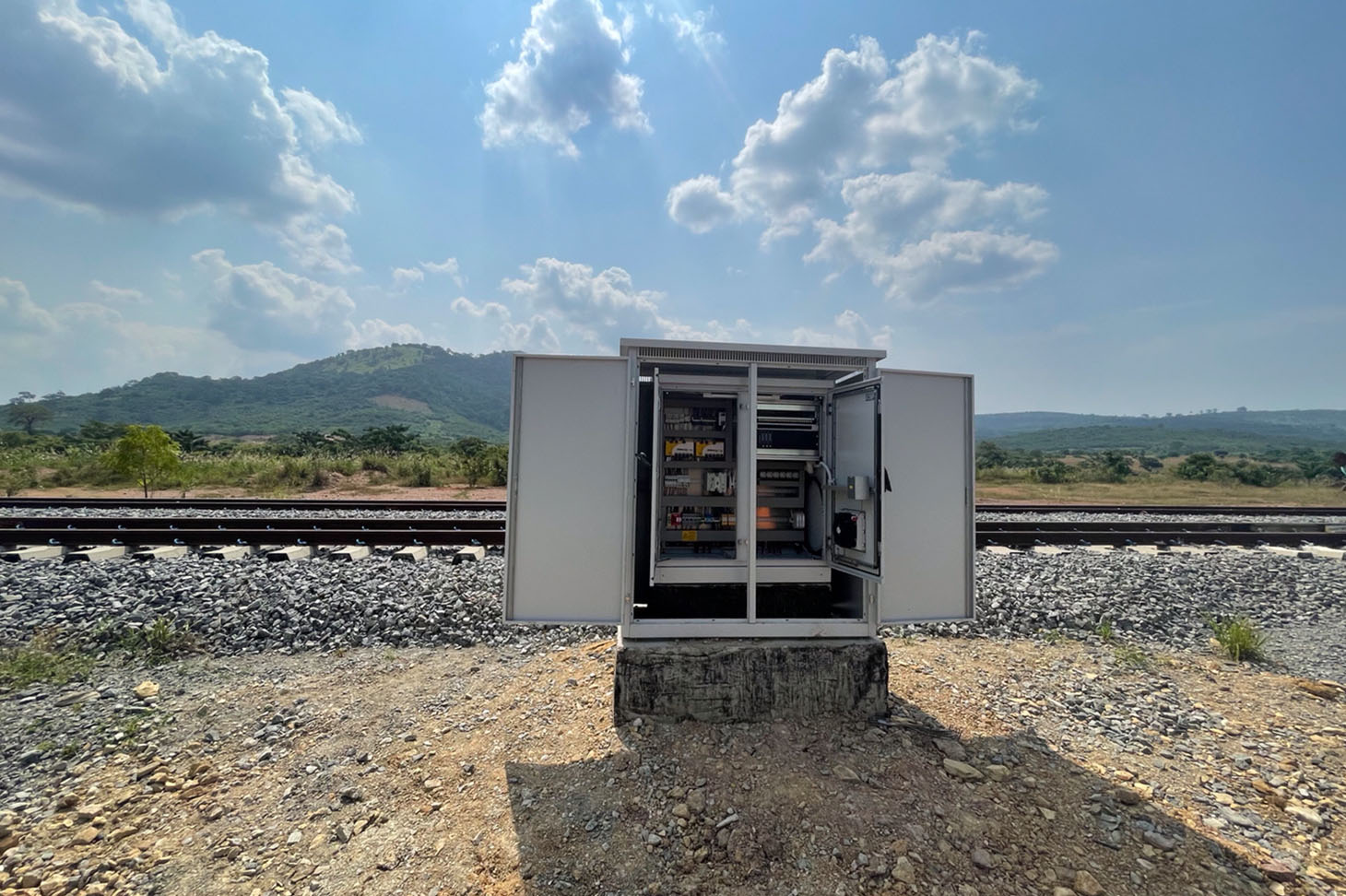
Back in 2018, voestalpine companies presented their services at the 1st Austrian Railway Seminar in Accra, the capital of Ghana. One of those companies was voestalpine SIGNALING Sainerholz GmbH.
The century-old line from Accra to Kumasi is currently being upgraded from a one-meter track to the wider standard track, increasing its permissible axle load by more than 80%. “This makes it much more attractive to switch freight traffic from the road to the railway,” confirms Holger P. “Our modern control and safety technology is ensuring that it is safe to increase the permissible speed for passenger and freight traffic, from 56 km/h to 120 km/h and 100 km/h respectively.”
The reliability of railroad tracks depends heavily on their superstructure. This includes the ballast, the rails, and especially the sleepers. For decades, railroad companies have been increasingly replacing traditional wooden sleepers with concrete sleepers; the German railway operator (DB) already estimates that 81% of the sleepers in its network are now made of concrete. Modern prestressed concrete sleepers also contain a voestalpine product: prestressed steel wire.
A stable superstructure is a prerequisite for safe railway traffic. More and more railway operators are increasingly relying on prestressed concrete sleepers, especially on higher priority lines. These durable and low-maintenance concrete heavyweights are found where high speeds of over 200 km/h or higher axle loads place heavy stress on the tracks—and they contain wire from voestalpine Wire GmbH.
Wire performs the same function in sleepers as in larger prestressed concrete elements, such as those used in bridge construction. Prestressed concrete elements have the advantage of being able to absorb higher tensile stresses, allowing prestressed concrete sleepers to achieve a service life of up to 45 years.
Prestressed concrete sleepers, including special designs for turnouts, are produced by voestalpine Railway Systems subsidiaries in North America and Europe including
One thing is certain: without turnouts there would be no complex railway systems. It is the ability to switch from one track to another that makes large-scale, flexible networks possible. For a turnout to function properly, it needs more than a thousand individual parts. These parts must be manufactured with precision and their interaction accurately monitored, a challenge that voestalpine Railway Systems GmbH meets with a high degree of reliability.
Wind and weather, maximum loads, and high speeds: turnout drives and locking devices must withstand the toughest operating conditions. They need to work reliably under all conditions in order to ensure track availability—the cornerstone of railway traffic.
An “onboard ECG” provides helpful functions for voestalpine Railway Systems turnouts. It extends planned maintenance intervals when functions are intact, ensuring continuous track availability; in the event of early signs of a fault, precise monitoring ensures timely troubleshooting without unforeseen track closures. The production of modern turnouts at voestalpine has also been thought through in terms of sustainability. “The production and working life of our turnouts generates one-third fewer CO2 emissions than the industry standard,” says Christian A., an employee in System Solutions Development at voestalpine Railways Systems GmbH, emphasizing the additional sustainability effect of the turnouts from the Austrian site in Zeltweg.
For decades, voestalpine has been the environmental and efficiency benchmark for the industry. We focus on sustainability out of conviction, not because it is the trend. We provide information on which sustainability criteria and standards we follow, on how we are continuously improving our carbon footprint, and about the innovative, sustainable products and solutions we develop for our customers in order to make the world a little better.
Die voestalpine ist ein weltweit führender Stahl- und Technologiekonzern mit kombinierter Werkstoff- und Verarbeitungskompetenz. Die global tätige Unternehmensgruppe verfügt über rund 500 Konzerngesellschaften und -standorte in mehr als 50 Ländern auf allen fünf Kontinenten. Sie notiert seit 1995 an der Wiener Börse. Mit ihren Premium-Produkt- und Systemlösungen zählt sie zu den führenden Partnern der Automobil- und Hausgeräteindustrie sowie der Luftfahrt- und Öl- & Gasindustrie und ist darüber hinaus Weltmarktführer bei Bahninfrastruktursystemen, bei Werkzeugstahl und Spezialprofilen. Die voestalpine bekennt sich zu den globalen Klimazielen und verfolgt mit greentec steel einen klaren Plan zur Dekarbonisierung der Stahlproduktion.