Corporate Blog
voestalpine AG
Electric Mobility – #FavoriteMoments With Sustainable Driving

Electric Mobility – #FavoriteMoments With Sustainable Driving

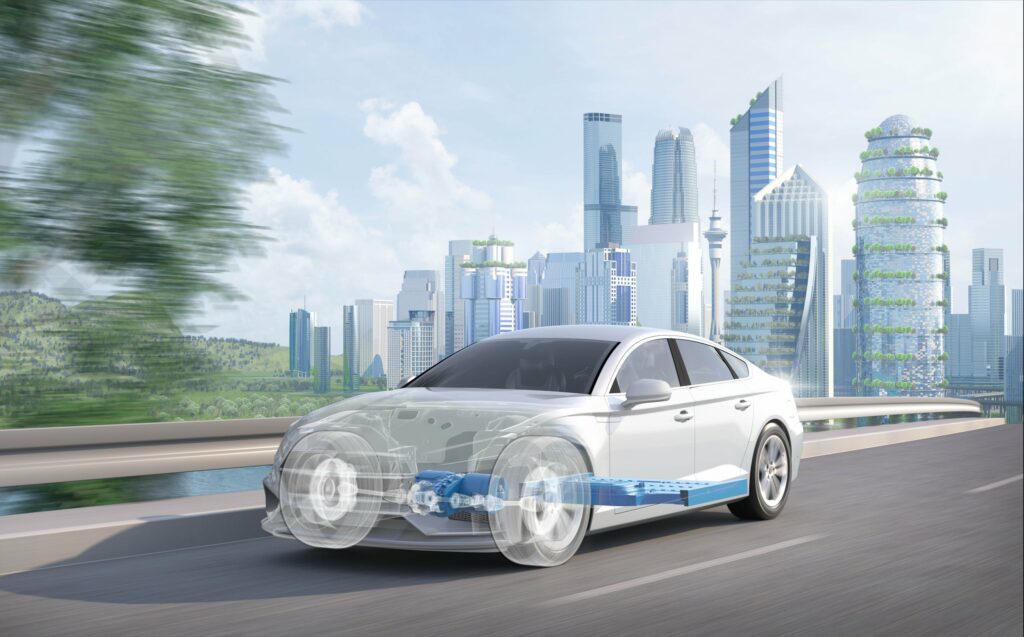
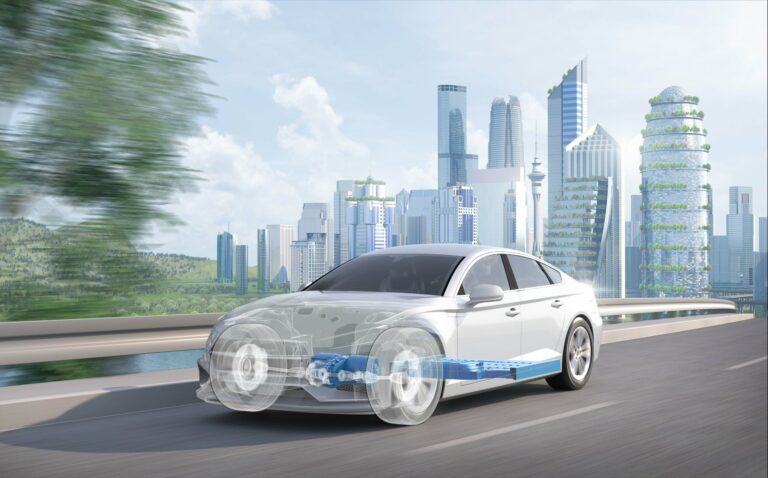
Illustration of a semi-transparent e-car driving on a road in front of a futuristic skyline
In this article
 

In the automotive world, the 20th century was the age of the internal combustion engine. The 21st century is increasingly shaped by electric mobility. The advantages in terms of driving experience, efficiency, noise levels, and environmental impact are appealing to more and more people. Demand and incentive programs are driving the global advancement of sustainable electric vehicles.

Woman stands beside an electric vehicle using her smartphone while the car charges at a charging station in a modern parking garage.

The Focus on Electric Vehicles: The Battery

Battery technology is one of the most important factors in the further development of electric cars. Primarily because of this, electric cars initially produce more CO2 during manufacturing than internal combustion engine vehicles. However, significantly fewer emissions are produced during driving, so that over their entire life cycle—taking into account the electricity mix in Europe—electric cars emit about 70 to 75% less CO2 than comparable vehicles with internal combustion engines. According to ICCT , the higher emissions from battery production are offset after only about 17,000 km of driving.

Steel Products in Modern E-Mobility

The potential of steel in e-mobility lies in weight reduction, recyclability, and cost-effectiveness, as the highlighted in study “The Role of Steel in Electromobility”, presented in March 2019 at the Handelsblatt Annual Conference.

The Drive System

From electrically assisted hybrid vehicles to all-electric vehicles—generators equipped with components made from electrical steel provide the necessary electrical energy. Depending on the drive type and power output, between 50 and 100 kg of this soft magnetic material is used for this purpose. With our isovac® electrical steel, we supply a key component for electric mobility. The advantages: excellent magnetizability, outstanding stampability, and minimal losses during remagnetization.

Nearly one in five electric cars manufactured in Europe is now powered by voestalpine electrical steel.

Stefan K.
Sales Manager for the Electrical Industry
Visualization of a modern electric vehicle cockpit with digital displays, a head-up display, and intelligent assistance and connectivity features.

Isovac® for Gen6

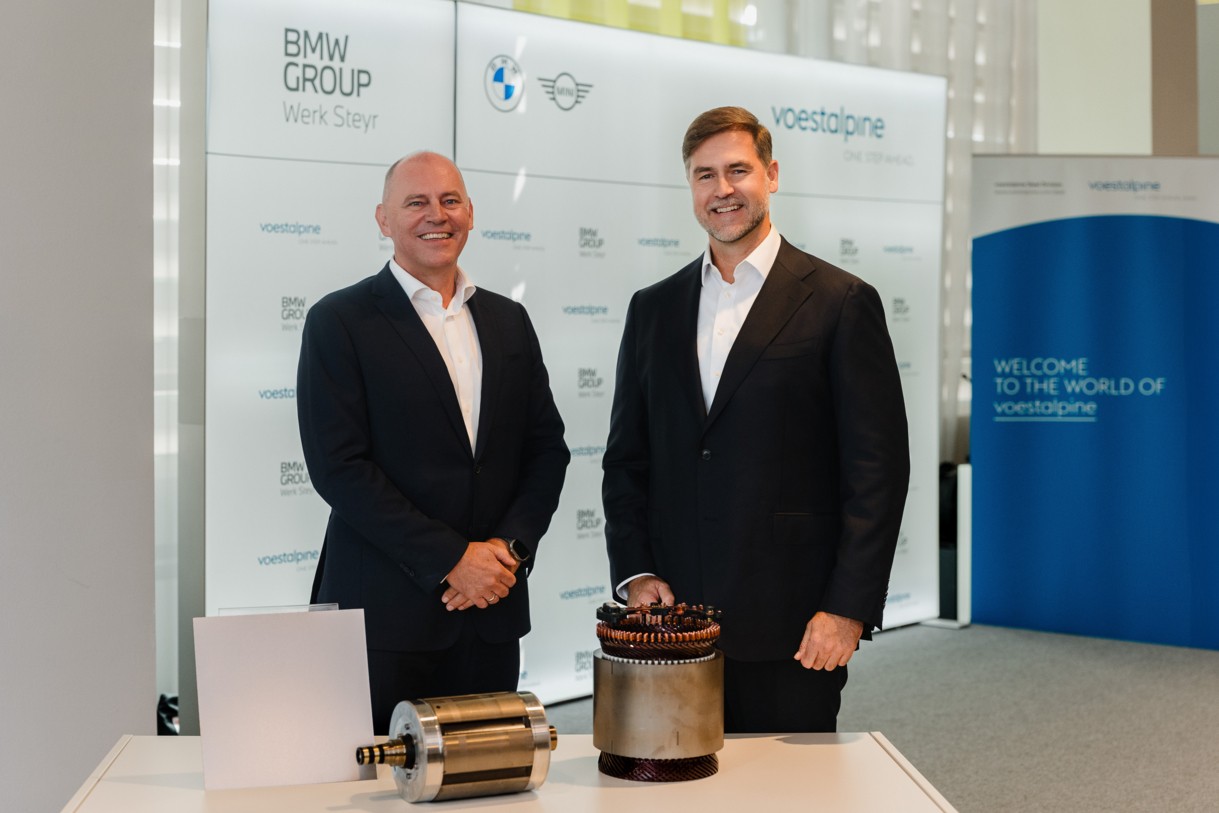
The BMW Group plant in Steyr is relying on our highly innovative isovac® electrical steel for the next generation of electric powertrains. Combined with state-of-the-art coating technology, this premium-quality material forms the core of the rotors and stators in the highly efficient Gen6 electric motor. isovac® not only increases the efficiency of the Gen6 electric motor but also enables longer ranges and better acceleration.

Two company representatives in front of a BMW Group and voestalpine backdrop, with electric motor components displayed on a presentation table.
Hubert Zajicek, Member of the Executive Board of voestalpine AG and Head of the Steel Division (left), with Klaus von Moltke, Managing Director of the BMW Group Steyr Plant (right)

Protection for the Electric Heart: The Battery Box

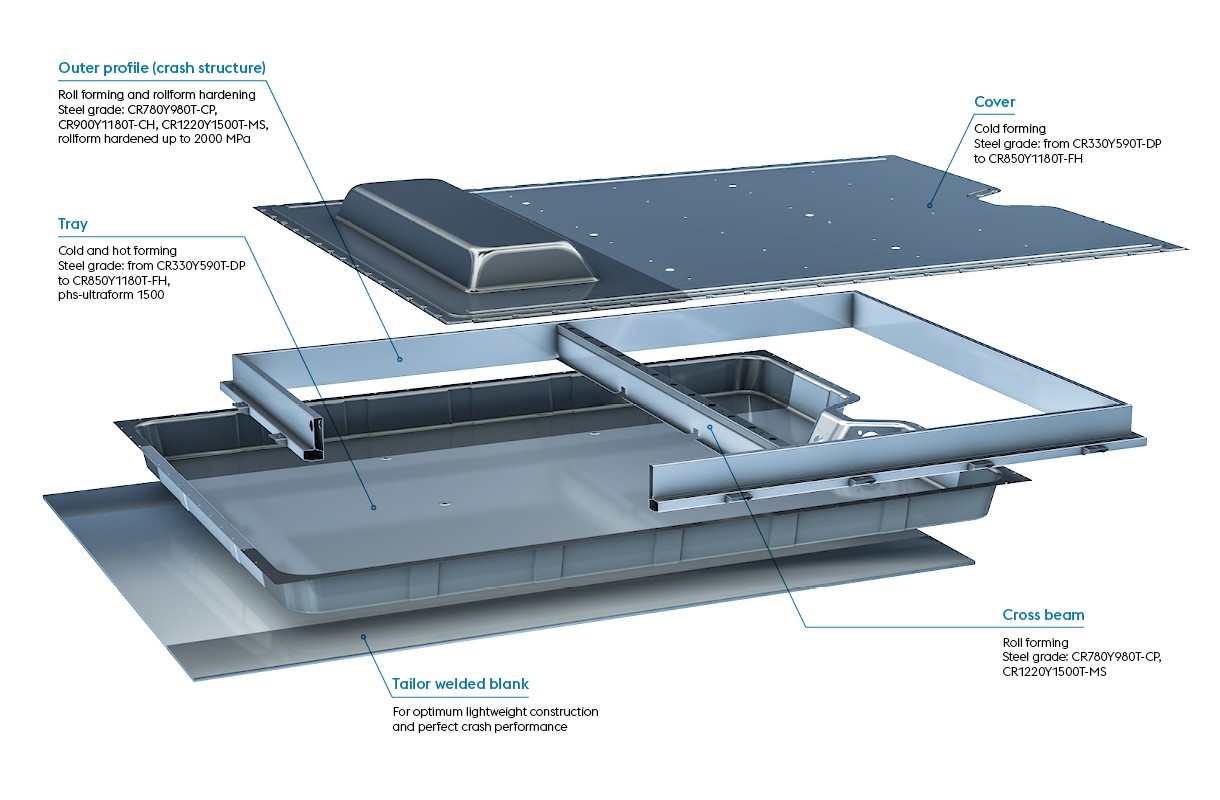
Battery boxes must meet high standards: They must be crash-resistant on all sides and fire-safe. At the same time, they should be as lightweight as possible, cost-effective in every respect, and straightforward to manufacture. Our battery box stands out as a complete solution in all performance tests conducted and protects the heart of e-mobility safely and reliably.

Exploded view of an EV battery housing with outer profile, cover, tray, cross beam and tailor welded blank components made from high-strength steels.

Bertrandt Scalable Battery Box powered by voestalpine

In collaboration with the engineering specialists at Bertrandt, we have also developed a scalable battery box with a steel housing that sets new standards. The innovative Battery Box complies with the ECE-R100 standard. It is designed for high-volume vehicle segments and meets modern sustainability requirements.

Solder for Battery Systems

Special solders for the e-mobility sector are used, for example, in the resistance brazing of battery systems and drive components. We also manufacture aluminum brazing rings and preforms for joining aluminum tubes in air conditioning systems, battery modules, electric motors, power electronics, and passenger cabins.

Increasing Range Through Lightweight Construction

Our ultralights products, as well as our press-hardened steel components (phs) and laser-welded blanks, make electric cars lighter. This reduces energy consumption, increases range, and can shorten charging times. At the same time, they offer superior crash safety compared to other lightweight materials. These high-strength lightweight steels are used, among other places, in the body, the battery housing, the chassis, and safety-critical structural components, as well as in weight-saving electric drivetrains and rotor shafts.

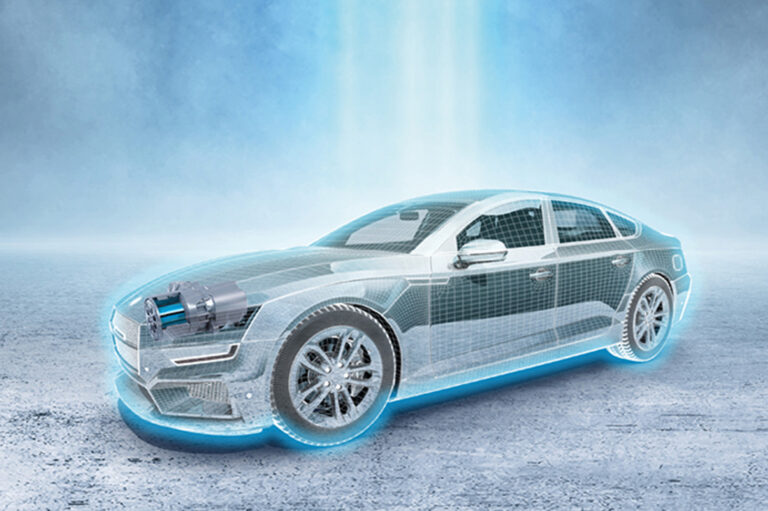
Illustration of an electric car driving through a modern green city, with a transparent view of the battery and electric drivetrain.

In automotive engineering, the 20th century was the age of the internal combustion engine. The 21st century is increasingly shaped by electric mobility. With electrical strips for their motors and drive components, high-strength lightweight steels—including those used to protect the battery core of electric cars—and innovative solders, we support automotive production facilities and suppliers in advancing electric mobility safely and economically—for the benefit of people and the environment.

  • Electric motors convert a significantly larger proportion of the energy input into motion than internal combustion engines. Due to combustion and moving parts such as pistons and valves, internal combustion engines generate more noise than electric motors and are therefore more prone to malfunctions. Electric cars can feed energy back into the battery during braking, which is not possible with conventional internal combustion engines. Electric cars offer smooth and direct power delivery, whereas internal combustion engines experience power losses due to gear shifts and as engine speed increases.

Share article
Picture of voestalpine AG

voestalpine AG

Die voestalpine ist ein weltweit führender Stahl- und Technologiekonzern mit kombinierter Werkstoff- und Verarbeitungskompetenz. Die global tätige Unternehmensgruppe verfügt über rund 500 Konzerngesellschaften und -standorte in mehr als 50 Ländern auf allen fünf Kontinenten. Sie notiert seit 1995 an der Wiener Börse. Mit ihren Premium-Produkt- und Systemlösungen zählt sie zu den führenden Partnern der Automobil- und Hausgeräteindustrie sowie der Luftfahrt- und Öl- & Gasindustrie und ist darüber hinaus Weltmarktführer bei Bahninfrastruktursystemen, bei Werkzeugstahl und Spezialprofilen. Die voestalpine bekennt sich zu den globalen Klimazielen und verfolgt mit greentec steel einen klaren Plan zur Dekarbonisierung der Stahlproduktion.