-
 Notizie ed EventiIscriviti alla nostra newsletter
Notizie dal mondo della filodiffusione

Welcome to Wire Insights, the podcast from voestalpine Wire Technology. Listen to our sixth episode on the topic of "Deep dive into our core products cold heading steel grades and prestressing wire".
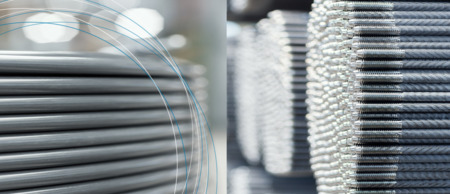
In the sixth episode of Wire Insights, we focus on two key product areas: cold heading wire and prestressing wire. These wire products are essential for applications that require maximum precision, strength, and reliability - from the automotive industry to large-scale infrastructure projects.
Our guests are two experienced experts from the company:
Be part of the future of the wire industry – innovation begins with knowledge! Listen now!
(00:00 - 01:25)
Welcome to Wire Insights, the podcast of the latest developments, innovations and trends at voestalpine Wire Technology. From cutting-edge materials to sustainable production processes. Experience exciting insights into current projects that are revolutionizing the industry and find out how innovations made of wire are changing the world.
Whether you are a technology enthusiast, an industry professional or just curious about the future, this podcast is for you. Tune in and join us. Welcome back to Wire Insights, your go-to podcast for deep dives into the world of voestalpine Wire Technology, innovation and engineering excellence.
In today's episode Wire Excellence, a deep dive into our core products of cold heading steel grades and prestressing wire. We are exploring two highly specialized and impactful topics. These materials are essential in applications where strength, precision and reliability are non-negotiable, from automotive components to large-scale infrastructure projects.
To help us understanding more about these fascinating materials, we are joined by two experts from voestalpine Wire Technology.
(01:20 - 01:55)
First, a warm welcome to our guests, Mr. Uwe Tertinek. It's great to have you with us. Could you please introduce yourself and tell us about your background and your role?
Hello and thanks for inviting me. I'm really happy to be here. So, as an Application Engineer, I'm responsible for supporting our customers with any technical questions they might have.
I studied material science at the Montanuniversität in Leoben and joined the company back in 2012. I spent six years working in research and development before switching to Application Engineering in 2018.
(01:56 - 01:25)
And also joining us today is Mr. Dieter Kalcher. Welcome to Wire Insights. We'd like to hear about your journey and what you do at voestalpine Wire Technology.
Also a warm welcome from my side. I started as an apprentice at our site in Bruck an der Mur over 35 years ago. After many interesting tasks, some of which were also outside of Bruck, I had the opportunity three years ago to take on the team leadership for sales and application engineering, also for our construction products and thus also for prestressing steel wire.
(02:33 - 03:48)
Mr. Tertinek, what areas of application are there for cold heading steels?
Cold heading steels are one of the most important product groups for our business unit. They are used everywhere in our daily life where precise, durable and often complex shaped components are required. Such as different kind of screws, fasteners and anchors. So typical application areas include industries like automotive, mechanical engineering, household appliances, so-called white goods, the energy sector and last but not least the construction industry.
In general, cold heading steels are used wherever good surface quality and high formability are required. Additionally, their strength increases through cold forming which is particularly relevant for the final component and its intended use. Beside the classic and well known steel grades, we also have so-called AFP grades in our standard product portfolio.
AFP stands for Advanced Ferritic-Perlitic. Those micro-alloyed steels do not require heat treatment to achieve desired properties. So they are ideal for high strength parts that are typically quenched and tempered after forming.
(03:49 - 05:14)
What properties make cold heading steels particularly suitable for the manufacture of precision components? There are quite a few very important requirements and properties of cold heading steels. First, they have a high cold formability. They are able to undergo extensive plastic deformation without cracks or fractures.
This requires high purity and a uniform microstructure. Especially important for multi-stage forging processes that are widely used in the industry is a good toughness. The material must remain ductile and not become brittle and needs uniform mechanical properties.
Very important as well is a good surface quality. A uniform smooth surface is necessary as even minor surface defects can lead to cracks during forming and thus to material failure. Steels are often supplied with phosphate soap and or polymer coatings to reduce friction during forming steps, which also positively affects tool life.
Due to customer production processes, cold heading steels must meet very tight tolerances and high shape accuracy. So in short, cold heading steels must offer a perfect balance between good formability and specifically adjusted high strength, while also ensuring excellent surface quality and dimensional accuracy.
(05:15 - 07:45)
How does the production process for cold heading steels differ from other types of steel and what advantages are there in terms of production within voestalpine Wire Technology? Special requirements in the production of cold forming steels include for example a very precise chemical composition with narrow limits.
Tight tolerances for elements like carbon, manganese, sulfur and phosphorus are important for good formability. Also important is a very low level of non-metallic inclusions, as inclusions can cause cracks during cold forming. The wire rolling process itself involves precise temperature control and targeted cooling to produce a fine-grained homogeneous microstructure.
Here I also want to refer to the podcast with Mr. Kienreich, where he explains the benefits of thermomechanical rolling in detail. At our site here in St. Peter-Freienstein we perform so-called GKZ annealing, meaning annealing for spheroidized cementite. This reduces wire strength and improves formability.
When it comes to the advantages of cold heading steels we deliver as voestalpine Wire Technology, I want to point out especially our high purity steel quality. Our raw material supplier voestalpine Stahl Donowitz produces steel with the state-of-the-art secondary metallurgy. This ensures high purity and thus excellent formability.
The wire rolling mill in St. Peter-Freienstein can deliver very tight tolerances across a wide range of wire diameters, the basis for a trouble-free process in forming machines. There is an ongoing R&D project aiming to launch a phosphate-free alternative to traditional phosphating. This saves the customer a cleaning step and improves the CO2 footprint of the product.
We as voestalpine Wire Technology offer a fully integrated process chain from the steel mill to the drawn wire, everything from a single source. This minimizes potential errors and ensures consistent quality. Our unique R&D infrastructure with the Techmet and the Wire Technikum provides the basis for continuous development and product quality improvements.
And of course we focus heavily on CO2 reduced production, for example the green steel initiative at voestalpine. At the end of the day, this makes cold-heading steel greener.
(07:46 - 09:44)
Before we move on a big thank you to Uwe Tertinek for the valuable insights and perspectives you've shared with us today. Now let's turn our attention to a topic that's fundamental to structural engineering.
Pre-stressing steel wire. Dieter Kalcher is here with us and he brings a wealth of experience in this area. Mr. Kalcher could you walk us through what makes prestressing wire so essential? What role does pre-stressing steel wire play in the modern construction industry and what advantages does it offer?
Pre-stressing steel puts the concrete in the structure under pressure, thus limiting the tensile stresses that occur and therefore the cracks in the concrete. Concrete is generally very resistant to compression but is more sensitive to tensile stresses. The pre-stressing steel is also responsible for absorbing dynamic stresses, for example in concrete slippers.
Okay, how is the quality and strength of pre-stressing steel wire ensured? The quality of pre-stressing steel wire begins with the use of qualified high carbon wire rod as the starting material. The tensile strength of the pre-stressing steel wire produced is determined by the diameter of the wire rod and the individual cold deformation steps in the drawing and stabilizing process. In addition to the high tensile strength with correspondingly good ductility, the stabilization process also achieves very low relaxation of the pre-stressing steel wire.
This means that the prestressing steel wire can permanently maintain the pre-stressing force applied in the concrete of structure. And the stabilization process also ensures that the wire is very straight when in use.
(09:45 - 10:41)
What challenges and trends do you see in the future for the use of pre-stressing steel wire and what solutions does voestalpine Wire Technology offer?
Prestressing steel wires are always divided into tensile classes according to existing standards and approvals.
One noticeable trend is certainly the development towards higher tensile strength in the same diameter range. Furthermore, we are also noticing the trend from classic concrete construction. So this is prestressing steel wire anchored in concrete towards the use of pre-stressing steel wire in wind energy.
Prestressing of concrete wind towers with external pre-stressing. In this case, the pre-stressing steel wire is located outside the concrete as an external tendon to tension the individual concrete segments of the tower together.
(10:42 - 11:03)
Thank you for the comprehensive insights. It's always enriching to dive so deeply into your areas and your expertise. And that brings us to the end of this episode of Wire Insights with Uwe Tertenek and Dieter Kalcher. Thank you to our guests for joining us today.
It's been a pleasure hearing your thoughts and experiences.
(11:04 - 11:37)
Before we wrap up, we'd like to hear what's currently keeping you busy. Any exciting projects or ideas you're working on that you'd like to share with our listeners? Mr. Kalcher first.
Of course, I think we have a very interesting project. We are currently working on a large stay cable bridge project in Taiwan. Designed by Zaha Hadid Architects and we are supplying the strand products for this project.
I would also like to take this opportunity to thank the entire team that makes it possible for us to realize such large projects.
(11:38 - 12:12)
And what projects are you currently working on, Mr. Tertenek?
As an Application Engineer, I'm in contact with many customers from various industries. But what is important for all of them and for our future in general is resource saving and CO2 reduced production throughout the entire process.
Therefore, the upcoming conversion of our steel base to EAF is of course a topic that accompanies me every day. Thank you. That wraps up this episode of Wire Insights with Uwe Tertinek and Dieter Kalcher.
(12:13 - 12:37)
A big thank you to our today's guests for sharing your expertise and perspectives. Your insights truly sparked some powerful conversations. And to our listeners, thanks for tuning in.
We've got something exciting lined up for next time. So stay curious and stay connected. Until then, take care and keep exploring the world of voestalpine Wire Technology.
Uwe Tertinek explains that cold heading steels are used wherever complex-shaped, durable, and precise components are required -such as screws, fasteners, and anchors. Typical areas of application are the automotive industry, mechanical engineering, household appliances, energy technology, and construction.
Particularly noteworthy are the high cold formability, uniform microstructure, and excellent surface quality of these steels. They must meet tight dimensional tolerances and exhibit high dimensional accuracy to meet the requirements of modern manufacturing processes. He also emphasizes the importance of AFP (Advanced Ferritic-Perlitic) steels, which do not require heat treatment and are ideal for high-strength components.
In the production process, voestalpine Wire Technology relies on precise chemical composition, low non-metallic inclusions, and thermomechanical rolling. GKZ annealing (GKZ = annealing to spherical cementite) at the St. Peter-Freienstein site further improves formability. Particular attention is paid to the high purity of the steel used, supplied by voestalpine Stahl Donawitz, as well as to innovative developments such as phosphate-free surface treatments to improve the CO₂ balance.
Uwe Tertinek emphasizes the importance of resource-saving and CO₂-reduced production, especially in view of the upcoming conversion to electric arc furnaces (EAF) at voestalpine.
Cold heading steels are used wherever fasteners and screws are used, whether in the automotive, construction, energy or appliance industries. Excellent formability, uniform mechanical properties and tight diameter tolerances are essential. With modern processes such as thermomechanical rolling and our AFP grades, we enable not only high quality but also resource-saving processes - all in the interest of our customers.
Dieter Kalcher introduces us to the world of prestressing steel wire, which plays a key role in modern construction. Prestressing puts concrete under pressure, reducing tensile stresses and thus cracks. Prestressing steel wire is also capable of absorbing dynamic loads, such as those that occur in concrete sleepers.
Quality begins with the selection of high-carbon wire rod. Targeted cold forming and stabilization achieve high tensile strength combined with good ductility. Another advantage is low relaxation, which ensures that the prestressing force is maintained permanently. Stabilization also contributes to the straightness of the wire, which is crucial for the application.
He sees future trends in the development of higher tensile strengths with the same diameter, as well as in new areas of application such as wind energy. Particularly exciting is external prestressing in concrete towers, where the wire runs outside the concrete and braces the individual segments together.
Dieter Kalcher also talks about the delivery of tensioning products for a large cable-stayed bridge project in Taiwan.
Prestressing steel wire has become an integral part of modern engineering: it exerts pressure on the concrete in the construction element and thus reduces the formation of cracks - even under dynamic stress, for example in concrete sleepers in the field of infrastructure. Thanks to targeted forming processes and high-quality raw materials, we at voestalpine Wire Technology supply wire solutions with maximum strength, minimum relaxation and maximum reliability - also for new applications such as external prestressing in the wind energy sector.
Cold heading steels must have high cold formability, i.e., they must be plastically deformable without tearing. High purity, a uniform microstructure, and good toughness are crucial for this. In addition, excellent surface quality and tight dimensional tolerances are necessary to prevent material failure during multi-stage forming processes.
GKZ annealing (annealing to spheroidize cementite) is carried out at the St. Peter-Freienstein site and significantly improves the formability of the wire. It reduces the strength of the wire and ensures a fine-grained, homogeneous microstructure that is ideal for cold forming. GKZ annealing is, so to speak, a heat treatment that enables components to be formed at room temperature.
AFP stands for "Advanced Ferritic-Perlitic". These microalloyed steels do not require heat treatment to achieve their mechanical properties. They are particularly suitable for high-strength components that would normally require tempering, thus offering advantages in terms of process economy and sustainability.
Non-metallic inclusions such as oxides or sulfides can lead to cracks during forming. Therefore, a low proportion of such inclusions is essential for process reliability and tool life.
Tight tolerances and high dimensional accuracy are crucial for smooth further processing in forming machines. They prevent tool wear, material failure, and production interruptions.
The phosphate-free alternative saves a cleaning step and improves the product's carbon footprint. It reduces the use of chemicals and contributes to sustainability without negatively affecting formability.
It contains no heavy metals, reduces waste, improves surface quality, and increases productivity.
The tensile strength results from the selection of the raw material - high-carbon wire rod - as well as from the targeted cold forming and stabilization processes. These steps increase strength while ensuring good ductility and low relaxation.
Relaxation describes the loss of tension over time. Low relaxation means that the prestressing force applied to the concrete is permanently retained. This is crucial for the structural integrity of buildings.
A current trend is to increase tensile strength while maintaining the same diameter. In addition, prestressing steel wire is increasingly being used outside of concrete, for example in wind turbines, where external prestressing connects the individual concrete tower segments.
Wire Insights is the podcast for anyone interested in sustainable technologies, innovative production processes, and forward-looking developments in the wire and steel industry. Stay tuned for the next episode with more exciting insights from the world of wire technology!
