-
 Notizie ed EventiIscriviti alla nostra newsletter
Notizie dal mondo della filodiffusione

Welcome to Wire Insights, the podcast about the latest developments, innovations, and trends at voestalpine Wire Technology – from pioneering materials to sustainable production processes. Gain exclusive insights into current projects that are revolutionizing the industry and learn how innovations in wire are changing the world. Whether you are a technology enthusiast, an industry professional, or simply curious about the future, tune in to our fourth episode on "Sustainable excellence – premium quality with a low carbon footprint".
The wire industry is undergoing radical change – new technologies, strict climate targets, and rising energy costs demand real solutions rather than mere promises.
The fourth episode of Wire Insights is all about premium quality with a low carbon footprint. With exciting insights and clear objectives, we show how sustainability at voestalpine Wire Technology is not just a buzzword, but a reality.
Our experts Stefan Gasser and Matthew Galler discuss how voestalpine Wire Technology uses innovative technologies and sustainable processes to ensure the highest quality standards while minimizing its ecological footprint.
Be part of the future of the wire industry – innovation begins with knowledge! Listen now!
(0:00 - 1:25)
Welcome to Wire Insights, the podcast of the latest developments, innovations and trends at voestalpine Wire Technology. From cutting-edge materials to sustainable production processes. Experience exciting insights into current projects that are revolutionizing the industry and find out how innovations made of wire are changing the world.
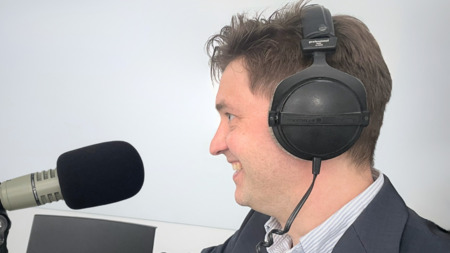
Whether you are a technology enthusiast, an industry professional or just curious about the future, this podcast is for you. Tune in and join us. Mr. Galler and Mr. Gasser, thank you for accepting our invitation and welcome to the new episode of the voestalpine Wire Technology podcast.
My name is Dieter Danko and today we dive into an exciting and forward-looking topic. Sustainable excellence, premium quality with a low CO2 footprint. We will discuss how voestalpine Wire Technology utilizes innovative technologies and sustainable processes to ensure the highest quality standards while minimizing the ecological footprint.
Mr. Galler and Mr. Gasser, before we delve into the technical topics, we would like to ask you to briefly outline the milestones of your professional career, Mr. Galler.
(1:26 - 3:35)
Gladly, thank you very much. The first milestone of my professional career was 20 years ago when I decided to move to Austria from the USA to get my PhD at the TU Graz in material science and engineering.
I even wrote my dissertation for voestalpine Linz on resistant spot welding of automotive sheet steel, and I had the chance to learn the voestalpine working culture for the first time. After my first employments at Material Center Leoben and Magna Powertrain, I started my voestalpine career in 2017 in research and development and innovation and product management in the area of material and product development. One of my first project leads was a cooperation with Material Center Leoben, the mining university of Leoben, as well as a key customer in the automobile industry and the title was development of new material concepts for thermal mechanically processed cold heading wires.
There was such good cooperation with this customer that we did further research on this topic and registered our first patent in the area of high strength and hydrogen resistant fasteners at the end of 2020. In 2022, I was nominated for the expert career path, and I received my expert title in material development for cold heading grade steels. Also in 2022, I had the opportunity to take and finish an educational program from the Deutsche Schraubenverband or the German screw organization and I received a new title Screw Specialist Engineer DSV and recently in 2025 the patent was accepted and now we are involved in the serial implementation phase as well as the marketing of the new product.
And now I'm currently involved in numerous R&D projects spanning across voestalpine divisions together with universities and research institutes as well as interdepartmental projects with application engineering, production, sales and finally with key development customers with the aim to ensure a seamless transition to EAF steel production in 2027. Thank you.
(3:36 - 4:46)
Mr. Gasser, what are the milestones of your career? Hello Dieter and thank you for having us today. My name is Stefan Gasser. I started working for voestalpine Wire Technology approximately 12 years ago after I finished my education as a mining and logistics engineer. For eight years, I collected experiences in the quality department before I got the chance to switch to the application engineering in 2021.
My job now is basically being the technical key account to the customer. We assess new projects, travel to the customers to see what they produce out of our wire and assist them with possible problems and also act as the connector to the steel mill. Last summer, I had the chance to become the manager of a project that will establish an optimized steel grade portfolio for our future and in the current green tech steel program, I'm responsible for coordinating all the trial productions and since this is the largest climate protection measure of Austria, I'm more than honored that I can make a contribution to it.
(4:47 - 7:05)
What specific measures is voestalpine Wire Technology taking to produce premium wire solutions with a low CO2 footprint? voestalpine Wire Technology offers a large portfolio of premium wire products to supply our customers in different market fields. Since we are quite automotive and energy focused, we are of course part of the current energy transition and confronted with a lot of customer demands regarding CO2 reduced steel. For this reason, voestalpine decided to build electric arc furnaces on their production sites and one of them is already under construction at voestalpine Stahl Donawitz in Leoben.
The existing blast furnaces that produce considerable amounts of CO2 will be shut down step by step in the next years, starting with the first one in 2027. To avoid green washing, it's also important of course to use sustainable electricity for the new arc furnaces. That's why we are also setting up an infrastructure accordingly and if you want to know about this, please listen to our previous podcast that focuses on the green transformation and the regarding project Roadmap to Zero.
Besides these activities at the steel mill, we also have to reconsider our existing steel grade and product portfolio. Simply explained, producing steel with the electric arc furnace method means using mainly scrap instead of smelted iron ores as a pre-material. According to the current state of technology, there are no environmentally friendly alternatives to produce new steel from iron ore in the required amount.
And since most European steel producers switch to the EAF route in the near future, high quality steel scrap will be definitely a sought-after product on the market. No one can really predict how the availability of scrap in different quality classes will be and how high the content of so-called trace elements that are brought into the steel from scrap impurities like copper cables will be. And this is a very important question that we have been investigating to prepare for the transformation.
(7:06 - 9:06)
Okay, Mr. Galler, how does the company ensure that its high product quality is maintained despite transitioning to more environmentally friendly production methods? For more than four years, we've been investigating within the framework of various R&D projects the most important questions regarding the EAF transformation. These questions are number one, what is the influence of increased scrap or more specifically increased tramp trace elements, which are unwanted elements such as copper, nickel, tin, moly, phosphorus, and sulfur on the product quality? And number two, how can we as a wire rod producer positively react to these changes in the steel chemistry either from an alloying perspective as well as from the processing side? The answer to these questions first begins with transparent communication, starting with our suppliers, voestalpine Stahl Donawitz, who inform us which elements can and cannot be removed during steelmaking and also to which extent. The open communication also extends to our end customers who define and set the required chemistry limits as well as the final mechanical technological properties of the end product.
It is well known that changes in steel chemistry will affect metallurgical and material science aspects of steel production, such as solidification, surface quality, heat treatment, and deformation, just to name a few. Thus, it's very important not to leave any stone unturned when investigating these influences of increased tramp trace elements. In other words, we have to look at each process step in detail along the entire supply chain, from steel melt processing, billet casting, wire rod hot rolling, cold drawing, and manufacturing of the end product by our customers.
So understanding these influences is essential to implementing the correct measures either with alloying or process changes to ensure the highest product quality is maintained with the most amount of CO2 saved.
(9:07 - 10:50)
Mr. Gasser, what role does the greentech steel program play in voestalpine Wire technology's CO2 reduction strategy and what goals are set for the year 2027? As Matthew mentioned before, we will have to deal with higher trace elements in the future that might have a negative impact on the material properties. Our clear target is to supply the same premium quality steel to our customers as we do now but with significantly less CO2 emissions.
In the past, many of our customers just used blast furnace steel that has just small amounts of trace elements and they optimized their processes to the limit of what's possible, so a slight change in the chemical composition coming from these trace elements could lead to production problems or even worse a loss of process capability. We need to assess carefully which scrap content is suitable for which customer or product and also which potential issues are going to arise. For some special products the 100% EAF scrap material might just not work and here our hybrid concept comes into play.
From 2027 on we will be able to offer not only 100% scrap material but also mixtures of scrap conventional blast furnace steel and hot briquette iron. Hot briquette iron is a directly reduced primary steel with approximately 50% less CO2 emissions. With this strategy we want to maintain the required quality and properties but with a significant CO2 reduction.
(10:51 - 13:08)
Back to you Mr. Galler, how does the integration of process models for automated adjustment of various process parameters contribute to the company's sustainability goals? Simply put, the integration of process models is essential to achieve our sustainability goals. Consider this, we have over 400 different steel alloys in our portfolio and we produce diameters from 5 to 55 mm at our rolling mill. Also, as you may already know, we have one of the world's most advanced rolling mills in St. Peter-Freienstein where we record a huge amount of important process data for each coil.
Additionally, we have the ability to adjust various parameters during hot rolling like for example the laying temperature and the cooling conveyor parameters which in turn determines the cooling rate of our wire rod and the cooling rate has a very big influence on the final microstructure and mechanical properties. So, as you can imagine, the large number of parameter adjustments and their resulting effects on mechanical properties and quality given the wide range of diameter and alloy possibilities can be extremely complex. By integrating process models however, we are significantly more efficient in improving our wire rod quality for the EAF transformation especially with the incorporation of big data analysis of production data.
Indeed, one of our current areas of focus is the development of AI-based machine learning models that leverage vast amounts of data from our rolling mill. This data serves as the foundation for a reactive alloying concept for automated chemistry adjustment aimed at improving future EAF production. We also utilize numerical simulation techniques to predict microstructural changes at elevated temperatures including phase transformations, carbide precipitation, and grain growth.
This enables us to fine-tune critical process parameters such as the finish rolling temperature to achieve the desired final microstructure in the Wire rod for example. So, overall, implementing these types of models will allow for the best possible wire rod quality combined with the maximum amount of CO2 savings for each alloy-diameter combination. Okay.
(13:09 - 15:00)
Mr. Gasser, what advantages do state-of-the-art research facilities such as Techmet and Metlab offer in the development of sustainable wire solutions? Well, there is one big problem with new inventions, tests, or trials in the steel industries. The minimum order quantity. If a customer wants to try a new steel grade, they usually have to order a full batch of 60 tons or even more.
But no one really wants to take the risk of throwing away 60 tons in case the trial doesn't work out as desired. In order to address this problem, we build a world novelty, the Techmet and the Metlab. The Metlab is a vacuum induction furnace and we use it to test the influence of different alloy additions on a laboratory level, meaning it produces five batches of approximately 12 kilogram each only.
While the Techmet enables a more realistic approach to alloy development and the production of prototypes at our end customers. It is basically a mini electric arc furnace that produces a batch size of only three tons and these three ton billets have exactly the same size as the standard billets from the big steel mill. The billet can then be rolled into our wire rod and further processed by our customers to the final product, like for example an engine screw or a ball bearing.
If customers want to try, if their production process and products are still going to work with higher scrap rates, we can produce a Techmet batch for them and simulate different scrap contents and scrap qualities by adding the trace elements intentionally. That's how we want to find the sweet spot between scrap content and product quality for all our valued customers.
(15:01 - 17:23)
How is voestalpine Wire Technology responding to the increasing demand from customers for CO2 reduced premium steel products, Mr. Galler?
Part of our strategy is we are dedicating time and effort together with key customers to identify future steel grades and demanding end products with the highest technical requirements. Within this context we provide with our Techmet facilities, as Stefan just mentioned, artificially alloyed future EAF compositions to these customers with high scrap content with the goal of identifying the main challenges in the processing and properties of the finished product. In this case, the customer feedback provides a valuable basis to guide our future steps with regards to understanding which steel grades allow for an easier transition and which require more attention from a metallurgical point of view.
Additionally, we are conducting R&D projects focused on developing new types of steels that can be produced without the need for costly and CO2 intensive process steps, such as soft annealing and final quenching and tempering heat treatments. In this case, the final properties are achieved alone with the wire rod mechanical properties plus cold deformation. Finally, we are in the development and testing phase of a new environmentally friendly wire coating solution.
Currently, most coatings rely on heavy metal carriers and a phosphate layer to create a surface that supports lubricants for cold heading processes and wire drawing. However, these coatings pose environmental concerns due to the use of heavy metals and phosphorus, which is a limited mineral resource that is crucial in everyday life as well as the fertilizer industry. We recently developed a coating agent that is free of heavy metals and phosphate while offering performance equal to or better than existing solutions during cold heading and Wire drawing.
The customer benefits in this case are clear. We achieve increased productivity, reduced waste disposal of coating residues, fewer product cleaning steps, and consequently a reduction in CO2 emissions. Additionally, by eliminating phosphorus, we enhance material properties because phosphorus can negatively impact the surface after heat treatment of cold heading products.
Overall, these new solutions offer several ecological advantages that can help customers improve their environmental footprint. Thank you for your expert insights. To conclude, we would like to take a brief look into your private life.
(17:24 - 20:05)
Do you personally implement sustainable initiatives and what is particularly important to you in this regard? Maybe Mr. Gasser first? In fact, I also started my personal transformation to a more sustainable life about three years ago when I decided to buy a hybrid car. After that, I also installed a wall box at home so that I can charge the car overnight and drive most of my ways in the electric mode. The next step was changing the heating system in my private office to an air condition, and you won't believe how efficient air conditions can be in heating up rooms.
And I also installed a heat pump in our house in Leoben. To round off the whole situation, of course, I also bought a photovoltaic system that is already laying around in my garden waiting to be installed. So, with a few exceptions, when I drive longer distances, I'm on a really good way to live a climate neutral life.
And finally, a brief look into your private life, Mr. Galler. So, sustainability is also very important for me. And some of the things that I do to make sure I live a sustainable life is things like shopping locally at farmers markets, as well as trying to stay in season.
This reduces the plastic waste from shopping, as well as other CO2 related transport costs. I also enjoy spending time in nature, foraging for mushrooms and edible plants. I also ride bicycle a lot and take the train whenever possible.
And finally, I'm involved in different environmental preservation activities through my hobbies as well as through my fishing club. Okay, thank you very much for the interesting insights into your areas of expertise. And thank you for sharing your private initiatives with us as well.
I believe that our listeners now have a good overview of the topic sustainable excellence, premium quality with a low CO2 footprint. That's it for this episode of Wire Insights. Thank you for tuning in and diving into the world of voestalpine Wire Technology and sustainable technologies with us.
We hope you gained valuable insights and look forward to welcoming you back in the next episode. Until then stay curious and committed to a greener future.
The demands placed on modern materials are increasing - not only in terms of performance and precision, but also in terms of their environmental footprint.
voestalpine Wire Technology is meeting this challenge with a clear goal: premium wire solutions with the lowest possible carbon footprint.
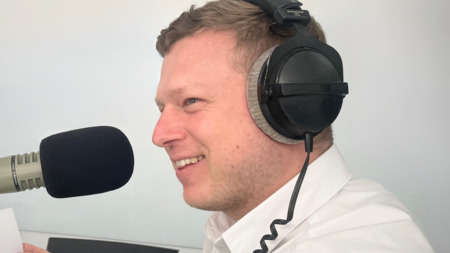
In this interview, Stefan Gasser, application engineer and project manager in the green transformation division, explains how the company is putting this claim into practice.
We talk about:
By integrating process models and big data analyses of our production data, we are significantly improving wire rod quality in the course of EAF transformation. AI-based models enable automated chemical adjustment and form the basis for a sustainable alloy concept.
The steel industry is facing a profound transformation - away from CO₂-intensive processes and toward sustainable production methods. But how can this transition be achieved without compromising product quality?
In this conversation, Matthew Galler, an expert in materials development at voestalpine Wire Technology, provides insights into the strategic and technological measures the company is taking to meet the challenges of the green transformation.
We talk about:
To ensure the highest product quality with maximum CO₂ savings, we analyze every step of the process along the supply chain—from melting to the final product—and focus specifically on alloy and process optimization.
Via the Metlab (laboratory batches with 12 kg) and Techmet (prototypes with 3 t), which enable realistic tests with new alloys and scrap content.
Metlab allows laboratory tests with small batches, Techmet produces realistic prototypes with 3 tons that can be processed directly - ideal for simulating scrap contamination.
They minimize the risk of new alloys, as customers do not have to order 60 t to test new materials.
Through machine learning based on production data, numerical simulations to predict microstructural changes and automatic adjustment of alloy parameters.
Customers receive prototypes with specific alloys, test them and provide feedback that flows directly into further development.
It determines mechanical properties, corrosion behavior, formability and suitability for specific applications such as cold heading or ball bearings.
Through simulation, AI-supported alloy customization and testing with Techmet prototypes to achieve optimal properties without additional heat treatment.
New products that are particularly resistant to mechanical stress and hydrogen embrittlement thanks to special alloys and process control.
They influence solidification, surface quality and forming behavior. In EAF steel production, their effects must be closely examined and controlled.
A mixture of EAF scrap and HBI (hot briquetted iron) that reduces CO₂ while ensuring material quality - especially for sensitive products.
It involves higher trace element contents, which affects metallurgical processes and end products - new alloying and process strategies are therefore necessary.
Laying temperature, cooling strip parameters, cooling speed, alloy composition and final rolling temperature.
Efficient quality improvement, CO₂ savings, fast response to material changes and better prediction of microstructure behavior.
It is central to further development - customers test prototypes and provide feedback that flows directly into new solutions.
Through hybrid concepts, individual scrap proportions, simulations, prototypes and advice on process capability.
To predict microstructural behaviour, phase transformations, grain growth and carbide precipitation - for targeted process optimization.
Through big data analyses, AI models and automated control of process parameters.
By analyzing production data to optimize alloys, cooling strategies and mechanical properties.
They enable automatic adjustment of the chemistry based on production data - for stable quality despite scrap contamination.
Using numerical models to predict microstructural development at different temperatures and alloys.
Temperatures, cooling rates, alloy data, coil parameters - for process control, quality control and simulation.
In an electric arc furnace (EAF), steel scrap is melted using electric arcs. Three graphite electrodes generate temperatures of up to 15,000 °C to liquefy the preheated scrap within approximately 30–40 minutes. HBI (hot briquetted iron) is added as needed. At the end of the process, the molten steel is tapped at around 1,600–1,700 °C.
Wire Insights è il podcast per chiunque sia interessato a tecnologie sostenibili, processi produttivi innovativi e sviluppi lungimiranti nell'industria del filo e dell'acciaio. Attendete con ansia il prossimo episodio con ulteriori interessanti approfondimenti dal mondo della tecnologia del filo!
