-
 News & EventsSubscribe to our newsletter

News from the world of wire

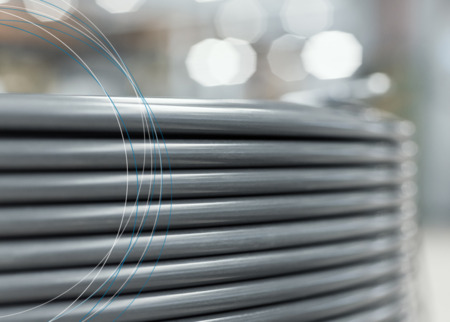
Whether screws, fasteners, anchors, or other precision components: cold heading steels are used wherever complex geometries, high load-bearing capacity, and cost-effective manufacturing are required. Typical applications can be found in the automotive industry, mechanical engineering, household appliances, energy technology, and the construction industry.
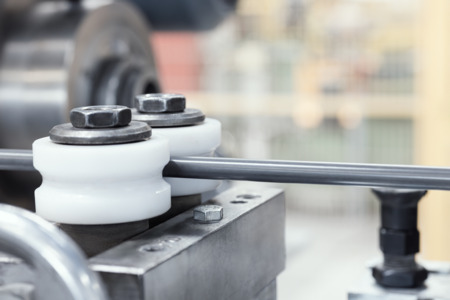
The key factor in the success of cold heading wire is its ability to withstand high levels of plastic deformation without cracking or material failure. Especially in multi-stage forming processes, materials must remain reliably processable even with complex component geometries.
Several properties are crucial for this: high steel purity, a homogeneous microstructure, uniform mechanical properties, and excellent surface quality. Even the smallest surface defects can lead to cracks during forming and compromise component quality. At the same time, tight diameter tolerances and high dimensional accuracy ensure stable and reproducible production processes.
The prerequisites for successful cold forming are established as early as the production of the raw material. A precise chemical composition and the lowest possible content of non-metallic inclusions contribute significantly to achieving the required formability. In addition, modern production processes such as thermomechanical rolling ensure targeted microstructural control and create optimal conditions for further processing. Furthermore, GKZ annealing (annealing to spherical cementite) further improves formability and facilitates the production of complex component geometries.
In addition to traditional cold-work steel grades, AFP (Advanced Ferritic-Perlitic) steels are becoming increasingly important. These micro-alloyed materials offer high strength and, depending on the application, can help reduce or eliminate the need for subsequent heat treatments.
This simplifies process chains, saves energy, and reduces manufacturing costs. Especially for fasteners subjected to high stresses, AFP steels open up new possibilities for combining cost-effectiveness with component performance.
Cold heading steels are used wherever fasteners and screws are used, whether in the automotive, construction, energy or appliance industries. Excellent formability, uniform mechanical properties and tight diameter tolerances are essential. With modern processes such as thermomechanical rolling and our AFP grades, we enable not only high quality but also resource-saving processes - all in the interest of our customers.
In the Wire Insights podcast on "Cold heading wire", our experts provide insights into the properties that make cold heading wire a true high-performance material. You’ll also learn about the demanding applications in which this material is used and the requirements it reliably meets in those settings.
With the expansion of the CHQ (Cold Heading Quality) Competence Center, voestalpine Wire Technology is strengthening its ability to further develop materials and forming processes in collaboration with customers.
At the heart of the facility is a five-stage cold extrusion press that allows materials, coatings, and tribological concepts to be tested under realistic conditions. This enables the targeted optimization of applications such as screws, nuts, and bolts, and helps bring new material solutions to series production more quickly.
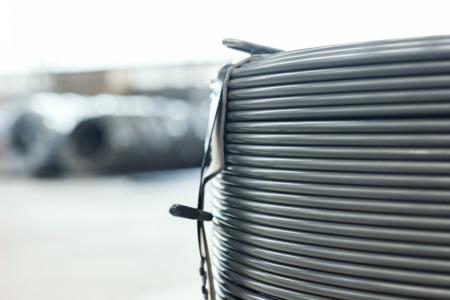
For technical details on cold heading wire, its applications, and properties, please visit our cold heading wire product pages:
In addition to quality and process reliability, sustainability is also becoming increasingly important. That is why voestalpine Wire Technology is working on innovative solutions such as phosphate-free surface treatments that can reduce the need for additional cleaning steps at customer sites.
At the same time, an integrated value chain - from the steel mill to drawn wire - and the transition of steel production toward CO₂-reduced manufacturing processes are making a significant contribution to improving the environmental footprint.
The quality of a fastener begins long before the actual forming process. High steel purity, excellent formability, precise process control, and innovative material concepts lay the foundation for cost-effective manufacturing processes and durable components. Modern cold-heading wires thus play a crucial role in the success of demanding forming applications.
If you have any questions or suggestions, please don't hesitate to contact us. We're happy to help!
