-
 News & EventsSubscribe to our newsletter
News from the world of wire

The qualification of 100Cr6 rolling bearing steel wire produced via the continuous casting process opens up new opportunities for the rolling bearing industry. Insights from real-world applications demonstrate how targeted process development, close collaboration with the rolling bearing industry, and an integrated value chain have made it possible to create a cost-effective alternative to the established ingot casting process.
Ball bearings are among the most demanding applications in the rolling bearing industry. Manufacturers place the highest demands on the purity, microstructure, fatigue strength, and surface quality of the materials used.
Until a few years ago, balls for ball bearings in Europe were manufactured exclusively from material produced via the ingot casting process. This was considered the established standard for ensuring the required material quality in terms of inclusion content, homogeneity, and freedom from segregation.
For voestalpine Wire Technology, the challenge was to tap into this demanding market segment with rolling bearing steel wire produced via the more efficient continuous casting process.
Industry: Roller bearing and ball bearing industry
Material: 100Cr6 roller bearing steel wire
Application: Ball bearings for automotive and industrial applications
Special Feature: First successful European qualification of ball bearing wire produced via the continuous casting process
Customer Benefit: Quality equivalent to that of the established ingot casting process, combined with an attractive cost structure
While roller bearing steel wire produced via the continuous casting process has already been successfully used for tapered and cylindrical roller bearings, ball bearings are subject to particularly high requirements regarding material quality. The focus was specifically on:
The central challenge was to reliably meet these quality requirements using the continuous casting process as well.
To meet these requirements, the entire process route was specifically refined. Key components included:
This was complemented by close collaboration between the steel mill, wire rod production, the drawing shop, Research & Development, and Application Engineering. The fully integrated value chain enabled short coordination channels and rapid optimization cycles.
voestalpine Wire Technology became the first European supplier to qualify continuous-cast bearing steel wire for demanding ball bearing applications.
Infobox: Ingot Casting vs. Continuous Casting
In the ingot casting process, molten steel is first cast into ingots and then processed further. In the continuous casting process, processing takes place continuously and is therefore significantly more efficient.
The challenge was to achieve the material purity and microstructure required for ball bearings using the continuous casting route as well - and thereby create a cost-effective alternative to the established ingot casting route.
Over several years, the material, process route, and testing concept were further developed and validated in collaboration with leading European manufacturers in the rolling bearing industry.
Thanks to close cooperation between the departments involved and the customers, adjustments could be implemented and evaluated quickly. Extensive material testing, processing trials, and service life tests formed the basis for subsequent qualification.

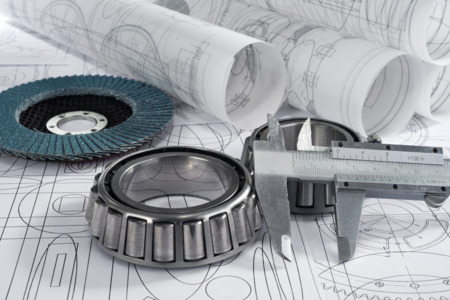
voestalpine Wire Technology was the first European supplier to qualify rolling bearing steel wire produced via the continuous casting process for demanding ball bearing applications.
The results confirmed:
This demonstrated that the continuous casting process also meets the high requirements of ball bearing applications.
Why voestalpine Wire Technology?
In addition to the technical requirements, working with an experienced and reliable partner played an important role. The integrated value chain, high quality standards, many years of experience in the rolling bearing segment, and short decision-making paths during the qualification process were decisive factors. This enabled development and approval processes to be implemented efficiently.
With this successful qualification, we were able to demonstrate that rolling bearing steel wire produced via the continuous casting process meets the high requirements of ball bearing applications. This provides a cost-effective alternative to the established ingot casting process - without compromising on quality.
The rolling elements, manufactured from roller bearing steel wire, are used in numerous applications where load-carrying capacity, precision, and service life are critical. The rolling elements are used in various bearing configurations and typically in diameter ranges from approximately 3 to 30 mm.
Automotive:
Industry / Mechanical Engineering:
Users benefit from both technical and economic advantages:
This successful certification opens up further opportunities for use in demanding rolling bearing applications. In addition to expanding existing applications in Europe, international growth markets such as India and Thailand offer additional potential for the use of high-quality rolling bearing steels.
Furthermore, the planned EAF process offers the potential to produce these materials with a significantly reduced carbon footprint in the future.
If you have any questions or suggestions, please don't hesitate to contact us. We're happy to help!
