-
 News & EventsSubscribe to our newsletter

News from the world of wire

The automotive industry is characterized by the highest quality standards, increasing demands on the supply chain, and the desire for greater regional value creation. This application demonstrates how cold-headed wire produced in Europe was successfully qualified and scaled up for mass production.
As a European manufacturer of automotive fasteners, the customer wanted to partially regionalize its previously global raw material supply. Until then, the raw materials had been sourced from Asia, which involved long transport routes and higher logistics costs.
At the same time, supply security, regional value creation, and resilient supply chains are becoming increasingly important in the automotive industry. Against this backdrop, the customer pursued a “Local for Local” approach, in which production and procurement are located as close as possible to the sales market.
The company was therefore seeking a high-performance European supply chain that combines consistent quality, process reliability, and traceability with a reliable supply and short response times.
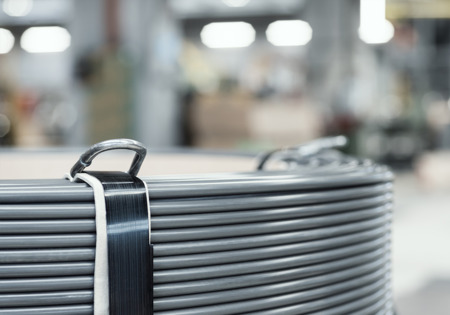
The mass production of high-quality fasteners for the automotive industry using cold-heading wire placed high demands on the raw material used.
The focus was particularly on:
For cold solid forming, both internal and near-surface defects had to be reliably eliminated.
Key components:
Infobox: What is the CC4 route?
The CC4 continuous casting line enables the production of exceptionally pure and homogeneous materials. It thus lays the foundation for demanding applications that place the highest demands on quality, purity, and process reliability.

The combination of ultrasonic and eddy current testing reliably detects and eliminates both internal and near-surface defects.
The collaboration proceeded in stages, from initial sampling through technical qualification to ongoing mass production deliveries.
The focus was on validating the manufacturing process, meeting stringent quality requirements, and ensuring a controlled increase in production volume.
Project timeline:
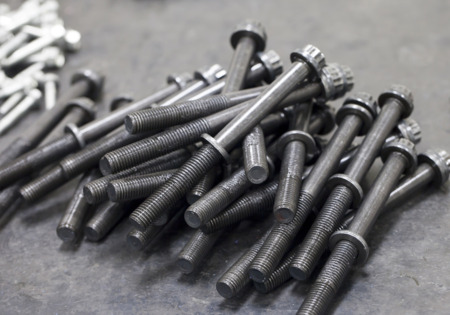
The successful ramp-up in production volume confirms the industrial feasibility of a European supply chain for demanding automotive applications. The introduction took place without any significant changes to existing manufacturing processes.
Following successful sample testing and extensive trials, the material for class 8.8 fasteners was transitioned to series production. This provides the customer with a regionally available alternative to their previous sourcing options.
Proven results:
Why voestalpine Wire Technology?
In addition to the technical requirements, working with an experienced and reliable partner played an important role. The integrated value chain, high quality standards, many years of experience in cold heading, and short decision-making paths during the qualification process were decisive factors. This enabled development and approval processes to be implemented efficiently.

Automotive:
Following the successful introduction of materials for fasteners in strength class 8.8, plans are in place to expand to strength classes 10.9 through 11.9, to qualify additional materials and dimensions, and to further expand the European supply of raw materials. This will allow for further reductions in transportation distances, inventory levels, and the need for intercontinental supply chains.
If you have any questions or suggestions, please don't hesitate to contact us. We're happy to help!
