voestalpine’s Expertise in Plastic Injection Moulding for Packaging
Innovative Moulding Solutions for the Packaging Industry
In the packaging industry, speed, precision, and sustainability are essential. voestalpine’s Plastic Injection Moulding Department delivers advanced tooling solutions that enable high-volume production of durable, lightweight, and recyclable packaging components—helping brands meet consumer expectations and environmental goals.
Why voestalpine for Packaging Injection Moulding?
- Extended Tool Life: PVD coatings and optimized materials extend tool life and reduce maintenance, even when processing abrasive or corrosive packaging polymers.
- Premium Tool Steels: Our BÖHLER and UDDEHOLM grades offer excellent wear resistance, polishability, and corrosion protection—ideal for high-speed moulding of packaging components.
- Additive Manufacturing (AM) Capabilities: We design conformal cooled inserts and venting structures using AM, reducing cycle times and improving part quality by ensuring uniform temperature distribution and air evacuation.
- Surface Engineering: Our moulds support ultra-fine textures and integrated product protection features like DIGIMARC watermarks, enabling traceability and anti-counterfeiting.
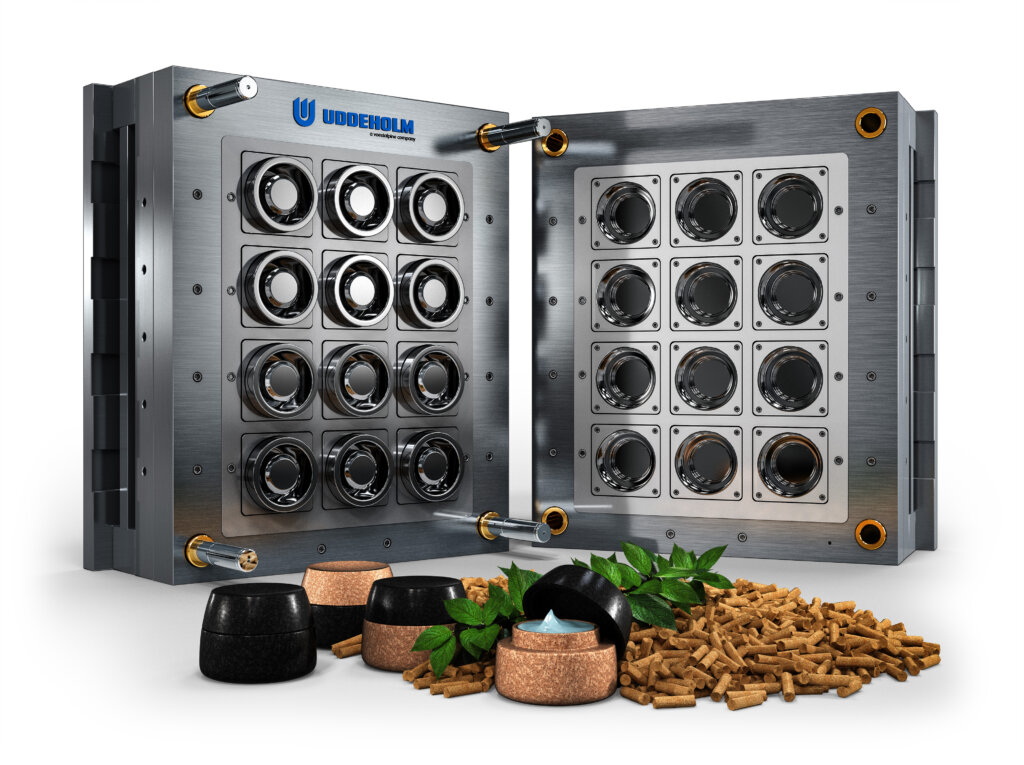
Packaging Applications We Support
voestalpine moulds are used to produce a wide range of packaging components, including:
- Bottle caps and closures
- Food container lids
- PET preforms
- Cylindrical containers
- Coffee cup and lid moulds
- Pharmaceutical packaging
Complete Value Chain Support
We offer end-to-end services for packaging OEMs and molders:
- Design & Simulation
- Additive Manufacturing
- Heat Treatment & Coating
- Surface Texturing & Polishing
- Sensor Integration & Data Monitoring
Sustainability Through Innovation
Our moulds support the production of recyclable and lightweight packaging components, with features like:
- Invisible Watermarks for sorting and recycling
- Functional Textures for mono-material packaging
- Reduced Scrap Rates through optimized thermal management