Corporate Blog
voestalpine AG
Security That Protects in an Emergency

Security That Protects in an Emergency

In this article
 

A brief moment of inattention, an incorrect reaction, or an unexpected obstacle—accidents cannot always be prevented. However, their consequences can be mitigated. This is precisely where the principle of the “forgiving road” comes into play: Roads and their surroundings are designed to account for human error and reduce the risk of serious or fatal injuries.


This approach is part of the so-called Safe System, which the European Union also consistently pursues. It forms the basis of its strategy to significantly reduce the number of traffic fatalities and serious injuries by 2030 and, if possible, bring it down to zero by 2050. This strategy combines safe vehicles, responsible behavior, appropriate speeds, and appropriately designed infrastructure. The result is a safety net for emergencies. For safety-related road infrastructure, we supply customized products that can save lives in the event of an accident.

Guardrails, energy-absorbing barriers, or terminal barriers

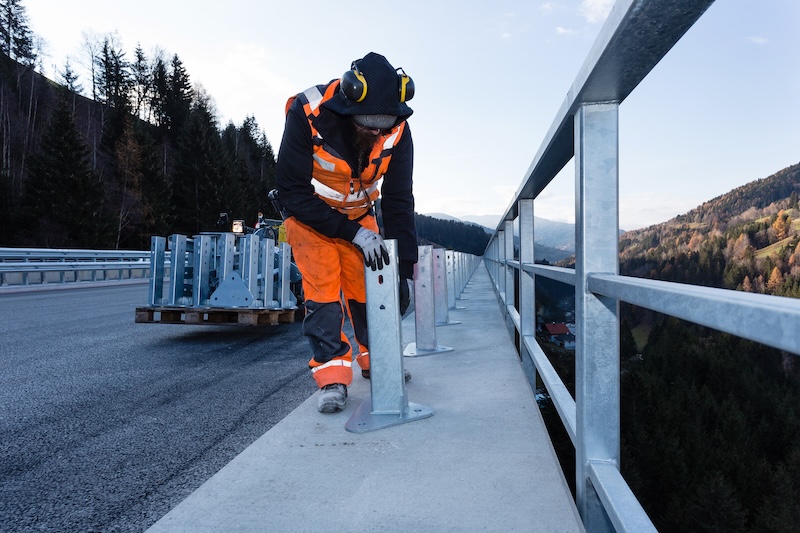
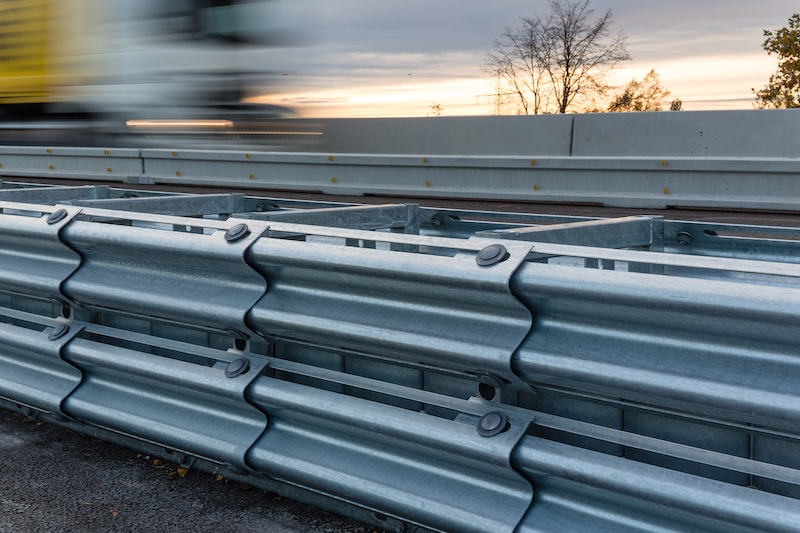
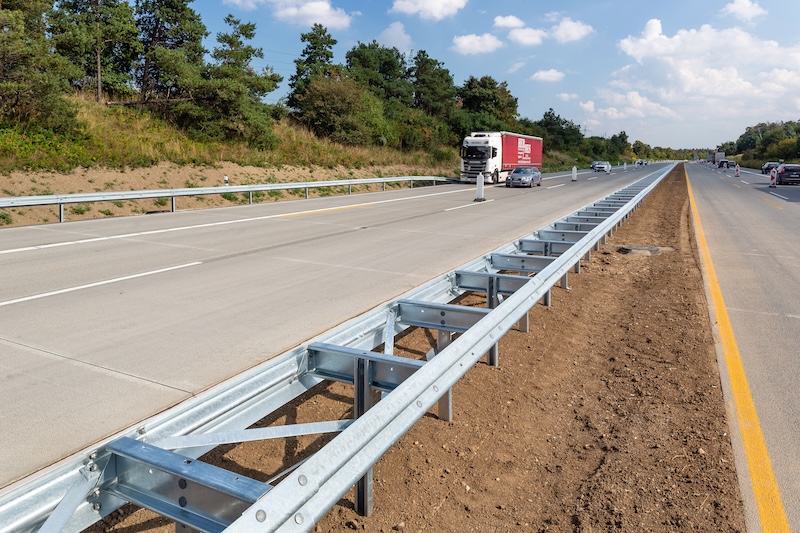
Different products are used depending on the hazard location. Vehicle restraint systems—commonly referred to as guardrails—are designed to contain vehicles that veer off the roadway and redirect them in as controlled a manner as possible. They thus prevent vehicles from leaving the road, crossing into oncoming traffic, or colliding with obstacles. On bridges, specially designed restraint systems and guardrails perform this function.


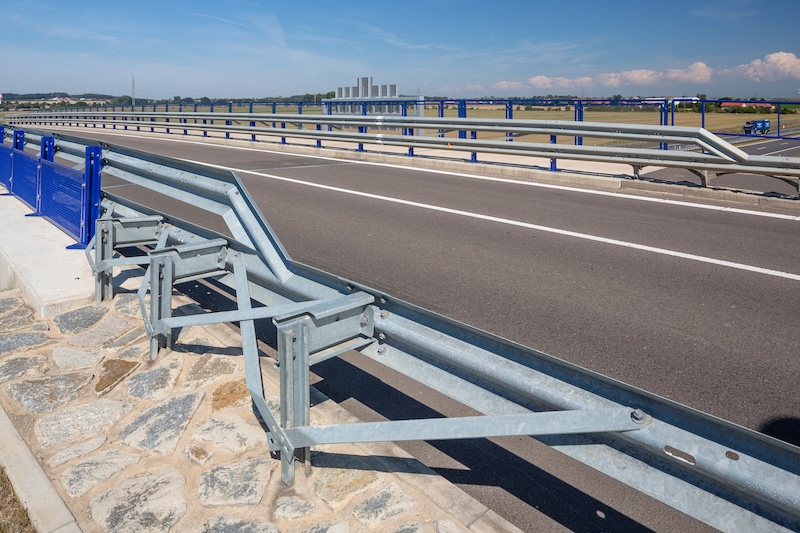
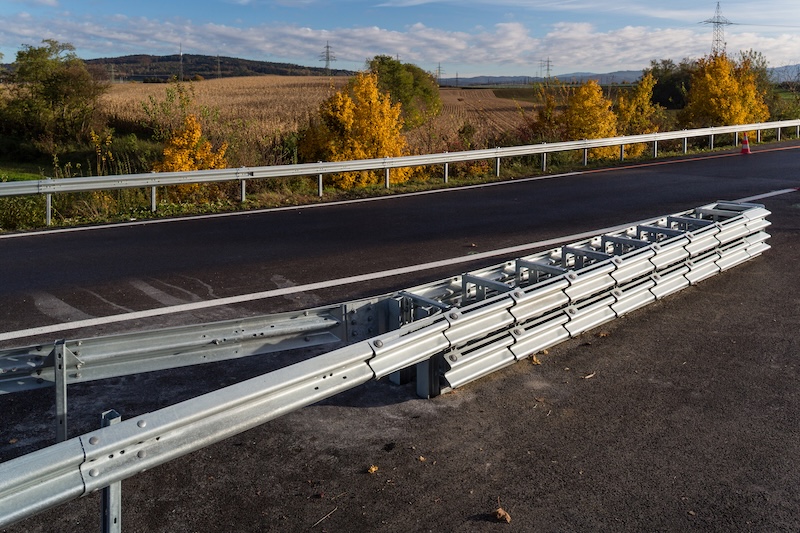
Crash cushions secure particularly hazardous locations such as lane dividers, highway exits, or tunnel niches. Upon impact, they absorb a portion of the kinetic energy and can thereby reduce the risk of injury to vehicle occupants. Transition structures securely connect different restraint systems. These solutions are supplemented, for example, by underrun protection for motorcyclists as well as splash guards that protect pedestrians and cyclists on bridges. It is always crucial that the respective system is suited to the specific hazard situation and local conditions.

Road Safety Expertise from Krems

Our voestalpine Krems Finaltechnik supports such solutions throughout the entire project lifecycle: from consulting and development through manufacturing and project management to on-site installation. Approximately 70 years of experience in road safety are incorporated into the planning and implementation.


Requirements vary significantly depending on the location—for example, on highways, bridges, or in tunnels. Accordingly, existing systems are selected, adapted, or developed specifically for a project. The combination of technical expertise, in-house manufacturing, and installation expertise enables us to implement even large-scale infrastructure projects both domestically and abroad.

When Passive Safety Features Prove Effective

An example from the A2 near Wiener Neudorf illustrates how effective these safety features are in an emergency. One of our crash absorbers was installed at an exit ramp for service vehicles. Just a few days later, a vehicle collided with the newly installed safety device. The occupants did not suffer any serious injuries. The crash absorber absorbed part of the impact energy and helped reduce the force exerted on the vehicle.


In Romania, too, a newly installed solution proved its worth shortly after installation. As part of a major contract, voestalpine Krems Finaltechnik supplied numerous impact absorbers. Two days after one of the systems was installed, a car collided with the impact absorber. All occupants were able to exit the vehicle on their own. Such incidents demonstrate why these systems were developed: They cannot prevent an accident, but they can help mitigate its consequences.

Solutions for Roads, Bridges, and Tunnels

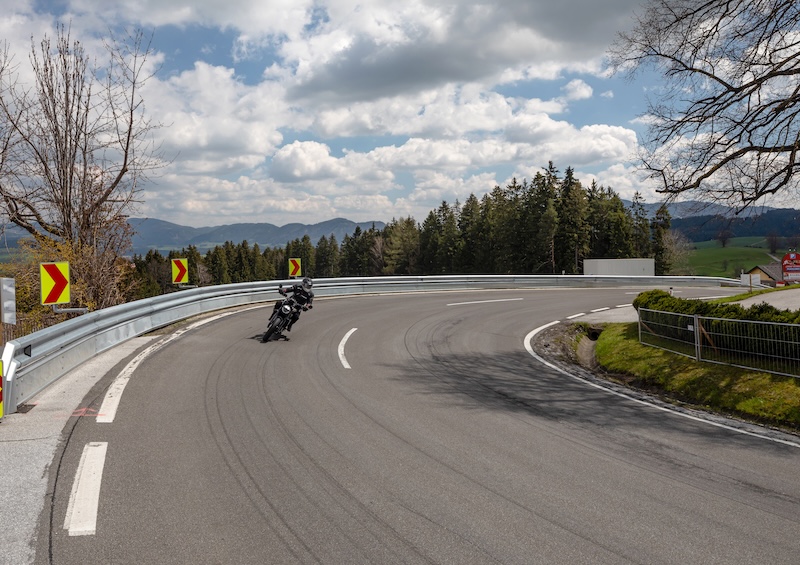
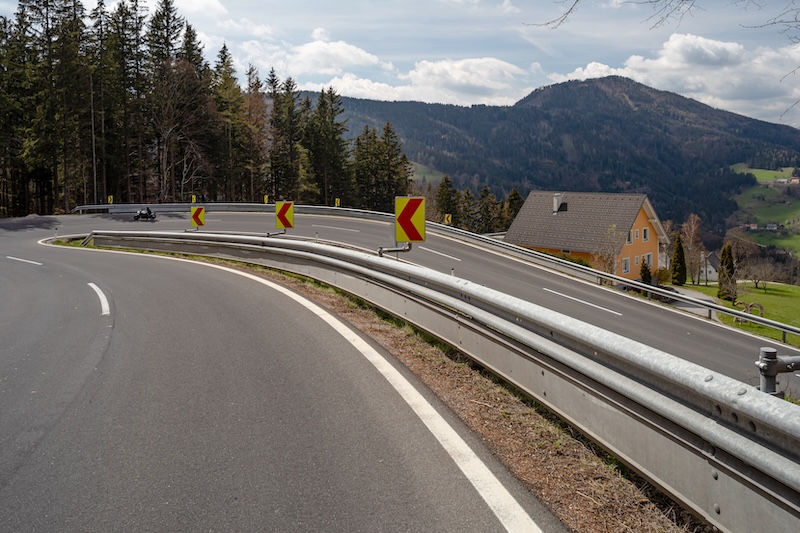
Selected projects illustrate just how varied the requirements are in practice: For the comprehensive renovation of the heavily trafficked A4 between the Prater and Schwechat interchanges, we supplied custom-designed restraint systems, including approximately 23 kilometers of guardrails and three energy-absorbing barriers. The project places high demands on planning, engineering, and execution. The guardrail systems from Krems are specifically designed to safely and reliably support such complex infrastructure scenarios. Along the winding stretch of the Rechberg race course, a special system with additional underrun protection safeguards motorcyclists in particular—not only during the race but also in regular traffic.


Expertise from Krems is also being applied to international infrastructure projects. In Slovakia, a custom guardrail system was developed for the R2 highway and installed on a 4.5-kilometer-long bridge. In addition, we were commissioned to equip the longest Slovakian tunnel on the D1 with 20 crash cushions in the tunnel niches. In the Czech Republic, we assisted in equipping the final, approximately ten-kilometer-long section of the D1 with modern restraint and energy-absorbing systems.

Safe Paths for People and Animals

However, safe transportation infrastructure does not only protect people in vehicles, on bicycles, or on foot. Wildlife and amphibians must also be protected from the dangers of road traffic. At the same time, animals on the roadway can cause serious accidents. Special guide walls therefore keep them away from dangerous sections of road and direct them to safe crossings.


Such facilities are used, for example, along the S 7 near Fürstenfeld. Depending on the animal species and local conditions, the solutions are designed so that wildlife and amphibians can cross road sections at designated points as safely as possible. The development and installation expertise gained in the field of road safety is also applied to other applications—such as the protection of railroad tracks or the substructures of photovoltaic systems.

Safety Is the Result of Coordinated Efforts

Road safety is achieved through a combination of many coordinated measures. With project-specific solutions and comprehensive implementation expertise, we help make transportation infrastructure safer—for people and animals.

Quiz

Can you answer this questions about the article?

1 / 7

What is the goal of the “forgiving road”?

2 / 7

For how many years have we been manufacturing innovative steel products for road safety?

3 / 7

Who or what do our road safety systems primarily protect?

4 / 7

What products does our road safety portfolio include?

5 / 7

Which product series represents our expertise in road safety?

6 / 7

What do our Krems-based final engineers do in the field of road safety?

7 / 7

In which countries, among others, are our road safety systems already in use?

Your score is

Share article
Picture of voestalpine AG

voestalpine AG

Die voestalpine ist ein weltweit führender Stahl- und Technologiekonzern mit kombinierter Werkstoff- und Verarbeitungskompetenz. Die global tätige Unternehmensgruppe verfügt über rund 500 Konzerngesellschaften und -standorte in mehr als 50 Ländern auf allen fünf Kontinenten. Sie notiert seit 1995 an der Wiener Börse. Mit ihren Premium-Produkt- und Systemlösungen zählt sie zu den führenden Partnern der Automobil- und Hausgeräteindustrie sowie der Luftfahrt- und Öl- & Gasindustrie und ist darüber hinaus Weltmarktführer bei Bahninfrastruktursystemen, bei Werkzeugstahl und Spezialprofilen. Die voestalpine bekennt sich zu den globalen Klimazielen und verfolgt mit greentec steel einen klaren Plan zur Dekarbonisierung der Stahlproduktion.