-
 News & EventsSubscribe to our newsletter
News from the world of wire

Welcome to Wire Insights, the podcast from voestalpine Wire Technology. In our eighth episode, we dive deep into an often underestimated but crucial area of the value chain: Testing expertise for pre-materials with a focus on surface testing.
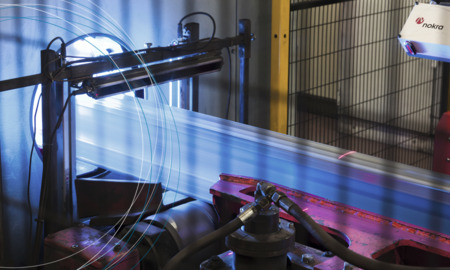
Quality isn’t just created during the drawing process but starts with the billet - that’s where it’s determined whether downstream production steps can run stably, efficiently, and flawlessly.
Our sister companies, voestalpine Stahl Donawitz and voestalpine Rail Technology, play a central role in this process. Using state-of-the-art testing methods, inline sensors, AI-based detection systems, AI-supported testing methods, and an integrated process chain, they ensure that defects are detected early, corrected, and documented.
This provides us with raw material that ensures the highest reliability throughout the entire process chain.
Together with two experts, we shed light on the journey from the hot billet to precise surface analysis - and how state-of-the-art measurement systems, AI technologies, and intelligent process control form the foundation for maximum reliability:
Be part of the future of the wire industry - innovation begins with knowledge. Listen now!
Intro
Host: Welcome to Wire Insights, the podcast from voestalpine Wire Technology. Here we talk about developments, technologies, and solutions that shape our industry - from materials technology to industrial applications. You will gain in-depth insights into current projects and their practical significance.
In this episode, we focus on a topic that often remains in the background but is crucial for quality, safety, and productivity: testing expertise for pre-materials with a focus on surface testing. Quality does not begin with the drawing process, but already with the billet. Defects that arise there or remain undetected affect the entire downstream production process—right up to the end product.
The two companies voestalpine Stahl Donawitz and voestalpine Rail Technology play a key role in pre-material production and the rolling process. voestalpine Stahl Donawitz provides material expertise and develops new steels and AI-based testing systems. voestalpine Rail Technology ensures that the billets are free of defects after rolling – using state-of-the-art inline testing and sensor technology. Only flawless pre-materials enable stable wire production and the highest quality.
I would like to welcome two experts:
Gerald Klösch, Head of Product, Process, and Material Development at voestalpine Stahl Donawitz, and Robert Windisch, Head of the Rail Rolling Mill at voestalpine Rail Technology. Welcome, and thank you for being here today.
Introduction and opening remarks
Host: Mr. Klösch, you have been working on new materials and production processes for many years. What tasks does your department cover?
Klösch: I have been Head of Product, Process, and Materials Development since 2012. Our focus is on optimizing metallurgical concepts, developing new steels, and designing robust, energy-efficient processes. One important area of focus is AI-based systems that help us identify quality risks at an early stage. We also work closely with universities and research institutes to quickly transfer innovative approaches into industrial processes.
Host: Thank you very much. Mr. Windisch, you are responsible for the rail rolling mill. What are your daily tasks?
Windisch: My area of responsibility covers the entire process chain—from pre-materials, heating, rolling, and heat treatment to the straightening process for rails, rail-fastening materials, and semi-finished products. We ensure that profile accuracy, surface quality, and process stability are always maintained. This also includes the operation and continuous development of our facilities, including modern measurement and testing technology.
Part 1 – The importance of testing expertise for pre-materials
Host: Mr. Windisch, why do you believe that quality begins not with the drawing process, but already with the billet?
Windisch: The pre-material is the basis for everything. If defects occur here, they can run through the entire process chain – in the worst case, right through to the end product. Our 100% inline inspection of billet surfaces allows us to detect defects at an early stage, thereby minimizing rework, scrap, and process risks. We consistently pursue a zero-defect philosophy, which applies to both rails and semi-finished products.
For our customers, this means greater process reliability, more stable further processing, and reduced costs. The immediate detection of surface defects or profile deviations enables us to adjust rolling parameters or rework rolls and fittings in the line. This saves time and prevents potential quality problems before they arise.
Part 2 – Process and technology in the rolling mill
Host: What technologies do you use to ensure profile and surface quality?
Windisch: We use a laser light sectioning process for all our products, which measures the rail or billet with high precision in both hot and cold conditions. With up to 5,000 cuts per second, a complete 3D profile is created from which we can immediately detect deviations. This process works reliably even under high temperatures and difficult environmental conditions.
One of the biggest challenges in manufacturing all of our products is temperature control. Unlike rails, which reach temperatures of around 900°C, the semi-finished material reaches up to 1,100°C, and the temperature varies along the length of the billet. Nevertheless, we ensure consistent profile quality with hydraulic roll gap controls, automatic stand preload, minimum tension control, and correspondingly slow cooling on the cooling bed.
Straightness and torsion are also crucial, especially for downstream processes, in particular reheating in the walking beam furnace. This can be ensured by the straightening machines used in the horizontal and vertical directions on the cooled billets.
Host: How does the quality of the equipment influence product quality?
Windisch: The quality of our products depends directly on the precision and reliability of the equipment. High-quality rolling stands, straightening machines, and measuring systems are crucial for ensuring consistent profile accuracy and surface quality - even under extreme conditions such as high temperatures and vibrations. Automated systems reduce operating errors and increase process stability.
We monitor all process parameters in real time using high-temperature sensors, pyrometers, and probes. This combination of modern plant technology and continuous monitoring guarantees stable processes, less scrap, and consistently high product quality for our customers.
Host: How is measurement accuracy guaranteed under extreme conditions?
Windisch: High temperatures, dust, and vibrations pose major challenges. The solution: robust systems in special housings, with appropriate cooling systems and redundant sensor concepts.
All measuring systems have cooling devices for cameras, lasers, and probes. Lasers and pyrometers are regularly checked, calibrated, and replaced if necessary. For probes, we consistently use "2-out-of-3" measurement—three probes, two must match.
Host: Will manual final inspection be eliminated in the future?
Windisch: In short: no. Automatic testing provides important data for process control and early warning systems. During the rolling process, an additional manual check is carried out – either visually or by sample measurement. The final inspection remains deliberately in human hands to ensure that quality approval complies with standards.
Host: How does direct loading in the contract rolling process affect logistics and costs?
Windisch: Just-in-time loading of the billets eliminates the need for intermediate storage in the finishing area. This reduces storage costs, reduces material movements, and shortens throughput times. For customers, this means particularly efficient material provision.
Part 3 – AI-supported surface inspection
Host: Mr. Klösch, how does the AI-supported surface inspection system work?
Klösch: After the last rolling stand, the hot billet is analyzed on all four sides using color cameras. The AI system scans the surface in a meandering pattern and detects defects based on trained patterns and defect classes.
It evaluates pixel brightness using a sliding window method and identifies typical defects such as longitudinal and transverse cracks, edge cracks, or mechanical damage.
Scale is detected but deliberately not classified as a relevant defect – an important step in avoiding misinterpretations.
The detection rate is currently over 85% and increases with each training iteration.
Host: What camera technology is used?
Klösch: We use cameras in the visible light spectrum. We optimize contrast by specifically selecting wavelengths (red, green, blue). In addition, blue light LEDs ensure better visibility of fine surface defects.
The cameras are installed in cooled, dust-protected housings with gas overpressure. The camera sensor is mounted in a vibration-isolated manner to ensure stable images.
Host: How does the system deal with unknown defects?
Klösch: If the probability of belonging to any known class is exceeded, the system marks the finding as "Unknown." These cases are evaluated manually and transferred to the training data set.
We carry out weekly, structured labeling processes to continuously improve the model. In addition, the AI increasingly recognizes which classes it is unsure about and collects additional data specifically for those classes.
For customers, this means early error detection, less waste, and less rework. At the same time, we retain data sovereignty because we do not use "black box" solutions.
Host: Can you explain the topic of data sovereignty and in-house development in more detail?
Klösch: Process data is our most valuable asset. With commercial off-the-shelf solutions, data is inevitably shared with the manufacturer so that their algorithms can learn and improve their analysis. This carries risks: the data flows into external systems, and the analysis algorithms remain a "black box" – not transparent and not adaptable to our specific requirements.
That is why we decided to develop our own solution. This allows us to retain full control over our data and adapt algorithms specifically to our processes and continuously improve them. The development was carried out in collaboration with long-standing research partners and is being continuously optimized.
The result: transparent algorithms, data sovereignty within voestalpine, and solutions that protect our know-how and are not used for training external systems.
Part 4: Future and innovation
Host: Looking to the future, what further developments are planned?
Klösch: We are working on the further development of AI models for the inline crack testing system as well as on ultrasonic testing concepts in the ongoing production flow. This will enable us to measure the internal quality of the billet inline in the future—a decisive step toward greater process reliability.
Host: Mr. Windisch, what does the future look like in your field?
Windisch: On the hardware side, in addition to the laser light section method, we are testing a new phased array technique specifically for detecting cracks in billets. In addition, an inline ultrasonic inspection system will be implemented in the coming fiscal year.
Outro
Host: Thank you very much, Mr. Klösch and Mr. Windisch, for the exciting insights into pre-material testing and the underlying technologies.
For more information, please visit the voestalpine Wire Technology website or contact us directly. Thank you for listening and see you next time on Wire Insights.
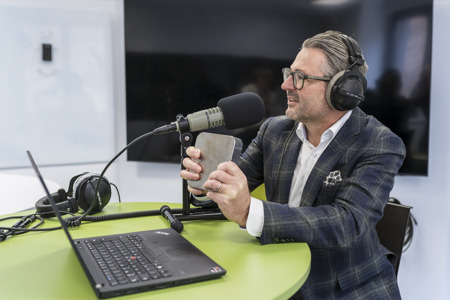
In this episode, Gerald Klösch demonstrates how closely material development and modern testing technologies interact today. His team develops new steels, optimizes metallurgical processes, and ensures that potential quality risks are detected directly on the hot billet - that is, at the earliest possible point in the value chain.
The focus is on the AI-supported surface inspection system, which analyzes the billet surface on all four sides with color cameras after the final rolling stand. The AI detects typical defects such as cracks or mechanical damage in a meandering scan process and specifically avoids false alarms by not classifying scale as a relevant defect.
Key features:
In this way, Klösch exemplifies how digitalization and materials science work together to make defect detection more precise, faster, and more reliable.
With AI-supported inspection systems, we can identify quality risks during production and react immediately. This significantly reduces scrap and rework and increases process reliability. At the same time, we retain full data control - we deliberately do not use black-box solutions, but transparent systems that are continuously evolving.
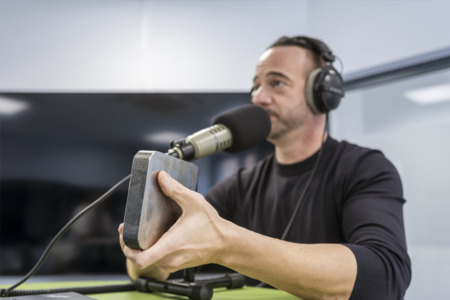
Robert Windisch makes it clear that quality is not created only during the drawing process, but already in the rolling mill. Defects overlooked here propagate throughout the entire process chain - with significant impacts on further processing, scrap, and process costs. That is why his division relies on consistent 100% inline inspection, in which the laser light sectioning method measures the billet profile with high precision in both hot and cold states and immediately reveals deviations. Despite temperatures exceeding 1,000 °C, intelligent process controls, stable equipment, and controlled cooling phases ensure that profile accuracy and straightness are reliably maintained.
To ensure this level of precision under extreme environmental conditions, robust measurement systems are used: protected and cooled camera housings, vibration-isolated sensors, and redundant measurement principles that deliver stable data even in the presence of dust, heat, and vibrations. Despite the high degree of automation, manual final inspection remains a deliberate part of the quality strategy—it ensures that standard requirements are met without a doubt. At the same time, direct loading without intermediate storage enables particularly efficient logistics and noticeably shortens turnaround times.
Key features:
In this way, Windisch demonstrates how crucial process discipline, modern sensor technology, and equipment quality are for defect-free raw material - and how these factors form the basis for maximum process reliability in wire production.
Quality begins with the raw material. Our 100% inline inspection of billet surfaces ensures that defects are detected and corrected at an early stage. This minimizes process risks, ensures stable further processing, and reduces overall costs. For our customers, this means maximum reliability and a zero-defect philosophy that is reflected in every step of production.
Because defects that arise in the billet or remain undetected can carry over through all subsequent steps - all the way to the final product. A reliable surface and internal defect inspection reduces scrap, minimizes process risks, and ensures stable further processing.
After the final rolling stand, color cameras capture all four sides of the still-hot billet. The AI analyzes the surface in a meandering pattern, detects typical defect classes such as longitudinal and transverse cracks or edge cracks, and filters out irrelevant signals such as scale. In this way, the system ensures that only actual defects are reported.
Such findings are marked as “Unknown,” then manually evaluated and added to the training dataset. This allows the system to continuously learn and regularly improve its detection rate.
voestalpine Wire Technology deliberately relies on its own algorithms and systems. This means: full control over process data, no dependence on black-box solutions, and maximum transparency in defect detection.
Laser cross-section measurement, hydraulic roll gap control, optimized cooling systems, temperature-stable sensors, and straightening machines are used. This combination enables precise profile geometry despite extreme conditions such as heat, dust, and vibrations.
Automated systems provide continuous data, but the final quality approval in accordance with standards is deliberately carried out by experienced specialists. This ensures that even complex or rare defect patterns are correctly assessed.
They benefit from greater process reliability, less scrap, more stable downstream processes, and lower overall costs. Defects are detected early—before they lead to costly problems.
With cooled, dust-protected sensor housings, vibration-isolated cameras, and redundant measurement methods such as “2-out-of-3 measurement.” This ensures that measurement results remain reliable even at high temperatures and under heavy stress.
Plans include advanced AI models for crack detection, the use of phased-array technology, and the introduction of inline ultrasonic testing. This will also enable the detection of internal billet quality within the production flow.
Wire Insights is the podcast for anyone interested in sustainable technologies, innovative production processes, and forward-looking developments in the wire and steel industry. Stay tuned for the next episode with more exciting insights from the world of wire technology!
