Corporate Blog
voestalpine AG
Smart scrap sorting for green steel

Smart scrap sorting for green steel

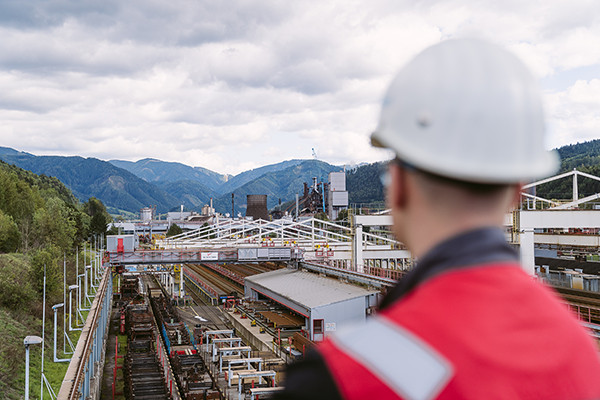
voestalpine employee looks over the large scrap sorting plant.
In this article
 

For example, voestalpine Stahl Donawitz has been researching smart scrap sorting for several years, digitally supported by laser-based real-time analysis. Reusing the recyclable material not only reduces CO2 emissions per ton of crude steel from 2.32 to 0.67 tons. It also makes a significant contribution to the circular economy. It therefore forms an important basis on the way to sustainable steel production.


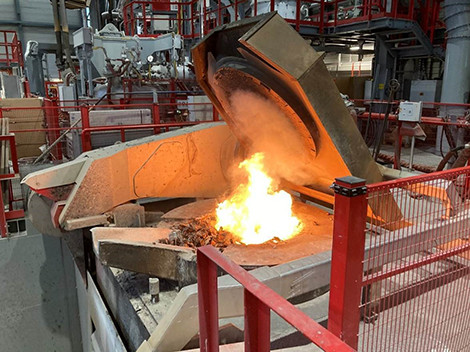
One thing is certain: steel needs scrap. In steel production, this valuable secondary raw material is used in the LD converter: a huge vessel in which liquid pig iron, scrap and alloys are processed into steel. Approximately 15 – 20 % of the volume is cooling scrap, which ensures that the temperature remains within limits during melting. voestalpine Stahl Donawitz alone currently requires around 350,000 tons of scrap for steel production every year.

In high demand

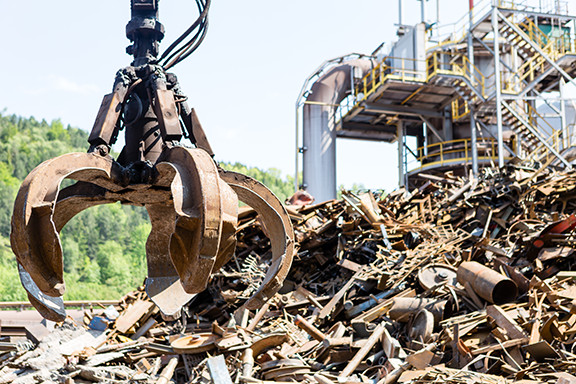
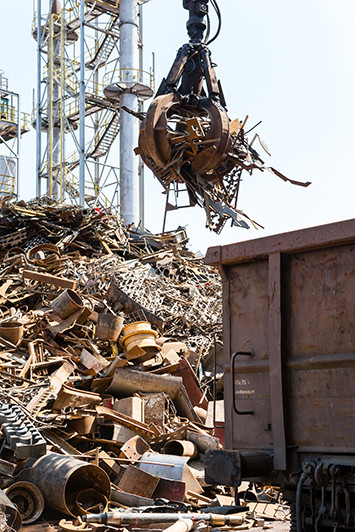
There are many different sources for these enormous quantities of scrap: the scrap iron container at the building yard, disused railroad wheels, end-of-life vehicle bodies or carrier scrap. Our own scrap is also generated during production. However, not all scrap can simply be used as it is classified and only certain types may be used. In order to produce high-quality steel, the scrap must also be of a correspondingly high quality. One of the quality factors is the amount of trace elements in the scrap. The limits for trace elements in the product standards or specifications are sometimes very low, which also limits the usability of individual scrap grades. It is therefore an important goal to increase the quality of the scrap with regard to the contained but sometimes undesirable by-elements.

Recyclable material re-sorted

In a research project, voestalpine Stahl Donawitz therefore initially tested laser-based real-time analysis for scrap sorting with a partner company at a pilot plant. The aim of smart scrap sorting was to get the best out of the recyclable material and make new scrap grades accessible in order to achieve a high-quality product. As part of the project, the accuracy of the steel analysis was increased and adapted to the purposes of voestalpine. The results were verified and further optimized in melting tests in the Technical Metallurgy Laboratory (TechMet) and Metallurgy Laboratory (MetLab) at voestalpine Stahl Donawitz. Around forty tons of scrap were precisely analyzed and melted down for research purposes.

Scrap analyzed with laser sharpness

In practice, the smart scrap sorting system works as follows: Shredded, cut or shredded scrap is mechanically separated on a vibrating chute and fed onto a conveyor belt running at a speed of up to 3 m/sec. A laser cutting process is then used to determine the position of the parts to be analyzed on the measuring belt and the “landing point” for the analysis. To do this, the surface is first cleaned of coatings, etc. with a large number of individual laser pulses. With a second burst of laser pulses, plasma is generated from a small volume of the sample, the emitted light of which is used for the actual chemical analysis. This process is called LIBS (laser induced breakdown spectroscopy). A targeted jet of compressed air then sorts and separates the parts according to the previously programmed specifications. After around one and a half years of project work, during which the analytical concept was tested in practice on the test facility, the project team was finally satisfied with the results.

EU-weit geforscht: Projekt PURESCRAP

It was clear to the project team from the outset that the technology and the concept should nevertheless be continuously developed and that potential applications should be defined even more precisely. At one of our cooperation partners, two processes are currently being examined on the smart sorting system implemented there: LIBS and X-ray fluorescence analysis (XRF). voestalpine Stahl Donawitz is now also part of the EU project PURESCRAP – Purity improvement of scrap metal. The aim of the project is to increase the utilization of low-quality scrap (post-consumer scrap) through the use and application of innovative sensor combinations and analyses – supported by artificial intelligence. A pan-European consortium of twelve companies – from Sweden to Belgium and Italy – is working intensively on the various aspects of the process in order to further develop the steel cycle as one of the key factors of industrial sustainability.

FAQs

Questions to Gerald K., Head of Product, Process and Materials Development, voestalpine Stahl Donawitz GmbH


  • Scrap is a major issue when it comes to reducing emissions and sustainability in steel production. The more scrap is used, the lower the CO2 emissions. Reusing the recyclable material therefore conserves resources and is precisely the step we need to take to mitigate the increasingly noticeable consequences of climate change. Technology and metallurgy make a valuable contribution to manufacturing high-quality products and protecting the environment at the same time.

Share article
GreenTec Steel

Austria's biggest climate protection program

More info
Picture of voestalpine AG

voestalpine AG

Die voestalpine ist ein weltweit führender Stahl- und Technologiekonzern mit kombinierter Werkstoff- und Verarbeitungskompetenz. Die global tätige Unternehmensgruppe verfügt über rund 500 Konzerngesellschaften und -standorte in mehr als 50 Ländern auf allen fünf Kontinenten. Sie notiert seit 1995 an der Wiener Börse. Mit ihren Premium-Produkt- und Systemlösungen zählt sie zu den führenden Partnern der Automobil- und Hausgeräteindustrie sowie der Luftfahrt- und Öl- & Gasindustrie und ist darüber hinaus Weltmarktführer bei Bahninfrastruktursystemen, bei Werkzeugstahl und Spezialprofilen. Die voestalpine bekennt sich zu den globalen Klimazielen und verfolgt mit greentec steel einen klaren Plan zur Dekarbonisierung der Stahlproduktion.