Incredibly smart: artificial intelligence at voestalpine
Applying modern technologies is the smart thing to do. That’s why we use artificial intelligence at voestalpine. The capabilities of AI (artificial intelligence) support us in improving our production processes and assisting us on our journey toward a steel production with net zero CO₂ emissions.
8
In this article
For us it is clear that manufacturing modern products require smart technologies. For this reason, we are working with smart and high-performance AI applications. AI is the topic of the hour, and part of everyday business at our company.
We have a great appetite to make even more out of our business with AI.
Michael E.
Chief Digital Officer, High Performance Metals Division
AI, the all-rounder
Artificial intelligence provides groundbreaking solutions. Generative AI in particular, whose application in technology such as ChatGPT, Midjourney, and DALL-E is just the tip of the iceberg, is dominating current debate. While these apps may generate text, images, and videos, they are all based on the lightning-fast use and analysis of enormous volumes of data. This is the feature that we are keen to benefit from. “The increased processing power now available allows us to improve production processes thanks to new algorithms,” confirms Jürgen Z., Data Science Expert, Steel Division.
A look at the industrial sector shows that AI can assist in all areas. In logistics, chatbots help to support customer communication, optimize shipping routes, and generate demand forecasts in warehousing. In production, AI can evaluate enormous volumes of data, plan plant maintenance well in advance, optimize the consumption of energy and raw materials, and safeguard product quality. It can even take on the real-time monitoring of safety equipment worn in defined areas of operation.
Decision-making and example
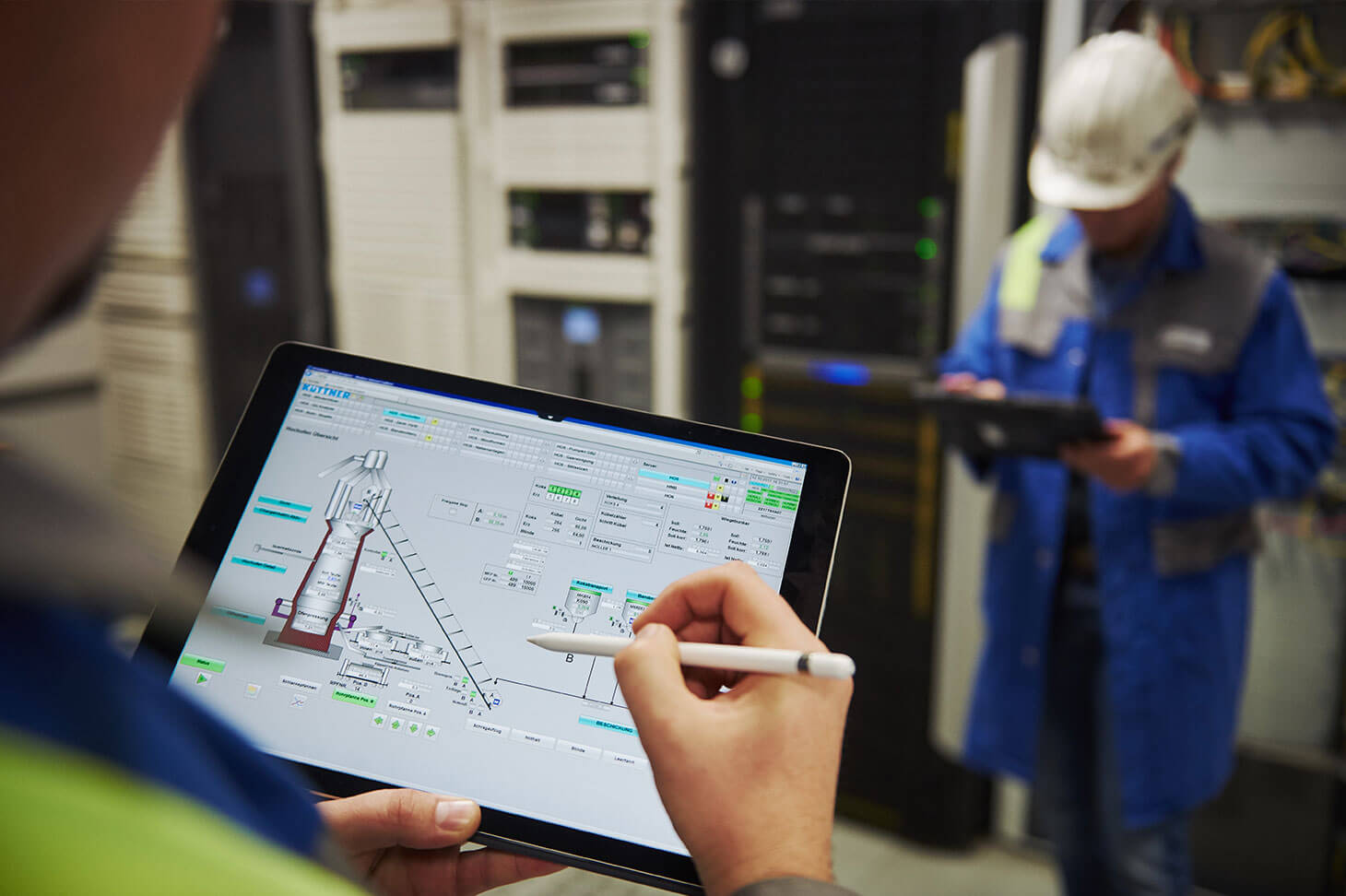
It is clear to us that AI applications are helpful in production and other processes. This is demonstrated by the promising results shown by AI-driven systems for visual defect detection in many Metal Engineering Division businesses. Along the production chain, we rely on various systems for visual surface inspection to facilitate early identification of defects. For example, computer vision technology at voestalpine Tubulars can recognize cracks in the hollow billet and other defects on the surface of the jacket and end face. Gerold F., IT Manager, Metal Engineering Division: “AI provides essential assistance with decision-making processes, but the final decision is still made by our employees.”
AI provides us with important assistance in decision-making processes; the final decisions are made by our employees.
Gerold F.
IT-Manager, Metal Engineering Division
AI and OCR (optical character recognition) technology is also in use at our Linz site. One application is to unequivocally identify objects and follow them as they move through the factory. The data acquired by sensors is processed on cloud-based platforms. Data science algorithms then support tasks such as optimizing product properties.
AI also helps us to increase efficiency by providing us with electricity price forecasts, among other things.
Jürgen Z.
Stop and go
We are not testing out every possible AI-driven application, but rather focusing on the ones that we see as vital for the future. Some extremely promising approaches to new applications turn out to be a dead end, while the potential of other ideas might not (yet) have been recognized: That’s how it goes when dealing with new technologies. Currently, experts in all voestalpine divisions are thoroughly checking trends and examining how they can be implemented within our Group.
AI is not a fix-all solution that will overcome all of the challenges we face. After all, it is also intelligent to recognize the limits of what is possible—and work on expanding them. This includes our experts sharing their experience and data across the Group.
We strive to ensure the reliable collection of data along the value chain and the seamless networking of data strands across divisional boundaries.
Theresa R.
Senior Data Scientist, Metal Forming Division
What AI does for us
“Using OCR, we can distinctly identify various parts and follow their progress. This is an important AI-driven application in handling.” Stefan S., Research Engineer, Mechatronic Research (SFM), Steel Division
“AI applications and machine learning help us with liquidity planning, meaning they contribute to maintaining our solvency. Thanks to their analyses, we can accurately forecast incoming and outgoing payments.” Jörg F., Technology Management, Steel Division
“We can use verified company data and market development forecasts to better plan our resources. Using internal and external data, our AI-driven program decides which process along the supply chain might be the most successful and presents it to us for approval.” Florian K., Supply Chain Manager, High Performance Metals Division
In addition to the visual detection of defects, machine learning methods are used at voestalpine Stahl Donawitz to predict longitudinal cracks in the billets before they have even appeared. Gerold F., IT Manager, Metal Engineering Division
“In our production companies we use AI to improve areas such as equipment availability and output. This not only helps to optimize capacity utilization and the production chain, it also reduces energy use, and with it CO2 emissions and energy costs.” Michael E., Chief Digital Officer, High Performance Metals Division
“We have already successfully applied AI in quality management for condition monitoring or for predictive maintenance. Overall, AI is extremely well suited to visual processing, for example detecting defects in components.” Theresa R., Senior Data Scientist, Metal Forming Division
“The system checks the parts and determines the properties they need to be logged as acceptable. Where deviations are detected, the system rejects the part. We don’t need to present the system with any defects, it recognizes them as deviations from the parts that have been accepted.” Tony J., F&E, Metal Forming Division
Intelligent product solutions
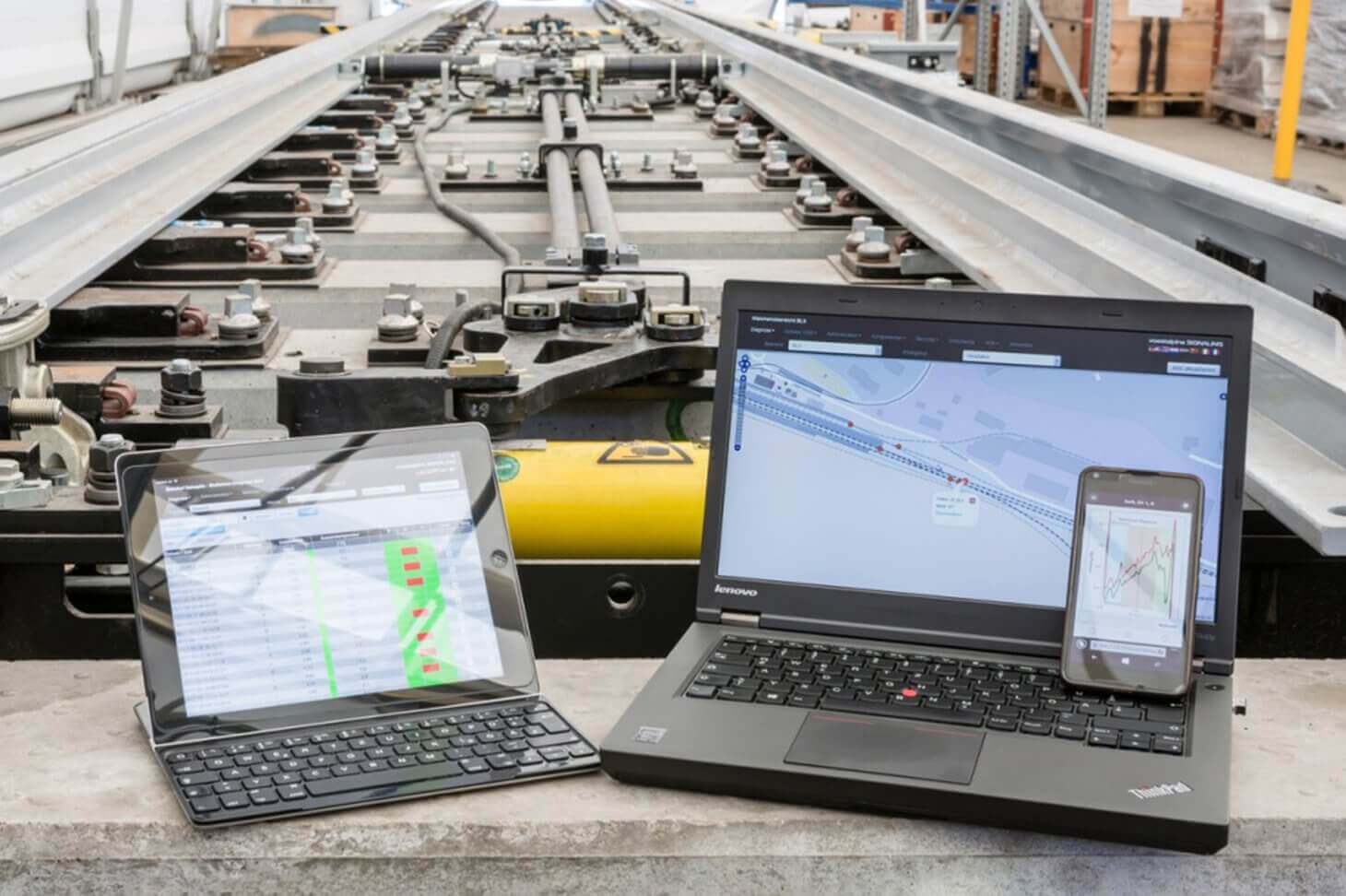
It is possible to go a step further with artificial intelligence and not just limit its application to production, logistics, and administration. Within our company, AI is already a firm fixture in our product portfolio, for example at voestalpine Railway Systems. Here, the new generation of points use their sophisticated sensors to decide, with the help of AI, whether there is a risk of a points failure that would lead to a line closure. The flawless functionality of this essential system component can be ensured with a high degree of accuracy, and predictive maintenance can be initiated.
The future remains exciting
Where is AI headed? So that our employees are better able to recognize the (im)possibilities of this journey, our IT specialists offer decision-making aids in the form of training programs and manuals. Not all staff need to become AI specialists, but enhanced knowledge opens up a clearer view of opportunities. Artificial intelligence has a secure place in the Group no matter what.
We are in the process of ramping up our work with cloud data platforms to improve the standardization and networking of resources. It is also worth looking deeper into the opportunities presented by generative AI.
Courage to innovate, flexibility in action and quick decisions - this is what should characterize us on our way into the future of AI.
Michael E.
SAELING - for intelligent efficiency
We are systematically expanding the use of artificial intelligence at voestalpine. In the SAELING research project, we are expanding its possible applications with a focus on sustainability. AI will help us to increase the effectiveness of aggregates and reduce their energy requirements at the same time. A project that we are carrying out together with the University of Klagenfurt, the Belgian KU Leuven and our industrial partner Siemens.
Data acquisition: Sensor at a sawing unit.
The thousands of saws, milling machines and grinders in the High Performance Metals Division (HPM) can work even more efficiently. This simple basic idea formed the starting point for the research partnership of voestalpine HPM DIGITAL SOLUTIONS GmbH in Kapfenberg in the SAELING project.
AI creates efficiency
The project, which is supported by the Austrian Research Promotion Agency FFG, was launched at the beginning of May 2024. SAELING is derived from the English term for “saving energy by learning and improving logic-based optimization processes” – a programmatic title for a project with which we are taking an important step towards more efficient and environmentally friendly production.
As a result of the project, we see a faster, more efficient and environmentally friendly use of our systems. Controlling more than 2,000 saws, milling machines and other units intelligently and proactively means a clear gain in efficiency and sustainability. We will achieve this with the SAELING AI project.
Erfolgreicher Vorgänger
With HPMconnect, we have developed and implemented a program in recent years that collects and collates the usage data of the units. More than 250 saws, milling machines etc. are currently connected in the rollout phase. In the future, the collected data will be analyzed by self-learning programs. SAELING will develop the necessary AI approaches and thus make an important scientific contribution to increasing efficiency.
The research project brings together the University of Klagenfurt, KU Leuven, Siemens and voestalpine. With the help of selected artificial intelligence (AI) approaches, we will realize a significantly more effective use of energy in industrial plants in this project. Energy efficiency increases of 20 to 30 percent are targeted for the use case.
Q&A
Consumption amounts to around 21 GWh; this corresponds to the annual consumption of 4,750 Austrian households.
Energy efficiency increases of 20 to 30 percent are to be achieved at the locations concerned.
After several years of preparation and implementation, the world’s most modern testing center in the steel industry has gone into full operation at our Linz site. It presents itself as a well-organized and consistently digitized laboratory for materials testing – clean and spacious, it underlines our commitment to the highest product quality.
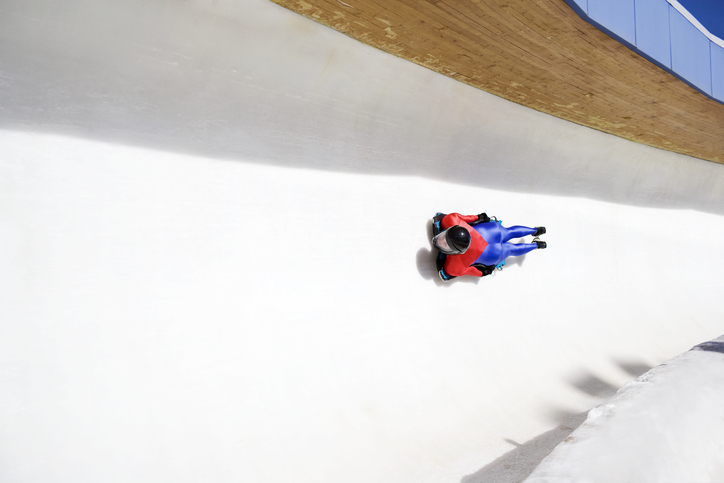
The 2026 Winter Olympics are already in full swing. Just like the lugers, who shoot through the ice channel at over 150 km/h on runners made of high performance steels from voestalpine High Performance Metals Germany.
When every hundredth of a second counts on the ice, every detail matters. That’s why numerous international athletes rely for training and competition on high-precision bimetal blades from bohlerstrip, including at the 2026 Winter Olympics
After several years of preparation and implementation, the world’s most modern testing center in the steel industry has gone into full operation at our Linz site. It presents itself as a well-organized and consistently digitized laboratory for materials testing – clean and spacious, it underlines our commitment to the highest product quality.
The 2026 Winter Olympics are already in full swing. Just like the lugers, who shoot through the ice channel at over 150 km/h on runners made of high performance steels from voestalpine High Performance Metals Germany.
When every hundredth of a second counts on the ice, every detail matters. That’s why numerous international athletes rely for training and competition on high-precision bimetal blades from bohlerstrip, including at the 2026 Winter Olympics
Die voestalpine ist ein weltweit führender Stahl- und Technologiekonzern mit kombinierter Werkstoff- und Verarbeitungskompetenz. Die global tätige Unternehmensgruppe verfügt über rund 500 Konzerngesellschaften und -standorte in mehr als 50 Ländern auf allen fünf Kontinenten. Sie notiert seit 1995 an der Wiener Börse. Mit ihren Premium-Produkt- und Systemlösungen zählt sie zu den führenden Partnern der Automobil- und Hausgeräteindustrie sowie der Luftfahrt- und Öl- & Gasindustrie und ist darüber hinaus Weltmarktführer bei Bahninfrastruktursystemen, bei Werkzeugstahl und Spezialprofilen. Die voestalpine bekennt sich zu den globalen Klimazielen und verfolgt mit greentec steel einen klaren Plan zur Dekarbonisierung der Stahlproduktion.