#FavoriteMoments in space: How our technologies are space travelrevolutionizing
- 5
The idea of conquering “the sky” – i.e. outer space – is as old as mankind itself. Pioneers such as Isaac Newton laid the foundations for modern space travel with their findings. Today, rocket launches and space probes seem far removed from everyday life for many people – yet space travel makes many things possible that shape our daily lives – and we make space travel possible.
Space travel makes a decisive contribution to the comfort and safety of our modern lives and has a direct and significant influence on the way we live and work today. For example, because satellite technology, which was originally intended for space communication, now forms the basis for global television, the internet and GPS navigation. Freeze-dried food or fortified baby food originally came from space programs. Even medicine cannot do without space – from scratch-resistant lenses, which were actually developed for space, to magnetic resonance imaging (MRI), which was intended for examining the surface of the moon and is now an indispensable part of medical diagnostics.
But modern space travel also has a direct or indirect impact on our lives in a global context, and our products play a key role in supporting space travel by supplying components for the European Ariane space program. Earth observation satellites provide real-time data on climate, agriculture, ocean currents and disasters, and measure greenhouse gases, ozone holes, ice sheets and temperature trends. The data generated in this way forms the basis for a global understanding of climate change and enables accurate weather forecasts for agriculture and fisheries. Farmers use the data to increase yields, use water more efficiently or apply fertilizer in a targeted manner – a factor that should not be underestimated in view of the constantly growing world population and food security. In the event of forest fires, floods or earthquakes, satellite images provide rapid situation analyses for rescue teams and help coordinate relief efforts. What does this have to do with us? Without the Ariane rockets of the European Space Agency (ESA), for which we manufacture components, there would be no European satellites to provide us with this data.
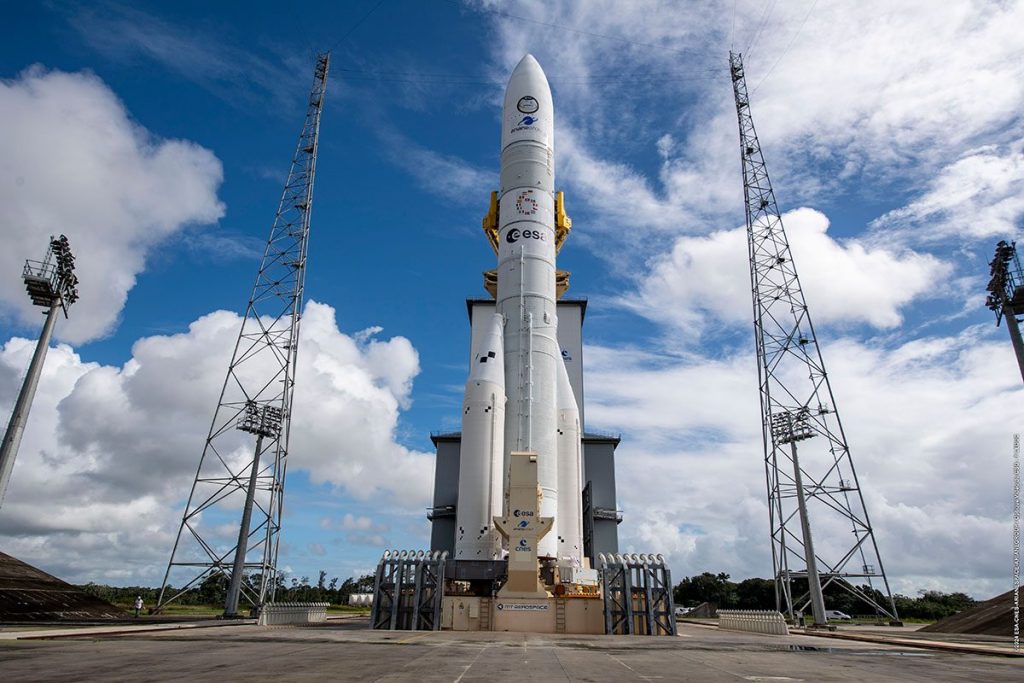
Several European countries launched the Ariane space program in 1973, which was intended to secure Europe’s independent access to space. As a highly reliable launcher system “made in Europe”, the Ariane 5 rocket was used many times between 1996 and 2023 to transport satellites into geostationary transfer orbit (GTO) – a total of around 100 satellites and space probes. The European space freighters ATV (Automated Transfer Vehicle) were also transported to the ISS, the International Space Station, by Ariane 5. We are currently supplying the housing and housing covers for the starter of the upper stage Vinci rocket engine for the Ariane 6 launch vehicle – the successor to Ariane 5. After a good ten years of development, it took off on its maiden flight from ESA’s space port in Kourou (French Guiana) at the beginning of July 2024. The new launcher took off on its first commercial flight in March 2025.
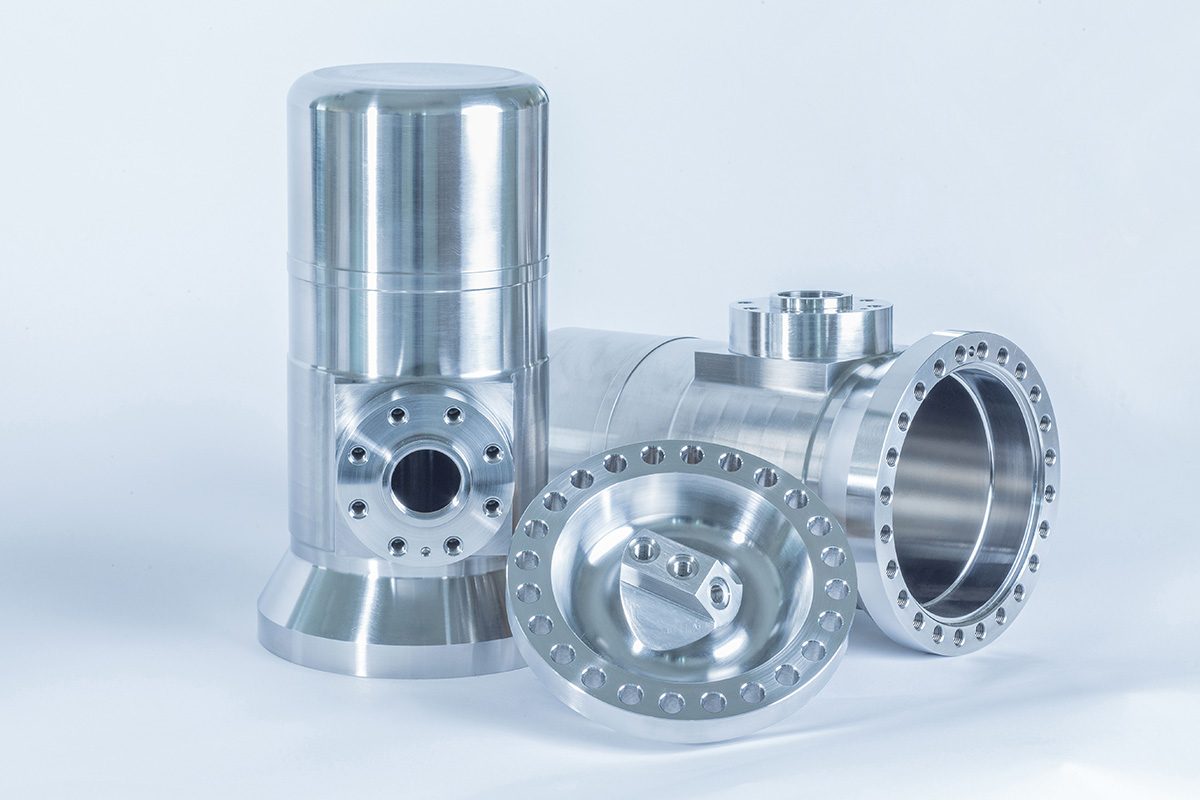
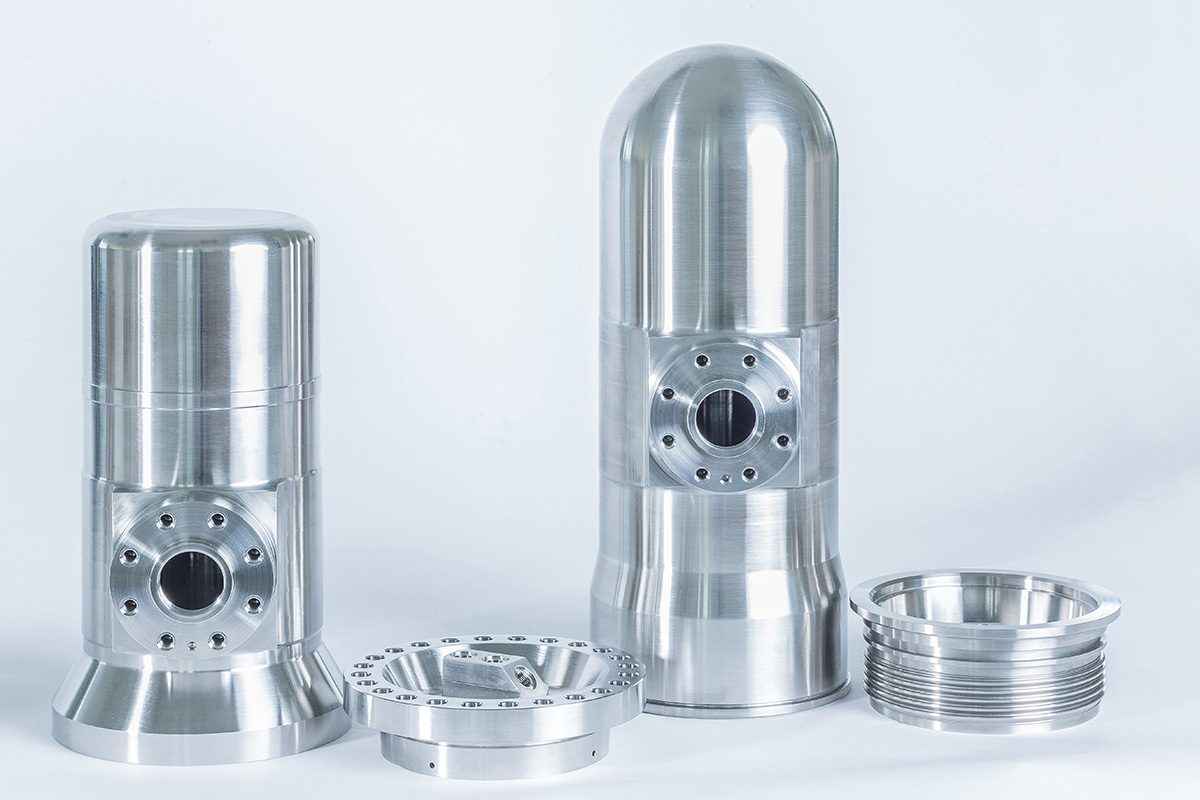
Against the backdrop of competition, not only from the government, but also from increasingly established private providers, the ESA decided in 2014 to launch the development of a new launcher to fly into space. The new heavy-lift rocket was to be significantly cheaper than its predecessor. In order to be more competitive, the components were simplified and reduced in size. We already supplied a component for the launch system for Ariane 5, but different materials are now being used for Ariane 6 – in line with the cost-efficiency requirements – and the design has also changed. In 2018, the first prototypes of the launcher housing were delivered to ESA and thoroughly tested and tried out on the test benches under laboratory conditions. Following these successful tests, we were finally able to secure the series orders for the starter housing and housing covers for the starter of the upper stage turbopump of the Vinci rocket engine. By extending the contract, ESA can continue to rely on our know-how and precision.
For voestalpine BÖHLER Edelstahl, which is responsible for the Ariane components, the project is more than just prestige. In addition to the pure material production of rolled and forged steel bars, a ready-to-use high-tech component will be manufactured, into which the ignition mechanism will be installed and which will be sealed with the cover, also manufactured by voestalpine BÖHLER Edelstahl. This means that we not only supply primary material, but also a ready-to-install component. From the melting of the nickel-based alloy to its remelting, forging and heat treatment through to testing and finishing, everything comes from a single source – ours.
As our products and solutions are not only in demand in the aerospace industry, but also in aviation, Ariane components are also a quality benchmark for this sector. The fulfilled quality criteria for aerospace are also strong arguments as an aviation supplier: aviation companies can assume that we will always get the best for them, as we not only have expertise in flight altitudes for scheduled flights, but also expertise that extends into space.
Rockets carry satellites into space, enabling communication, security and knowledge transfer. By developing and manufacturing components for space travel, we make an important contribution to modern life on Earth and to space research.
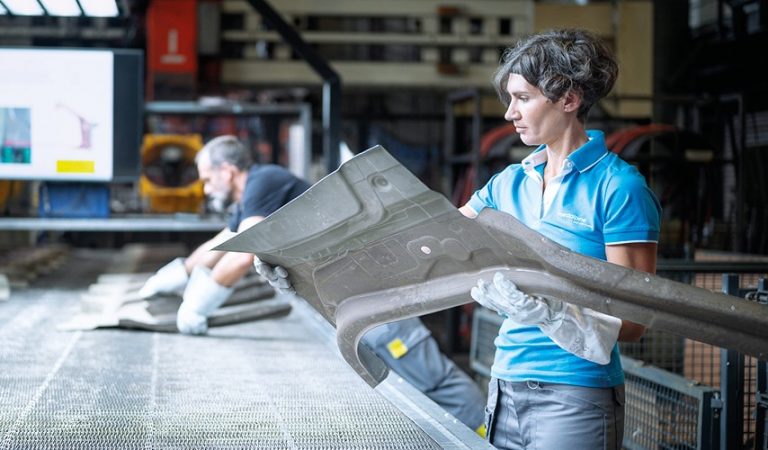
In our new brand and image campaign #FavoriteMoments, we show our contribution to a modern, sustainable life from the perspective of people. We focus on their individual favorite moments and the commitment of our employees that makes such moments possible. The specially composed song “All these moments” accompanies the campaign and musically conveys our values, courage, community and our joy for the future and is authentically accompanied by pictures of our employees.
Die voestalpine ist ein weltweit führender Stahl- und Technologiekonzern mit kombinierter Werkstoff- und Verarbeitungskompetenz. Die global tätige Unternehmensgruppe verfügt über rund 500 Konzerngesellschaften und -standorte in mehr als 50 Ländern auf allen fünf Kontinenten. Sie notiert seit 1995 an der Wiener Börse. Mit ihren Premium-Produkt- und Systemlösungen zählt sie zu den führenden Partnern der Automobil- und Hausgeräteindustrie sowie der Luftfahrt- und Öl- & Gasindustrie und ist darüber hinaus Weltmarktführer bei Bahninfrastruktursystemen, bei Werkzeugstahl und Spezialprofilen. Die voestalpine bekennt sich zu den globalen Klimazielen und verfolgt mit greentec steel einen klaren Plan zur Dekarbonisierung der Stahlproduktion.