-
 News & EventsSubscribe to our newsletter
News from the world of wire

Welcome to Wire Insights, the podcast from voestalpine Wire Technology. In our seventh episode, we take a look at the cold-drawn bar product segment.
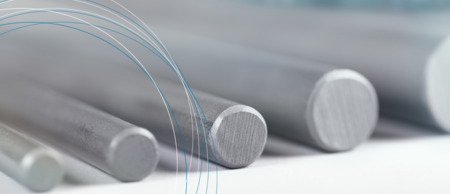
Cold-drawn bar is a solid long product that is brought to its final dimensions through controlled cold forming. The process control enables tight tolerances, high straightness, defined surface quality, and stable mechanical properties. These properties are relevant for applications in automotive engineering, mechanical engineering, and the energy sector.
The seventh episode shows how cold-drawn bars differ from classic wire, which manufacturing steps influence the product properties, and what role a continuous process chain play. Two experts from the company provide insights into technical fundamentals, future developments, and possible applications:
Be part of the future of the wire industry – innovation begins with knowledge! Listen now!
(00:00 - 00:57)
Host: Welcome to Wire Insights, the podcast from voestalpine Wire Technology. Here we talk about developments, technologies, and solutions that shape our industry - from materials technology to industrial applications. You will gain in-depth insights into current projects and their practical significance.
This episode focuses on cold-drawn bar – a product that offers maximum precision and process reliability and opens new possibilities for demanding applications. What are its technical characteristics? What advantages does it offer for demanding applications? And how does voestalpine Wire Technology support its customers in material development and process optimization? Today, I will be talking to two experts from our company:
Welcome, Holger Winter, Application Engineer, and Wolfgang Fasching, Expert in Process Technology and Development.
(00:58 - 01:26)
Host: Mr. Winter, it's great to have you here. What are your responsibilities as an Application Engineer?
Winter: I look after customers from various industrial sectors and support them with technical issues and product development. My focus is on translating individual requirements for materials, processes, and component properties into practical solutions. I am also the central contact person for the introduction and application of our new product segment of cold-drawn bars.
(01:27 - 02:00)
Host: Thank you very much. Mr. Fasching, you are heavily involved in process technology and development. What does your daily work involve?
Fasching: I further develop our forming and testing processes to ensure stable and reproducible quality. This includes process analyses, the introduction of new technologies, and communication with application engineering and, if necessary, with customers in the case of special requirements. My many years of management experience help me to implement new processes and product ideas in a targeted manner.
(02:01 - 02:44)
Host: Mr. Winter, why is entering the cold-drawn bar segment more than just a product portfolio expansion for voestalpine Wire Technology?
Winter: Entering this segment is a strategic move. We are transferring our existing expertise in forming technology, materials development, and quality assurance to a new product, cold-drawn bar. This enables us to offer our customers an integrated portfolio from a single source. For companies, this means fewer interfaces, greater process reliability, and dependable quality - especially for safety-critical applications. Industries such as automotive, machine building, and energy, where precision and material performance are crucial, will benefit.
(02:45 - 04:31)
Host: Mr. Fasching, what distinguishes cold-drawn bar from conventional wire?
Fasching: The main difference lies in the geometry. Cold-drawn bar is a solid long product that is brought to its final dimensions by cold forming. It is used where the highest demands are placed on dimensional accuracy, straightness, and surface quality – for example, in precision components such as axles, shafts, or bearing components.
The product requirements also differ significantly. When drawing bars, the degree of forming, tool geometry, and straightening process must be precisely coordinated. This is the only way to reliably achieve the required tolerances, straightness, and surface quality of the bars.
Host: And how do you ensure these properties?
Fasching: Through a fully integrated process chain. We control every step - from steel production to hot forming, heat treatment, drawing, and final inspection. Every process is documented and traceable. For our customers, this means maximum transparency, high process reliability, and reproducible mechanical properties such as tensile strength or yield strength.
Host: What role does digital process monitoring play in this?
Fasching: A crucial one. We rely on inline measuring systems and digital data analysis to detect and correct deviations at an early stage. This enables us to ensure a high level of consistency from batch to batch – even with complex requirements.
In addition, we can specifically influence material properties. If certain strength or toughness values are required, we control the microstructure via process control. The combination of metallurgical expertise and reliable manufacturing makes our materials reliable and high-performance.
(04:32 - 06:08)
Host: Mr. Fasching, how do you support customers in the development of new materials? What is the path from the initial idea to the actual application?
Fasching: We accompany our customers throughout the entire development process – from the initial idea to series production. The process is structured, but extremely flexible thanks to our in-house research facilities such as Techmet, MetLab, and the Wire Tech Center. It usually starts with a specific requirement, such as higher strength, improved corrosion resistance, or optimized forming behavior.
We then develop a suitable alloy concept for cold-drawn bars, which we sample in our pilot plants and test under real conditions. At the same time, we check the scalability for industrial production. Only when all requirements have been met does implementation in series production take place.
In this way, we bridge the gap between research and practice and ensure that new materials not only work in theory but also perform reliably in application.
Host: What role do simulation methods or digital approaches play in the development of new alloys?
Fasching: Digital methods are now a central component of materials development. They enable us to understand and specifically influence complex relationships between alloy composition, process parameters, and material behavior.
With numerical models and digital twins, we can, for example, make predictions about microstructure development, forming behavior, or thermal stability - even before the first physical test takes place. This saves time and resources.
In combination with our pilot plants and real-world tests, this creates an efficient link between virtual pre-development and practical validation.
(06:09 - 06:33)
Host: Mr. Winter, how is this perceived from the customer's point of view – and how quickly can you respond to new market requirements?
Winter: Thanks to our flexible development structure and integrated production chain, we can often respond to new market requirements within a few weeks. Initial sampling is possible quickly because we combine research, pilot plants, and industrial scaling under one roof.
(06:34 - 07:59)
Host: What distinguishes your forming processes from classic drawing lines?
Fasching: We combine our wire drawing expertise with bar steel technology. This means precise control of the forming degrees, targeted intermediate treatments, and high-quality surface finishing - for example, through controlled phosphating or mechanical smoothing. In contrast to conventional drawing lines, which often use standardized processes, our processes enable flexible and application-specific adaptation – for maximum dimensional accuracy and surface quality.
The dimensional accuracy and surface quality when drawing bars depend largely on parameters such as drawing speed, lubrication, tool geometry, and temperature control.
Host: How do you ensure that the surface quality is maintained even at high degrees of deformation?
Fasching: To guarantee surface quality, we rely on optimized tool coatings, controlled friction conditions, and a precisely coordinated process. We use inline measuring systems, adaptive control systems, and digital monitoring, precisely coordinate the drawing parameters, and carry out process-accompanying tests such as eddy current testing. The drawing processes for cold-drawn bars are designed in such a way that the surface quality is reliably maintained even at high degrees of deformation. A uniform, clean surface reduces the effort required in subsequent process steps at the customer's site.
(08:00 - 09:46)
Host: Mr. Winter, how do you help customers find the right material?
Winter: We work together to analyze the mechanical, thermal, and tribological requirements and recommend materials that are technically and economically optimal. We draw on a portfolio of over 400 steel grades – from standard qualities to highly specialized alloys.
Host: How do you deal with conflicting objectives – for example, between high strength and good machinability?
Winter: This is precisely where our material development comes in. We work with multi-parameter optimization approaches to reconcile both requirements, for example through microalloys or targeted heat treatment.
Host: What services do you offer beyond the product itself?
Winter: We see ourselves not only as a materials supplier, but also as a global development partner. In addition to classic materials consulting, we offer co-engineering from the idea to series production of cold-drawn bars, digital simulation support, testing concepts, and customized logistics solutions—such as just-in-time delivery, packaging concepts, and traceability services. Our goal is to maximize customer benefit holistically.
Host: What role does sustainability play in the production of cold-drawn bars?
Winter: A central one. When selecting materials, we already pay attention to resource-saving alloy concepts and recyclability. In the production of cold-drawn bars, we rely on energy-efficient processes, optimized lubrication systems, and forming with as little loss as possible. Digital approaches such as simulations and inline measuring systems enable precise process control, which not only ensures quality but also saves energy and raw materials.
(09:47 - 11:04)
Host: Mr. Fasching, how do you integrate customer feedback into further development?
Fasching: Customer feedback is an essential part of our continuous product and process optimization. We consider every piece of feedback - whether from application, quality assurance, or logistics - to be a valuable stimulus. We analyze this information and incorporate it directly into the adaptation of alloy concepts, manufacturing parameters, and testing methods. Through regular technical reviews, joint development projects, and open communication channels, we create a partnership-based foundation on which innovation and quality grow together.
Host: What are the next steps for the cold-drawn bar product segment?
Fasching: We are working on new alloy concepts, continuously optimizing our drawing processes, and evaluating innovative testing methods - such as AI-supported inline quality control.
Host: Thank you very much, Mr. Winter and Mr. Fasching, for the valuable insights into cold-drawn bar and the processes behind it.
If you would like to learn more, visit the voestalpine Wire Technology website or contact them directly. Thank you for listening - and see you next time on Wire Insights.
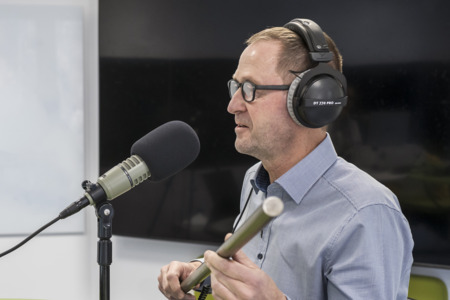
Holger Winter explains the technical design of cold-drawn bars for various applications. His focus is on analyzing material and process requirements and translating them into suitable material and process concepts. Together with customers, he develops new components, alloys, and process variants.
He describes how materials and process parameters must be selected and adapted so that the bar can later be reliably processed further – for example, into axles, shafts, or bearing components. Cold-drawn bars are used where low tolerances and functionally resilient components are required.
Key points:
Cold-drawn bar stands for precision in every respect. Dimensional accuracy, straightness, and surface quality must be exactly right - because many of our customers use it for components where tolerances in the range of hundredths of a millimeter are critical. This accuracy is essential for the function and safety of complex systems.
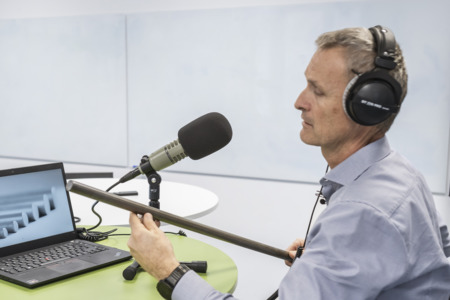
Wolfgang Fasching is responsible for the further development of forming and testing processes. The aim is to reliably meet the tight tolerances and quality requirements of cold-drawn bars.
He explains the process engineering basics of manufacturing. Although wire and bar use similar forming mechanisms, specific challenges arise due to geometry and tolerance requirements.
Important aspects:
The result is cold-drawn bars with a uniform microstructure, reproducible mechanical properties, and defined surfaces, as required for precise and stressed components.
Thanks to fully integrated process control, voestalpine Wire Technology achieves high reproducibility from batch to batch. The combination with data-based process analysis and adaptive control systems contributes to the stability of the properties.
Reproducible quality does not happen by chance - it is the result of controlled processes, precise testing technology, and consistent data analysis along the entire production chain. This is the only way we can reliably meet the high demands of modern applications and ensure long-term stability.
A cold-drawn bar is a solid long product that is brought to its final dimensions through controlled cold forming. This process results in tight tolerances, high straightness, defined surface qualities, and stable mechanical properties.
The basic forming mechanism is similar, but the bar differs in its geometry, higher cross-section, mass, and the associated higher requirements for dimensional accuracy and surface quality. These differences significantly influence tool geometry, friction conditions, and the entire drawing process.
Cold-drawn bars are used where tight tolerance ranges and high functional reliability are required - for example, in axles, shafts, bearing components, and other precise, mechanically stressed components.
The material, degree of forming, and heat treatment must be precisely coordinated. Depending on the application, different requirements are paramount, such as strength, toughness, machinability, or surface cleanliness. A wide range of materials allows a wide variety of properties to be specifically achieved.
Tribological requirements relate to the friction, sliding, or wear behavior on the bar surface. Depending on the component function, a certain level of friction may be required, for example, for bearing or sliding surfaces. Surface quality and possible alloy or heat treatment adjustments play a central role here.
Tool geometries, lubrication, drawing speed, and straightening processes must be precisely coordinated. In addition, inline measuring systems and digital process monitoring support the early detection and correction of deviations.
A continuous process chain - from steel production to hot forming, heat treatment, cold drawing, and final inspection - enables complete traceability and reproducible properties from batch to batch. Deviations can be identified more quickly, and process parameters can be adjusted in a targeted manner.
A high degree of forming places increased demands on drawing tools and lubrication. With a suitable process design, the surface quality is maintained even at high degrees of forming and defined mechanical properties and a uniform microstructure can be achieved.
Wire Insights is the podcast for anyone interested in sustainable technologies, innovative production processes, and forward-looking developments in the wire and steel industry. Stay tuned for the next episode with more exciting insights from the world of wire technology!
