-
 News & EventsSubscribe to our newsletter
News from the world of wire

Welcome to Wire Insights, the podcast about the latest developments, innovations and trends at voestalpine Wire Technology - from pioneering materials to sustainable production processes. Get exclusive insights into current projects that are revolutionizing the industry and learn how innovations made of wire are changing the world. Whether you are a technology enthusiast, an industry professional or simply curious about the future - listen to our third episode on the topic of "Beyond greenwashing - our path to transformation".
The wire industry is undergoing radical change - new technologies, strict climate targets and rising energy costs demand real solutions instead of mere promises.
The third episode of "Wire Insights" is all about green transformation instead of greenwashing. With exciting insights and clear objectives, we show how sustainability at voestalpine Wire Technology is not just a buzzword, but a living reality.
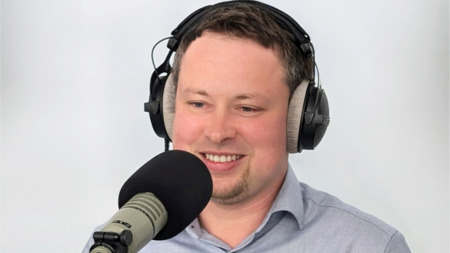
The two experts Stefan Obermoser and Manuel Jandl, who are significantly involved in the sustainable transformation of our company, jointly shed light on the challenges and milestones on the way to climate neutrality. They present concrete measures and give honest assessments of the feasibility and efficiency of various technologies.
Be part of the future of the wire industry - innovation starts with knowledge! Listen in now!
(0:00 - 1:11)
Welcome to Wire Insights, the podcast of the latest developments, innovations and trends at voestalpine Wire Technology. From cutting-edge materials to sustainable production processes. Experience exciting insights into current projects that are revolutionizing the industry and find out how innovations made of wire are changing the world.
Whether you are a technology enthusiast, an industry professional or just curious about the future, this podcast is for you. Tune in and join us. A warm welcome to our guests on today's podcast episode “Beyond greenwashing: our path to transformation.”
Stefan Obermoser and Manuel Jandl have joined us at the microphones today. Thank you to the experts for accepting our invitation. Mr. Obermoser and Mr. Jandl, could we ask you to give our listeners a brief insight into your professional careers? Since when have you been with voestalpine Wire Technology? What are the main focuses of your activities and what milestones have you achieved in your professional lives?
(1:12 - 3:03)
First of all, thank you very much for the invitation. It's a special honor to be here today. Regarding to my professional experience at voestalpine, it's quite a long time from now, but it was a very fast time. I'm here for now for roughly 12 years.
I began rightly after my studies of production science and management at the Technical University in Graz in 2013 in Linz as a trainee for technology management in the voestalpine Steel Division. Then I got the special honor to work as an assistant for the management board of metal engineering here in Styria. There I also had my first contact with the topic of sustainability and also lifecycle management.
Then after a while, I had the opportunity to join the business unit Wire Technology and took over the responsibility for strategy and special projects, which is also one of my special interests.
I really like strategy and dealing about the future and possible trends and what could happen. So that was a special honor for me as well. And then after a few years in 2022, a second special interest of me, where I was honored to take over the responsibility is sustainability.
So, I was really happy to have both these responsibilities in business unit via technology, since they are also my personal interests, where I really like to dig into it, to be hyper-focused on researching in those various topics. So, it's not only a job, it's also some kind of passion for me to drive those things forward. And I really want to point out that sustainability is not only about decarbonization.
It's also a topic where it's about how to say how we work together, how we live together, and to make a better future for all of us. Thank you.
(3:04 - 3:52)
Mr. Jandl, can we ask you to give our listeners a brief insight into your professional career? Thank you for the invitation to this podcast from my side too.
I am 34 years old. I have been working at voestalpine Wire Austria located in Bruck an der Mur for 15 years. I'm an electrical engineer and I have a master's degree in energy and environmental technology.
At voestalpine Wire Austria’s side, I'm responsible for energy management, the infrastructure, as well as the media and energy supply systems. My main tasks include the operational management of our energy systems and the implementation of investments and energy optimization projects. For example, I was responsible for the implementation of the ISO 50001 energy management certification.
Thank you for sharing insights into your professional careers and milestones with us.
(3:53 - 5:42)
"Beyond greenwashing, our path to transformation" is our topic today. Mr. Obermoser, would you briefly outline what this is actually about for those who are not so familiar with the subject?
Please let me start with the vision of our business unit Wire Technology. "It is together we shape the perfect Wire technologies for a safe and sustainable tomorrow."
What does it mean in a concrete target or in concrete points we want to tackle? We have a clear commitment to a CO2 neutral economy with defined clear milestones. We want to reach CO2 neutrality for our scope 1 and scope 2 emissions by 2035.
And we want to reach a complete CO2 neutral company for all scopes by around 2050, which has to be heavily supported by greentec steel, which is another very historical project in our voestalpine. But maybe a short explanation that for you and everybody is clear what I mean with scope 1, 2 and 3 emissions. Scope 1 emissions are the direct emissions where the source can be directly controlled by us.
For example, if we burn natural gas in one of our ovens or if we burn diesel in one of our company vehicles in internal transport. Scope 2 are indirect emissions from energy or more electricity. If we purchase electricity from outside, that's the emissions we get in scope 2.
And scope 2 are the other indirect emissions. That's the emissions from the value chain. That means if we buy something from another company, that's in our emissions.
And it's also the emissions from business travel, which we can, everybody in the company can influence that and from waste disposal and other indirect emission sources.
(5:43 - 8:30)
Okay, what are the key steps voestalpine Wire Technology is taking to achieve a truly green transformation rather than just making sustainability claims?
We have two major initiatives, and our decarbonization strategy is named "Roadmap2Zero". And that's exactly as I said before, where we want to go, we want to go to a CO2 neutral company.
And what are we doing for that? First point is, let's say, not the easiest, but the obvious point is to save energy. We have in each company an energy and environmental program, which is carried out by the local experts, how to save energy and improve our processes. The second main thing is increasing material efficiency.
Here it's all about quality, because if we don't have to scrap produced material, we also have less emissions. And that's a very, very big input on our emissions. We also want or we also produce green energy.
We're investing in photovoltaic plants. We try to get business partnerships with wind power plants, with waterpower plants, and we externally source only green energy, only green electricity to be precise in our Austrian plants. And the fourth point is using green energy.
That means we try to shift from our fossil fuels like natural gas, which is the one major emission source in our processes, to green electricity or to green hydrogen or to biomethane. But we are really investigating on this topic what makes sense for the future and really find out where we must go to have a stable and competitive business in the future and a green business. The second big initiative, even though it's not driven by us, it's driven by voestalpine Stahl Donawitz.
It's greentec steel. It will heavily affect our scope-free emissions. And it's also Austria's biggest environmental protection program, which contributes about 5% of Austria's total emissions and is about 1.5 billions of investment. Now the immediate focus in our companies is really energy efficiency. And here the expert is Manuel Jandl, especially for the drawing plants and decarbonizing low temperature processes via electrification. Here also technology is available.
Maybe one technology which is a lot in use now and a lot of people know is using heat pumps and using waste heat from our processes to put it into heat pumps and then use it in our low temperature processes with green electricity. So that's very interesting. A lot of very interesting information, Mr. Obermoser.
Thank you so much for that. Thank you.
(8:31 - 14:45)
Mr. Jandl, you are an expert in the energy sector.
A lot has already been done at the site in terms of the green transformation. Would you briefly outline the green energy areas in which the company is already well on the way? Well, concerning this question, I want to switch to the site of voestalpine Wire Austria located in Bruck an der Mur. The site in Bruck an der Mur has a long history which is dating back in the 16th century.
It all started back then with a water wheel on the Muerz river which powered a forging hammer. Then the site was continuously expanded by building new halls and ultimately two hydroelectric power plants and a photovoltaic system. Today we are proud to say that we can cover around about 40 percent of our electricity by our own hydroelectric power plants and photovoltaic system.
By generating our electricity locally from the new energy sources, we are able to reduce the CO2 emissions cost. We also generate an important economic advantage for our location which makes us less dependent from the energy market. Currently we are investing in our hydropower plants with the target to operate their facilities more efficiently in the future.
This involves the replacement of a 100-year-old weir system with a modern structure. The aim is to steadily increase the proportion of electricity we supply by ourselves. Another very important energy source which Stefan Obermoser already mentioned before is natural gas.
Natural gas is used to supply our various heat treatment plants as well as our plant heating system with thermal energy. But natural gas is also known as an energy source that causes increased CO2 emissions. As a result of CO2 pricing the use of natural gas has become more and more of an economic issue.
In addition, the geopolitical situation regarding the supply of natural gas has become increasingly acute in recent years. At our site in Bruck an der Mur there are also projects, ideas and scenarios that aim to completely replace natural gas with other energy sources. But you must consider many challenging aspects such as the potential impact on our products and economic aspects.
We therefore pay close attention to new developments and have also focused strongly on the topic of energy efficiency. Okay, I remember you saying the following sentence during our preliminary discussion. After all it also benefits us a lot if we use less electricity.
You were referring to the important area of energy efficiency. There were and there are many projects at the site that have dealt with energy efficiency. For example, you have analyzed existing systems and drawn important conclusions from them.
Please tell us and our listeners a few examples from practice and perhaps there are also a few tips for us. As already mentioned, energy efficiency terms are very important for us in Bruck an der Mur. We have implemented several projects in the past to increase the energy efficiency of our plants and there are still a few projects on our to-do list in future.
An important approach here is to raise awareness among all of us to identify the optimization potential and ultimately implement the measures together. The basis for this is again a solid database which we first had to create. In the beginning when I started to work at voestalpine in Bruck an der Mur there were already some energy meters back then, but I can remember they were mostly analog, or the data wasn't easily accessible.
So, we started to continuously modernize our infrastructure systems such as the electrical switchboard or the production facilities. So, all new systems were also equipped with modern metering systems. We also decided to implement a plant-wide monitoring system.
This system is very important for us because it enables us to analyze and compare information from the infrastructure and information for the production area almost synchronously. So, this process has enabled us to take a holistic view of the energy flows at the site. This allows us to recognize and understand complex interactions between production facilities and the infrastructure, so we get to know our processes and systems even better.
So, if I talk about a few projects I want to share a few details about the last projects. One very successful project was the process and energy optimization of our annealing furnaces. Together with the process technology team and the furnace manufacturer we were able to reduce hydrogen consumption by up to 50 percent and the electricity consumption by up to 20 percent. A key factor here was the implementation of a control system that enables the hydrogen flow to be dependent on the actual revealing furnace atmosphere instead of the old time-based system.
A second project concerns the optimization of existing pumps in our cooling and heating circuits. By analyzing the power consumption of the pumps in the infrastructure area at the same time as the production facility we noticed that there was a very high-power consumption of the water pumps. Through further tests and measurements, we realized that individual hydraulic circuits had far too much water flow while other circuits had almost too little flow. As a measure we carried out hydraulic balancing using previously installed valves. As a result, each consumer now of the plant receives the right amount of cooling water and we were able to reduce the power consumption of the pumps by up to 70 percent reducing the water pressure.
And there is far more. As we had worked intensively on the cooling circuits, we were also able to increase the productivity of our rolling mills by the improvement of the rolling oil cooling. Finally, I would like to mention the energy efficiency gains from the newly invested production facilities.
When we procure new production lines or systems it's also our aim to achieve possible energy optimizations through the appropriate design of the facility and to implement them at the same time.
(14:46 - 18:46)
An internal project is currently centered around heat supply. Natural gas is to be replaced by waste heat. What is the status of this project and what can you tell us about it? Well, this project concerns an issue Stefan Obermoser already mentioned before. The target is to exchange the natural gas consumption by the usement of green electricity. In the course of our analysis, we have recognized that there is unused potential in our cooling circuits in the form of waste heat at a temperature level of around about 30 degrees. At the same time however we are using natural gas to heat several applications.
So, we identified that there are a few applications which require rather a low temperature level, and this is where we wanted to start and create an energy cycle to use the low temperature waste heat and bring it into the low temperature process applications. So, we managed this by the integration of a water-to-water heat pump into the existing production process by coupling with the infrastructure. The heat pump draws the cooling water from the existing large volume cooling tanks in the underground and rises the temperature level to a higher level.
The waste heat is then fed into the heating network at a temperature range between 45 to 70 degrees via a second buffer tank. The potential for utilizing waste heat from cooling water at our site is huge. So, the idea was born to first develop and realize the smaller plant as an instrumented pilot plant.
It was important for us that the pilot plant can be operated as flexible as possible. We want to be able to run as many load conditions as possible and gain our experience with this technology.
This dimension plant was equipped with extensive measurement technology and all data has been made again available in our plant wide monitoring system.
The plant is already in operation since last December. We are satisfied with the first results we have received so far. The plant is able to feed around about five to seven times more energy compared to the electrical energy input into the heating network.
This factor depends on the prevailing temperature conditions in the cooling water and the heating system. The existing large cooling water tanks in the underground proved to be very helpful because they were providing a large buffer effect and thus ensuring a long running time for the heat pump. Long running times are therefore important to get an appropriate economic efficiency of the system.
Well, the system integrates very good into the existing operation with our existing waste heat recovery systems as from the compressors or the exhaust gas recuperator from the annealing furnace. So far, we didn't have noticed any negative effects on our products or on our facilities. Currently we are working on the fine tuning of the system.
The electrical energy input gets minimized while we are maximizing the heat output. The operation of the system closely will be monitored over the next few months. It is important for us to be able to draw the first well-founded conclusions at the end of the first year of operation. The issue of economic efficiency and the achievable optimization time of the system is of course particularly important to us. So, if the outcome is positive it is quite possible that further and larger systems will be realized in the future. Mr. Jandl, thank you. You're welcome. Thank you so much for coming.
Thank you for joining us on this episode of Wire Insights “Beyond greenwashing, our path to transformation.” We hope you found the discussion insightful and inspiring. Stay tuned for our upcoming episodes where we'll continue to explore innovative solutions and transformative ideas.
You won't want to miss what's next. voestalpine. One step ahead.
Stefan Obermoser, Head of Sustainability at voestalpine Wire Technology, provides insights into the company's strategic direction on the path to CO₂ neutrality. The focus is on our decarbonization strategy called "Roadmap2Zero", which focuses on energy-saving measures, increasing material efficiency, generating green energy, and using new energy and decarbonization through new technologies.
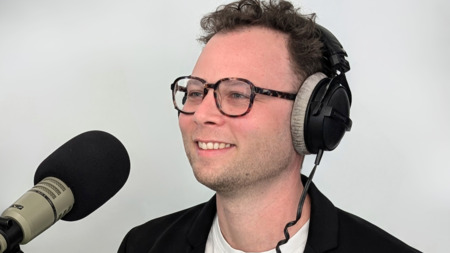
Using green energy means shifting from fossil fuels such as natural gas — the main source of emissions in our processes — to green electricity, green hydrogen, or biomethane. However, we are investigating this topic to determine the best path forward and ensure a stable, competitive, and green business.
Manuel Jandl, energy management expert at voestalpine Wire Austria, reports on concrete progress in the area of energy efficiency and green energy at the Bruck an der Mur site. Around 40 % of the electricity already comes from the company's own hydropower and photovoltaics. The aim is to further increase this proportion. A modern energy monitoring system supports this by enabling the analysis and optimization of energy flows.
Successful projects show the potential: hydrogen consumption in annealing furnaces has been reduced by up to 50 %, and the electricity consumption of pump systems by up to 70 %. An innovative heat pump pilot project also uses waste heat from cooling circuits to heat low-temperature processes - a first step towards gradually replacing natural gas with green alternatives. Energy efficiency pays off - both ecologically and economically.
Today, we cover around 40 percent of our electricity requirements with our own hydroelectric power plants and photovoltaic systems. Local generation from renewable sources reduces our CO₂ costs, strengthens the profitability of the site and reduces our dependency on natural gas.
Through green electricity, heat pumps, biomethane and, in the long term, green hydrogen - e.g. by using waste heat in low-temperature processes.
A strategic plan for CO₂ neutrality: Scope 1 & 2 by 2035, complete neutrality by 2050 - supported by greentec steel and EAF conversion.
A major project to decarbonize steel production using electric arc furnaces - with an investment of €1.5 billion and 5% CO₂ savings for Austria.
Waste heat from cooling circuits is processed using heat pumps and fed into heating systems - with energy savings of up to 70%.
Through monitoring, hydraulic balancing, heat recovery, modern control systems and targeted investment in new technologies.
Via a monitoring system that analyzes infrastructure and production data synchronously - for targeted optimization.
It enables the analysis of complex interactions between infrastructure and production - the basis for increasing efficiency.
It allows precise control of the hydrogen flow and reduces energy consumption by up to 50%.
Wire Insights is the podcast for anyone interested in sustainable technologies, innovative production processes, and forward-looking developments in the wire and steel industry. Stay tuned for the next episode with more exciting insights from the world of wire technology!
