Retour à la vue d'ensemble

Subway and commuter rail: Setting the course for the future

2025-10-27 | 

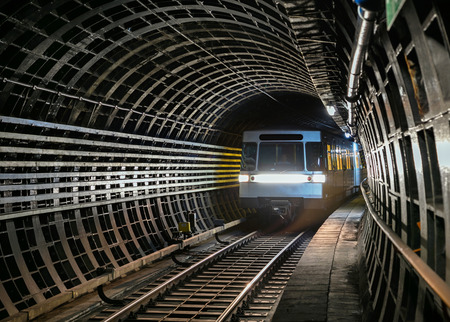
Every day, suburban and underground railways transport hundreds of millions of people safely to their destinations. How do low-noise, low-vibration, and low-maintenance turnout systems contribute to efficient and sustainable urban mobility? Robert Demal, Vice President – Product Management Fixations and System Expert for Metro Systems, voestalpine Railway Systems GmbH, talks about turnout solutions for the present and the future.

Mr. Demal, what does it mean for voestalpine Railway Systems to be a system provider—especially in the field of turnout systems?


Turnouts are usually designed as prototypes, as the specific requirements vary considerably depending on the customer and area of application. Thanks to our system approach, we have a deep understanding of both the individual components and their interactions within the overall system. This enables us to tailor the turnout system to the individual needs of our customers, configure the components accordingly, and optimally control their interaction.

How do rail operators benefit specifically from a holistic system approach compared to individual solutions?

At voestalpine Railway Systems, we offer our customers integrated system solutions from a single source, and they benefit from a central contact person who accompanies and coordinates the entire project process—from planning to commissioning. The turnout components can be provided pre-assembled as a functionally tested system and installed on schedule in line with a just-in-time concept. In addition, we take care of the system-specific integration and coordination of the turnouts with other signaling components such as drives, monitoring, and diagnostic systems. This eliminates the need for our customers to go through time-consuming coordination processes with multiple project participants. At the same time, we ensure high system availability and minimize operational downtime. The entire process—from turnout design and system integration to installation—is subject to continuous quality assurance and functional coordination.

What are the biggest challenges in the metro sector – and how do you address them with an integrated system approach?

Urban rail lines generally do not have redundancy in the form of sidings. A failure of individual sections of track therefore immediately leads to significant restrictions in traffic flow, which can have a negative impact on operational stability and the public image of the operator. Against this backdrop, both the service life of track and turnout components and the efficiency of maintenance measures are becoming increasingly important. In the subway sector in particular, ever longer operating times combined with shorter maintenance windows require a highly optimized maintenance strategy. Added to this is the increasing strain caused by high train frequencies – in urban metropolitan areas, cycle times of 90 seconds are no exception – which significantly increases the demands on load capacity and system availability. 

Targeted, condition-based maintenance and the use of durable, heavy-duty components are therefore essential. In the specific application area of concrete superstructures – as frequently used in the metro sector – minimizing noise and vibration emissions is also a key objective. Effective noise and vibration damping can be achieved through the systematic coordination of rails, fastening systems, and turnout components, as well as the targeted selection of a system with reduced stiffness. In addition, stressed elements such as tongues and frogs are specifically designed for the high dynamic loads encountered in inner-city operation. 

These measures make a decisive contribution to increasing system availability, reducing operational disruptions, and thus ensuring efficient, reliable, and user-friendly urban rail transport. 

What role do digital solutions and condition monitoring play in a holistic turnout system?

In recent years, we have seen a clear trend towards real-time condition monitoring in response to continuously rising passenger numbers and increasing train frequencies. Continuous condition monitoring is becoming increasingly important, particularly in the area of turnouts, which consist of a large number of mechanical and electromechanical components and have a high number of parts that are susceptible to wear. Traditional, interval-based maintenance strategies are increasingly reaching their limits under today's operating conditions, especially with regard to shortened maintenance windows and the need for high plant availability.

By implementing sensor-based monitoring systems and data-based diagnostic technologies, maintenance requirements can be identified as needed and maintenance planning optimized. This enables targeted, resource-efficient maintenance measures, reduces unplanned downtime, and contributes significantly to operational safety and the extended service life of turnout systems. 

What other trends do you see in the future of turnout systems, particularly in the context of system solutions?

In addition to real-time condition monitoring, there is an increasing demand for sustainability and the lowest possible carbon footprint for our products. We are already reviewing our current and future research projects for sustainability aspects and are working to further reduce the CO footprint of our products over their lifetime.

By developing components with extended technical service life and increased availability, the CO₂ footprint can be significantly reduced, as maintenance and replacement cycles can be reduced and resources can be used more efficiently.

In addition, we are investigating the potential of circular economy approaches, in particular the reuse and recycling of components, in order to further reduce material use and emissions throughout the entire product life cycle. These measures contribute to the continuous improvement of the overall ecological balance of our systems. 

How does voestalpine Railway Systems support rail operators in the transformation to sustainable and digital infrastructure?

In most cases, we develop our products and system solutions in close cooperation with our customers. Specific application conditions and operational challenges are integrated into the development process at an early stage to ensure that our solutions are optimally tailored to the respective application scenarios. 

If necessary, we are always on site as quickly as possible to provide direct technical support. Continuous, transparent communication and the best possible support are the foundation for sustainable, partnership-based cooperation with measurable added value for both sides.

About the expert

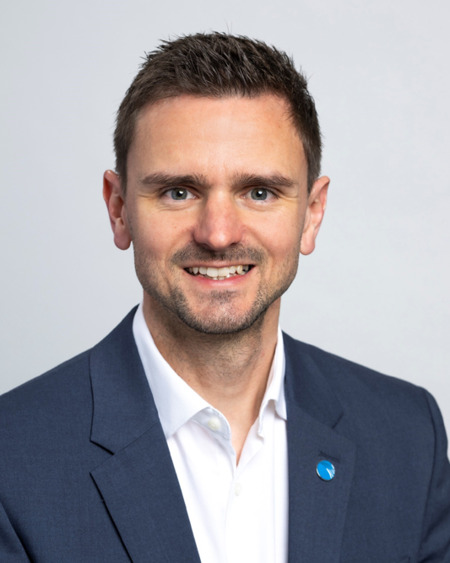
Robert Demal has been involved with railways since childhood and has carried this passion into his career. Today, as Vice President of Product Management Fixations and a system expert for metro systems at voestalpine Railway Systems in Zeltweg, he helps customers find the ideal system solutions for their requirements. Robert Demal has been working for voestalpine since 2014.