greentec steel: building progress above and below ground
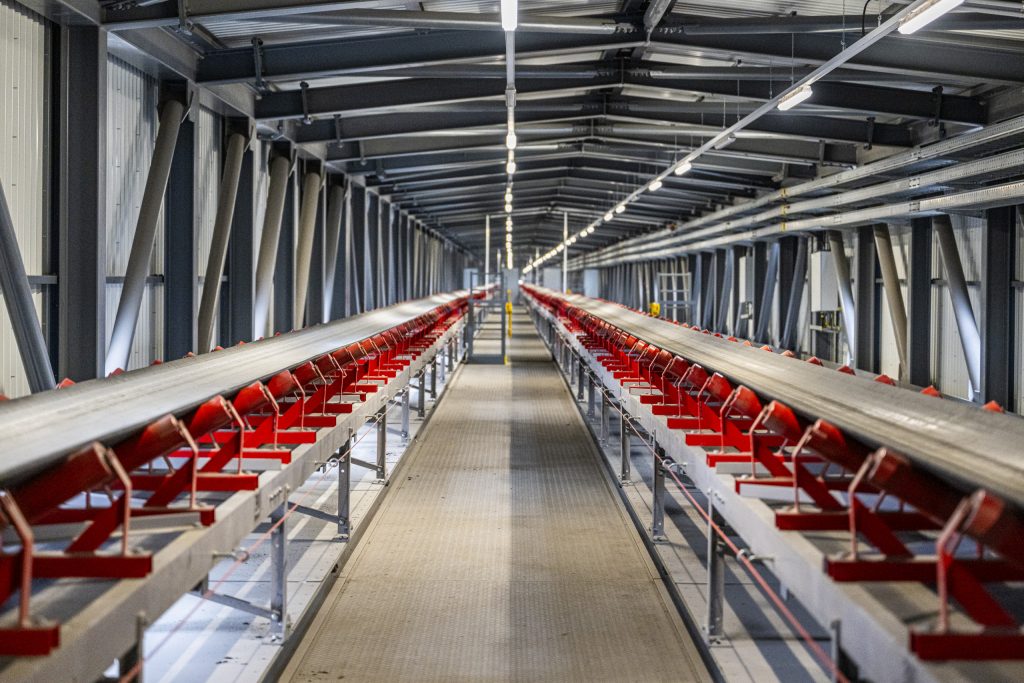
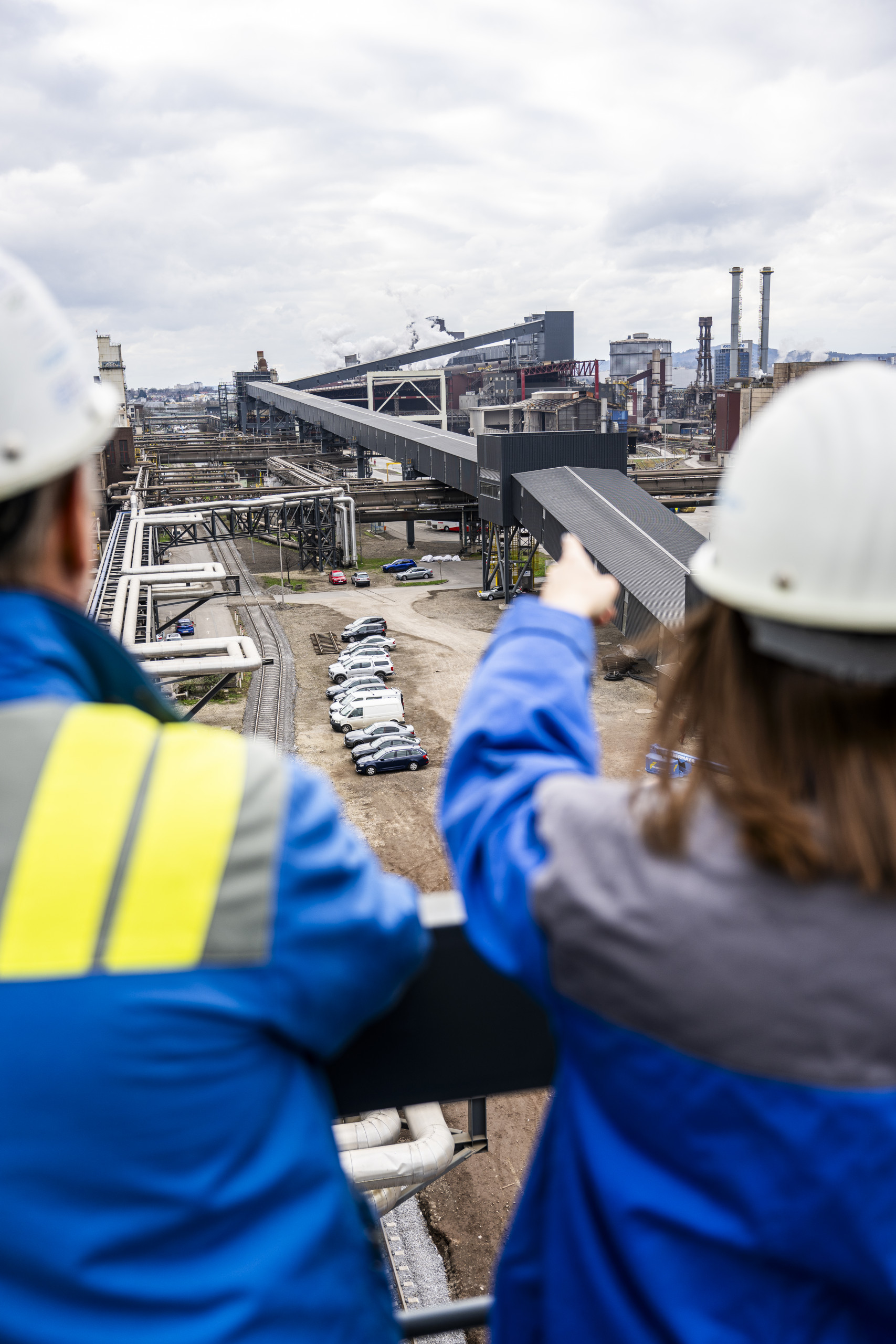
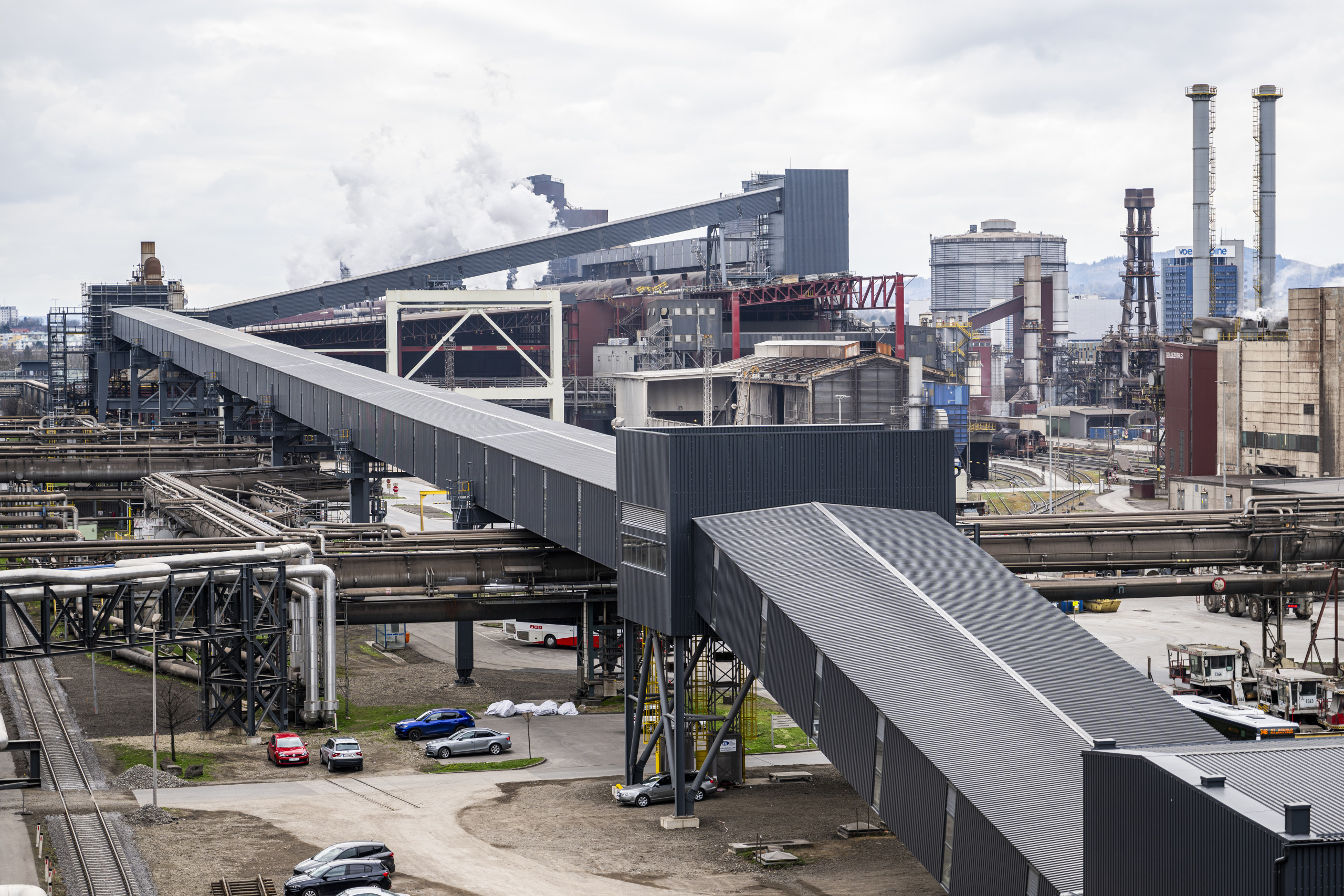
At voestalpine, we are building bridges and tunnels as part of greentec steel, our program for the conversion to steel production with net zero CO2-emissions. The new 800 meter-long conveyor belt bridge that will also supply the electric arc furnace with raw materials from 2027 onwards was recently completed.
3
In this article
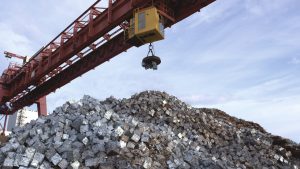
Our new electric arc furnace (EAF) will commence operation in 2027. We are already hard at work on securing its future supply. The pressure is on to ensure the raw materials, aggregates, and green electricity are available in time for the inauguration of the EAF. With completion of the conveyor belt bridge, one of the major projects involved in achieving this goal has been ticked off the list. The conveyor belt bridge will supply the LD crucible and EAF with materials including HBI and additives, transported from a depth of 10 meters underground to more than 50 meters overground.
The bridge to green steel
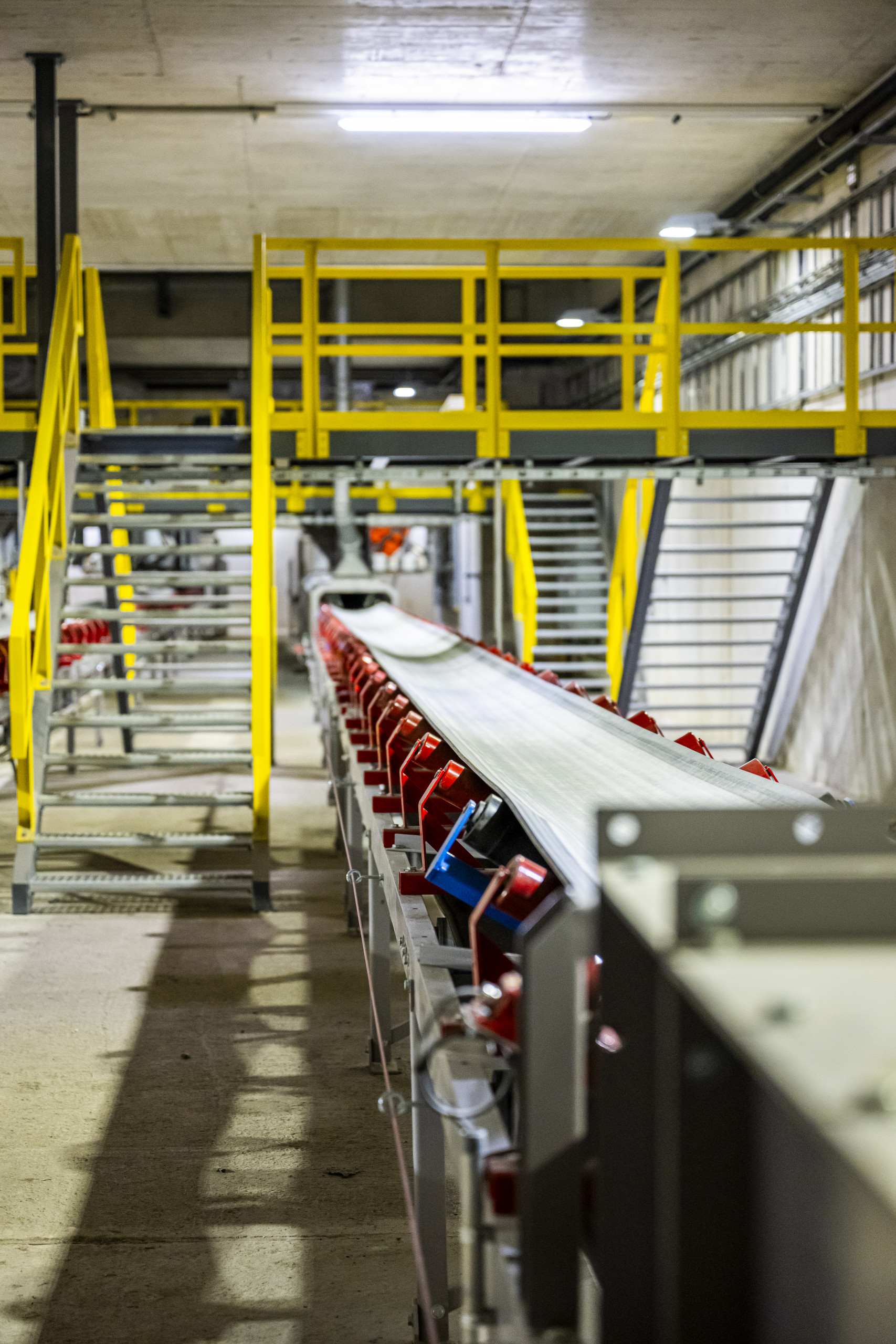
This supply line at the voestalpine site in Linz runs over a distance of 800 meters, from our new raw materials warehouse to the special steel plant complex. From April 2024, the conveyor belt bridge will supply the LD steel plant and, once commissioned, the new special steel plant. The former belt system gives way to the newly constructed special steel plant, with the new belt conveyor supplying alloying materials and aggregates to the existing LD3 steel plant. This is more than just a simple switch: the new belt conveyor offers one additional belt to transport HBI—directly reduced iron ore—to the EAF.
A colossus on feet of steel
Work to build the new belt conveyor has been underway since August 2022. The supports will bear a total weight of 5,000 tons, the weight of the structure itself. Once fully operational, the weight of the transported materials will also be added to the equation: HBI, aggregates, and alloying materials.
Length in meters
0
Meter height
0
Tons weight
0
wide Cross-section
0
Even before it commences operation, the new conveyor belt bridge is helping to reduce emissions. It is sheathed in voestalpine’s own greentec Edition steel: 190 tons of steel with a reduced carbon footprint is used to house the entire belt conveyor. A true bridge to the world of green steel at voestalpine.
Hannes U.
Project Manager Belt Conveyor
High voltage below ground
Pushing ahead with exciting developments. The new EAF, which commences operation in 2027, will consume large quantities of electricity. We are laying a 220 kV cable in a microtunnel situated approximately 25 meters under the plant and running from the Hütte Süd junction to the EAF to meet this demand.
The 1,800 meter tunnel will be flooded with groundwater from the wet ground immediately above. The advantage: the water cools the 220 kV high voltage power line, reducing the amount of electricity lost in transit. Targeted pumping of small quantities of water ensures efficient cooling; without cooling, temperatures in the tunnel could quickly get too hot.
Placing the supply tunnel at this depth ensures our 220 kV power line runs under all other subterranean supply and disposal canals. It is, in any case, an exciting subproject in our greentec steel program.
Christian M
Project Manager Microtunnel/Solid Construction
Precise routing underground
Four shafts, each sunk 25 meters into the ground, provide basic orientation for the tunneling. Working from the shafts, the microtunnel boring machines use hydraulic power to tunnel their way through the sedimentary rock below ground. Each day their position is checked by GPS. Precision is essential because the tolerances are as little as 10 to 20 mm. After all, the electricity supply must arrive at exactly the right place in our new special steel plant.
We start excavation work for the shafts in Q2. The boring and lining of the tunnel sections will commence in April 2025. Afterwards, the electrical fixtures will be installed in the microtunnel.Whether up high on the belt conveyor or down low through the microtunnel, we will secure the supply to the EAF and LD3 in good time to ensure Austria’s largest climate protection program can be realized on schedule.
Driving a microtunnel: This technology was already used in the construction of the industrial water channel.
FAQs
Above ground, a high voltage power line would need plenty of space: for the masts, and to keep the necessary distance from people and buildings. For that reason, we are placing the power line in a microtunnel.
The microtunnel will have an external diameter of 2.60 meters and an internal diameter of 2 meters. It will run over a distance of 1,800 meters at a depth of around 25 meters under the plant.
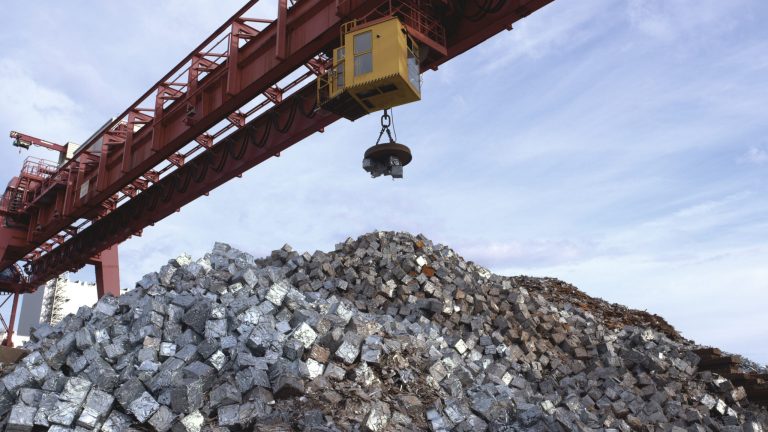
Three rather than the previous two belts will supply everything needed for steel production: alloying materials and lime, as well as several hundred tons of HBI—directly reduced iron ore—will be fed into the EAF each day. Scrap and pig iron will continue to be delivered by special vehicles.
Our focus on greentec steel
Within the framework of our focus greentec steel, we provide an overview of our concrete steps on the way towards long-term green steel production and the innovative processes we are using on this way. We provide information about the challenges we face and the breakthrough technologies we are already researching today in order to achieve our goal of steel production with net zero CO2 emissions by 2050.
With Hy4Smelt and H2FUTURE, we are consistently continuing the transformation to green steel production. Both projects demonstrate how innovation and partnership are paving the way to net-zero CO2emissions.
Cars, machines, trains, and so much more: if we have our way, all these everyday items will be made from green steel in the future – from greentec steel. The new steel production process, which uses green electricity and a high proportion of scrap, will not only be clean and climate-conscious. It will also be […]
An old steel girder that once supported a building becomes part of a new bridge. This is how the steel cycle works: durable, but not infinite. At the end of its useful life, steel returns as a valuable raw material. This is crucial for green steel production, because the switch to electric arc furnaces (EAF) […]
With Hy4Smelt and H2FUTURE, we are consistently continuing the transformation to green steel production. Both projects demonstrate how innovation and partnership are paving the way to net-zero CO2emissions.
Cars, machines, trains, and so much more: if we have our way, all these everyday items will be made from green steel in the future – from greentec steel. The new steel production process, which uses green electricity and a high proportion of scrap, will not only be clean and climate-conscious. It will also be […]
An old steel girder that once supported a building becomes part of a new bridge. This is how the steel cycle works: durable, but not infinite. At the end of its useful life, steel returns as a valuable raw material. This is crucial for green steel production, because the switch to electric arc furnaces (EAF) […]
Die voestalpine ist ein weltweit führender Stahl- und Technologiekonzern mit kombinierter Werkstoff- und Verarbeitungskompetenz. Die global tätige Unternehmensgruppe verfügt über rund 500 Konzerngesellschaften und -standorte in mehr als 50 Ländern auf allen fünf Kontinenten. Sie notiert seit 1995 an der Wiener Börse. Mit ihren Premium-Produkt- und Systemlösungen zählt sie zu den führenden Partnern der Automobil- und Hausgeräteindustrie sowie der Luftfahrt- und Öl- & Gasindustrie und ist darüber hinaus Weltmarktführer bei Bahninfrastruktursystemen, bei Werkzeugstahl und Spezialprofilen. Die voestalpine bekennt sich zu den globalen Klimazielen und verfolgt mit greentec steel einen klaren Plan zur Dekarbonisierung der Stahlproduktion.