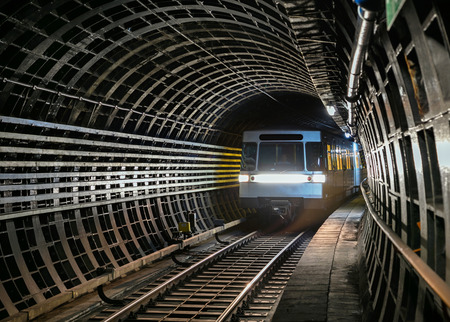
Urban rail lines generally do not have redundancy in the form of sidings. A failure of individual sections of track therefore immediately leads to significant restrictions in traffic flow, which can have a negative impact on operational stability and the public image of the operator. Against this backdrop, both the service life of track and turnout components and the efficiency of maintenance measures are becoming increasingly important. In the subway sector in particular, ever longer operating times combined with shorter maintenance windows require a highly optimized maintenance strategy. Added to this is the increasing strain caused by high train frequencies – in urban metropolitan areas, cycle times of 90 seconds are no exception – which significantly increases the demands on load capacity and system availability.
Targeted, condition-based maintenance and the use of durable, heavy-duty components are therefore essential. In the specific application area of concrete superstructures – as frequently used in the metro sector – minimizing noise and vibration emissions is also a key objective. Effective noise and vibration damping can be achieved through the systematic coordination of rails, fastening systems, and turnout components, as well as the targeted selection of a system with reduced stiffness. In addition, stressed elements such as tongues and frogs are specifically designed for the high dynamic loads encountered in inner-city operation.
These measures make a decisive contribution to increasing system availability, reducing operational disruptions, and thus ensuring efficient, reliable, and user-friendly urban rail transport.