
Voltar à perspetiva geral

High-speed turnouts: High speeds, high demands
2025-10-27 | 

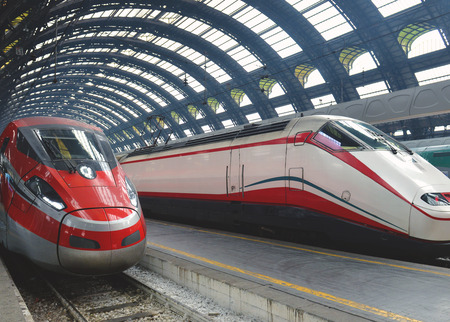
Thanks to increasing train densities and higher operating speeds of up to 360 km/h, traveling by rail is becoming increasingly attractive, especially in competition with air travel for longer journeys from city center to city center. How does voestalpine Railway Systems use its turnout systems to not only help customers keep up with this high speed, but also stay one step ahead? Burkhard Zillien, Product Manager Competence Center High Speed, provides practical insights.
Mr. Zillien, what does it mean for voestalpine Railway Systems to be a system provider—especially in the field of turnout systems?

A turnout consists of numerous elements, which in turn are embedded as an integrated overall system in a higher-level, complex system. Diverting high-speed trains from one track to another places high demands on the infrastructure. As a system provider, voestalpine Railway Systems combines expertise in rails and the components on which trains run with knowledge of the special features of turnout construction. Signaling components and monitoring systems are also part of our portfolio. As a systems expert, we understand the requirements and safety aspects of all parts of the integrated turnout system in operation, can coordinate them optimally, and exploit synergies. We are therefore not only a supplier of individual products that are combined to form a turnout system, but also create a meaningful integration of all areas

How do railway operators benefit specifically from a holistic system approach compared to individual solutions?

Thanks to our history, we have knowledge not only of the complete turnout system, but also of individual products. We therefore do not have a single fixed standard. Our system knowledge allows us to select individual products specifically for our recommendations to customers and to combine them individually. If a turnout is precisely tailored to the requirements, it is both safer and more economical. With our system approach, we also provide comprehensive consulting services – from acquisition to after-sales, including transport and support for precise installation

What special features apply to high-speed lines in terms of turnouts and their system integration?

In the high-speed sector, not only do operating speeds of up to 360 km/h affect the equipment, but also 18 tons of axle load, which must be dissipated. This means that the right turnout is needed for every branch speed. The turnouts must be precisely designed to meet the specific functional requirements as well as the high loads and forces. For example, a 200-meter-long turnout is required to change tracks safely at a speed of 230 km/h. In the future, the operating speed is to be increased even further—to up to 400 km/h—in order to make the railway system fit for the growing demands. 

How does a holistic turnout system contribute to optimizing the life cycle and increasing safety in high-speed applications?

It is absolutely crucial to be able to change tracks safely – both at 40 km/h and at 230 km/h. The key here is to find the right balance between speed and cost-effectiveness. After all, high-speed trains have extremely long braking distances, and a low branch line speed means a loss of time. Nevertheless, safety must always be guaranteed. Our 360° view helps us to find exactly this balance. Since we also support our customers during the operational phase, our digital solutions provide us with first-hand information on product performance. This enables us to optimize the rail grades and the individual components in the turnout itself in order to reduce wear and tear and thus also life cycle costs. Based on reports from operations, we can also draw conclusions about optimal maintenance intervals.

What trends do you see in the future of software systems—particularly in the context of system solutions?

In addition to the advance of digital solutions and information technologies, we are seeing that it is becoming increasingly challenging to procure sufficient human resources in the railway industry. Due to their complexity and considerable loads, turnouts are associated with high maintenance costs. Monitoring systems, data analysis, and predictive maintenance are therefore becoming increasingly important. Digital condition monitoring makes it possible to switch from costly regular maintenance to predictive maintenance, extend inspection intervals, optimize the life cycle of components, and reduce maintenance costs

How does voestalpine Railway Systems support rail operators in the transformation to sustainable and digital infrastructure?

It is important to us to increase the availability and safety of railway infrastructure while supporting the operation of high-performance, sustainably operated transport systems. We provide our customers with comprehensive advice on technical issues, products, services, and components. In consultation with the scientific community, we also strive to incorporate and initiate developments. We also use test turnouts to prove the practicability of new and further developments. These demonstrators give our customers the assurance that our solutions not only work in theory, but are also tried and tested in practice.

About the expert

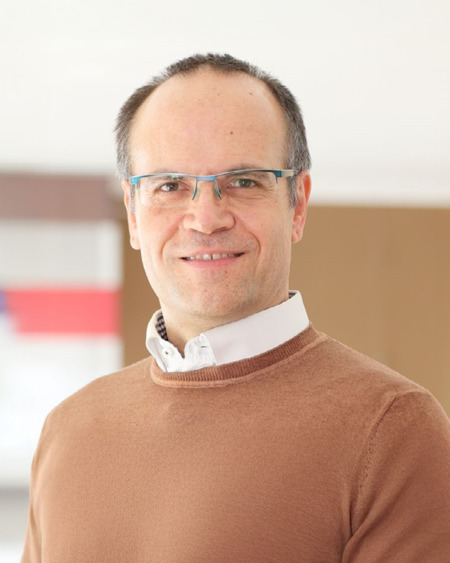
Burkhard Zillien is system expert in the area of high-speed traffic and has been working in the railway industry since 1993. The mechanical engineer has extensive technical and economic expertise, which he uses to support customers worldwide in their projects. For Burkhard Zillien, the fascination of his field of work lies in the fact that the extremely complex system of turnouts, with its constant further development, still has new things to offer even after more than 30 years.