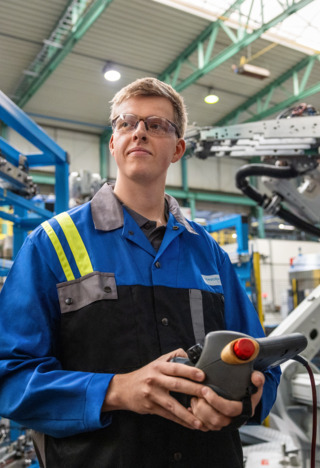
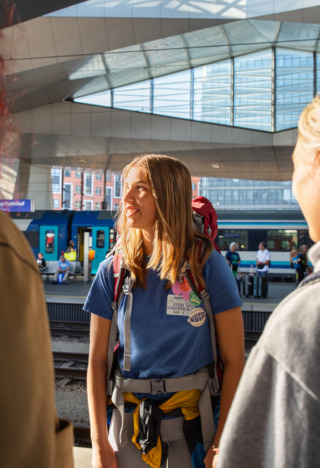
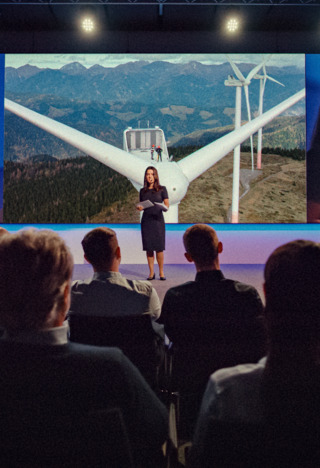
#FavoriteMoments Return to overview #FavoriteMoments Your Best Moments, made by voestalpine Read more
We are part of your #FavoriteMoments Sustainability Corporate Responsibility Innovation & Technology Innovation Corporate Culture https://www.voestalpine.com/blog/de/karriere/menschen-im-fokus/ More insights into the campaign Identity & Positioning More stories on our Corporate Blog More stories on our Corporate Blog Investor Relations Share Monitor EUR % ( €) 3 June 2026 Corporate News regarding Annual Report 2025/26 Financial Reports Report for the BY 2025/26 Financial statements IR news / Insider information IR news / Insider information Annual Report 2025/26 Online Annual Report 2025/26Annual Report News Latest news Media & Press Releases Media 3 June 2026 voestalpine increases earnings despite a volatile environment in the 2025/26 business year Factsheet voestalpine Group BY 2025/26 Factsheet voestalpine Group BY 2025/26 Multimedia Images & Footage-Material Multimedia Zu unserem myPODCAST https://mypodcast-voestalpine.podigee.io/ Konzern voestalpine overview Overview Identity & Positionierung Identity & Positioning Locations Locations voestalpine Employee Participation Employee Participation Research & Development Innovation Sustainability Sustainability Social Media @ voestalpine Social Media Information for Suppliers Information for suppliers Management & Supervisory Board Management & Supervisory Board Compliance Compliance Jobs Job Search https://jobs.voestalpine.com/index.php?ac=search_result Employee Benefits Employee Benefits FAQs for application voestalpine: FAQs application & information about job portal Career Blog https://www.voestalpine.com/blog/en/career/ Tips for applying Tips for applying voestalpine Career on Facebook https://facebook.com/voestalpinecareer
We are part of your #FavoriteMoments Sustainability Corporate Responsibility Innovation & Technology Innovation Corporate Culture https://www.voestalpine.com/blog/de/karriere/menschen-im-fokus/ More insights into the campaign Identity & Positioning More stories on our Corporate Blog More stories on our Corporate Blog
Investor Relations Share Monitor EUR % ( €) 3 June 2026 Corporate News regarding Annual Report 2025/26 Financial Reports Report for the BY 2025/26 Financial statements IR news / Insider information IR news / Insider information Annual Report 2025/26 Online Annual Report 2025/26Annual Report
News Latest news Media & Press Releases Media 3 June 2026 voestalpine increases earnings despite a volatile environment in the 2025/26 business year Factsheet voestalpine Group BY 2025/26 Factsheet voestalpine Group BY 2025/26 Multimedia Images & Footage-Material Multimedia Zu unserem myPODCAST https://mypodcast-voestalpine.podigee.io/
Konzern voestalpine overview Overview Identity & Positionierung Identity & Positioning Locations Locations voestalpine Employee Participation Employee Participation Research & Development Innovation Sustainability Sustainability Social Media @ voestalpine Social Media Information for Suppliers Information for suppliers Management & Supervisory Board Management & Supervisory Board Compliance Compliance
Jobs Job Search https://jobs.voestalpine.com/index.php?ac=search_result Employee Benefits Employee Benefits FAQs for application voestalpine: FAQs application & information about job portal Career Blog https://www.voestalpine.com/blog/en/career/ Tips for applying Tips for applying voestalpine Career on Facebook https://facebook.com/voestalpinecareer



voestalpine.jpg)