Camshafts
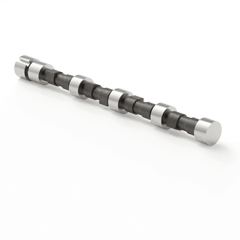
A racing camshaft plays a critical role in determining engine performance. Its lobe positioning and profile are engineered and manufactured with exceptional precision to ensure optimal output. While catastrophic failures in camshafts are uncommon, the demanding conditions they operate under such as, high valve spring forces, aggressive lobe geometries, and the use of low-viscosity oils for enhanced performance, pose significant challenges to the surface hardening and tool steel materials typically used. These harsh conditions can result in two primary types of surface damage:
1. Adhesive/abrasive wear or deformation, particularly on the lobe noses
2. Pitting and spalling, caused by fatigue just below the lobe surfaces
To safeguard performance under extreme conditions, racing camshafts are increasingly manufactured from through-hardened, high-strength steel grades engineered for superior wear resistance. These alloys are optimized through precise chemical refinement, enhanced material cleanliness, and consistent hardenability—enabling them to withstand high contact stresses and resist subsurface fatigue. Proven in top-tier motorsport, these steels deliver the reliability needed to maintain valvetrain integrity and performance throughout demanding race cycles.
Most Common Causes of Material Related Failure
1. Adhesive/abrasive wear or deformation, particularly on the lobe noses
- Adhesive wear occurs when metal surfaces in contact under high pressure experience localized welding and tearing, leading to material transfer and surface roughening. This is especially critical on lobe noses, where sliding contact and high loads are concentrated.
- Abrasive wear and deformation result from hard particles or asperities cutting into the surface, gradually removing material and altering the cam profile. This can compromise valve timing accuracy and increase mechanical stress throughout the valvetrain.
Increased surface hardness: adhesive and abrasive wear are accelerated by insufficient resistance to contact stress and friction.
Böhler high-performance steels are engineered for:
- High core strength to resist deformation under extreme loading
- Excellent polishability to maintain smooth contact surfaces and reduce friction
These material properties, combined in steels like BÖHLER S693 & S390, significantly enhance wear resistance and surface integrity, making them ideal for high-performance camshafts operating under severe racing conditions.
2. Pitting and spalling, caused by fatigue just below the lobe surfaces
- Pitting and spalling are caused by subsurface fatigue, where repeated contact stresses initiate microcracks just below the surface. Over time, these cracks propagate and result in small fragments breaking away, compromising surface integrity and leading to roughness, noise, and reduced performance.
BÖHLER high-performance steels are designed with:
- Exceptional material purity to eliminate fatigue-initiating inclusions
- High surface and core hardness to resist wear and deformation
- Superior fatigue strength to endure repeated high-load cycles
Steels like BÖHLER S690 combine these properties to deliver long-lasting durability and reliability in racing camshafts, even under the most demanding operating conditions.
To learn more download our OnePager: