Industrials
People in Focus
Reading time: 11 minutes
#FavoriteMoments with Thomas Schanzer
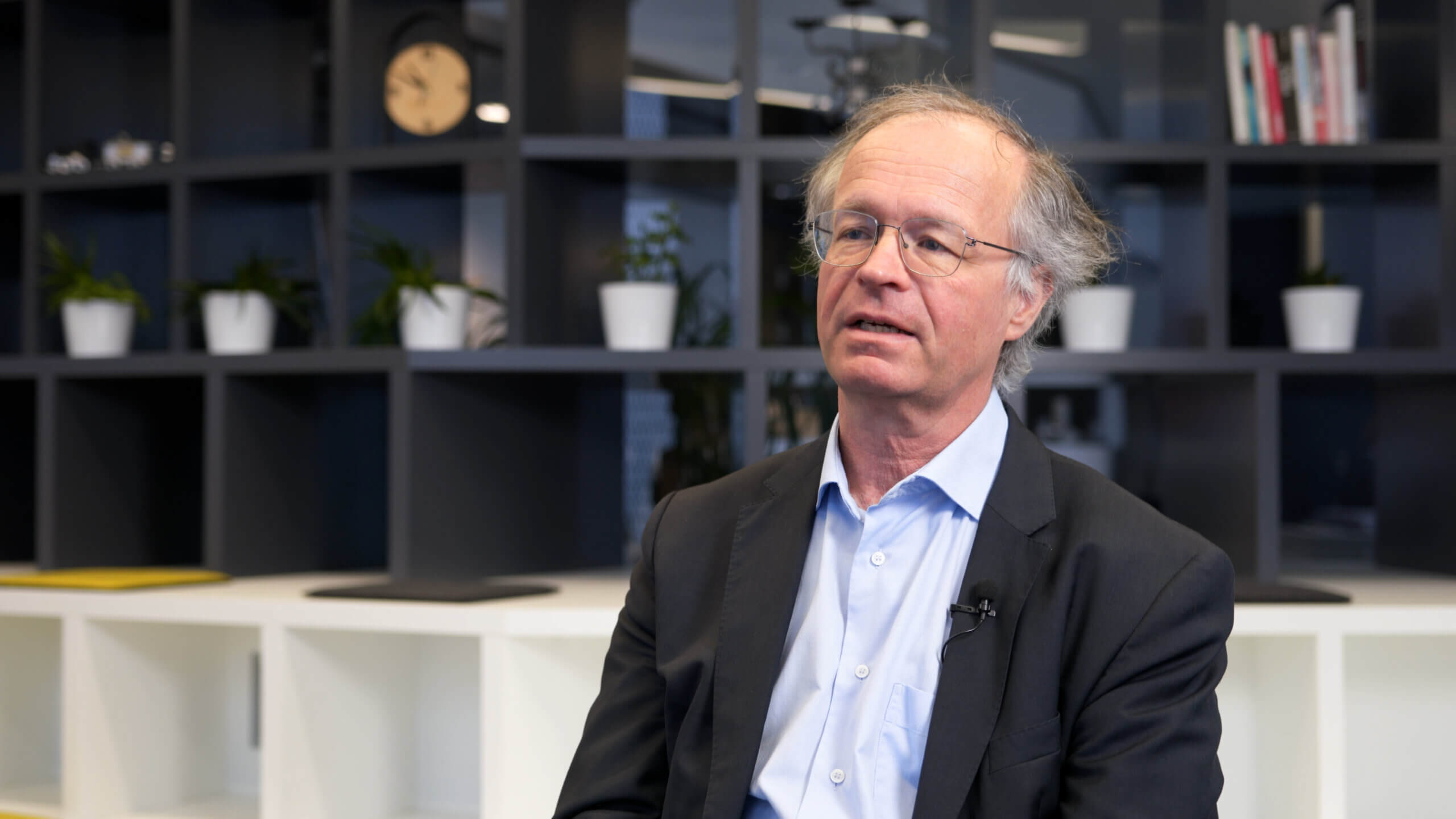
As Senior Vice President, Sales for Industrials at the voestalpine High Performance Metals Division, Thomas Schanzer leads a segment spanning a wide range of industries and markets.
As part of our #FavoriteMoments campaign, I sat down with Thomas to talk about his career journey, the team he leads and his insights into the Industrials segment.
From his office overlooking the Danube and the rooftops of Vienna, our conversation began with a look back at how his journey with voestalpine started nearly three decades ago.
Thomas, you’ve been part of the voestalpine Group for a long time. Can you tell us about your career journey and what led you to your current role?
“After 26 years in the Group, I have had the opportunity to take on responsibilities in different areas,” he began. “That is a great advantage of a group like voestalpine, where there are different opportunities to develop according to your strengths and where you want to go. Of course, you also need to show an interest in trying new things and have confidence that you can manage them together with a team. That has been the basis of my journey over the last 26 years.”
I asked Thomas to take us back to the beginning. Where did it all start?
“At the beginning, I was responsible for projects, among which was supporting building up heat-treatment shops in neighboring countries as an additional service. The first one was in Austria and served as a model, followed by projects in Hungary, Czech Republic, and Slovakia. As a next step in my career path, I got the chance to become managing director for the Austrian sales organization. Eight years later international and domestic BÖHLER sales organizations were merged and I took over the position as managing director being in charge of sales.
Most recently, I have been involved in building up the new Industrials organization. For a little over two years, I have been responsible for first building it up and then bringing it to life. It meant starting something completely new: setting up a structure, finding dedicated people, building a team and getting it up and running.”
Can you tell us about your current role and the challenges you have faced in building the Industrials segment?
“A major challenge for the entire team is that Industrials is the new kid on the block, a completely new segment,” Thomas said. “We need to bring people and colleagues on board. In several areas, we also have so-called split heads, meaning colleagues with responsibilities across more than one area. The challenge is to keep both the team and these colleagues focused on the topics, developments and projects we are pursuing.
The major challenge is therefore the people side: leading a worldwide team, understanding where people want to position themselves, deciding where we position ourselves, identifying our strengths, determining where we want to develop the business and setting clear areas of focus. This has been an important topic over the last 12 months.”
In the #FavoriteMoments video, you spoke about bringing local expertise to a global level. How do you and your team share ideas and experiences across regions and industries?
“We have established core-team meetings for the different subsegments. These take place monthly and provide a forum for exchanging successes. At the same time, we work step by step to bring new countries on board.
India is currently one area of focus. We recently had an intensive discussion about how to enter a new market in a smart way, which products to focus on and how to proceed so that we can be successful there in the future.
The approach depends on the subsegment. In some areas, such as MedTech, there is already more experience. In others, we really have to begin from scratch: Who are the main players? What does the supply chain look like? What does the business landscape look like?”
You also mentioned the importance of niche applications and specialized markets. Could you share an example of a successful customer application or project?
“It would be unfair to mention only one subsegment or one specific customer, because there are many examples,” Thomas said.
“In Mobility, we are currently working closely with a customer in a highly specialized application area. BÖHLER and Villares are working together to support the customer, combining expertise from two production sites. This shows how the team works together across continents and different mills to offer a complete package. This is not how we would have worked in the past.
There are similar examples in Food & Beverage, involving major machine producers in the United States, Germany and countries in Asia such as Japan and China. The common approach is to expand our presence in specialized markets.”
The HPM Division has brought together expertise from across its global network. How does this support the Industrials segment?
“The starting point is the right mixture of my core team. It includes colleagues from different areas, whether they originally come from the mills or our value-added service companies.
In the end, everyone has the same target: How can we develop the Industrials segment, and how can we gain more customers? Each person has specific challenges in their own area. The important thing is to have a highly motivated and committed team in place, to encourage colleagues to exchange ideas with one another and to ensure they see themselves as one Industrials team.
My aim is to make the transformation real by leading through example.”
Our conversation then turned to some of the broader trends shaping the markets Thomas and his team serve.
A common theme across the interviews has been the challenge of a dynamic global environment and changing customer expectations. How do you see this, for example, in mobility and the transition from combustion engines to electric vehicles?
“There are definitely major changes affecting mobility,” Thomas explained. “However, the transition is happening more slowly than many anticipated.
Traditional combustion-engine applications remain relevant and will continue to be important for several years, with stepwise reduced demands. On the other hand, ongoing spare-parts demand up to 2050 also influences the development of the demand . At the same time, changing supply chains are creating opportunities to gain new customers and expand into areas where we have not supplied before.
Where we need to be more agile due to the increasing number of tariffs in different regions. We need a clear understanding of quotas, their effects, and what they mean for us on one side and our competitors on the other. From my perspective this trend to protect local economies will continue, and we need to be prepared to navigate that environment.”
Our conversation then returned to the people behind the strategy: the global Industrials team.
You have spoken about the challenges of working across countries, cultures and areas of expertise. What helps the team work well together?
“The groundwork for this is having a common vision and a common target. The shared goal is to develop and grow Industrials. We know some subsegments will show more growth and others less, but the pattern is the same across all of them: our activity has often been very localized. The way forward is to bring this expertise to a global level.
It is a simple strategy, but I prefer not to make things too complicated. Simple strategies work better than complicated ones.”
Thomas then spoke about a recent meeting of the Industrials team in Vienna.
“Our aim is to hold these face-to-face meetings twice a year. They give us time to exchange ideas, work on topics together and better understand one another’s challenges.
I think it is very important to bring this team together regularly. Colleagues can understand one another’s individual challenges and exchange directly with their peers when they have questions.
The ideal setting is to spend several days together, work on topics, learn from one another and also enjoy the time together.”
As our conversation drew to a close, I was curious how Thomas enjoys his time outside work. That’s when he mentioned something I hadn’t expected: a rooftop garden in Vienna.
Outside work, what do you enjoy doing?
“I like to have sport as a counterbalance. I jog, and in summer, when it is too hot, I prefer swimming. There are public baths close to where I live, so swimming is very convenient. In winter, I enjoy skiing and going to the mountains, either for holidays or at weekends.
At home in Vienna, I have a rooftop garden. I do some gardening during spring, summer and autumn. It is something I can easily do in between other activities, and it helps me clear my mind and focus on something different.”
We ended our conversation talking briefly about that rooftop garden and the home-grown vegetables that eventually make their way into Thomas’ kitchen. With the Industrials segment continuing to grow, there will no doubt be more experiences and insights for Thomas to share in the future.
Find out more about the industries served by voestalpine High Performance Metals and explore applications, expertise and insights across our global network.
Find out more
You can find out more about the voestalpine HPM #FavoriteMoments campaign by exploring some of our other videos.