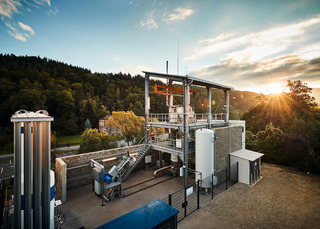

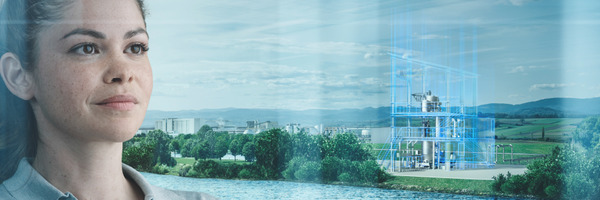
The research projects cover the entire possible spectrum and include both Carbon Direct Avoidance (CDA) projects, i.e., projects that research new technical possibilities to avoid producing CO2, and Carbon Capture Utilization (CCU) projects aimed at converting CO2 into new storable products. Currently, our research is primarily focused on CDA projects, namely steel production processes with no carbon emissions. These include projects such as the testing facilities for carbon-neutral steel production which uses hydrogen to directly reduce iron ore (sustainable steelmaking) at the Donawitz site, and the H2FUTURE hydrogen pilot facility at the Linz site.
Hy4Smelt
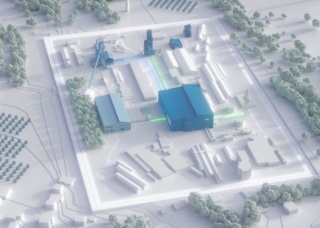
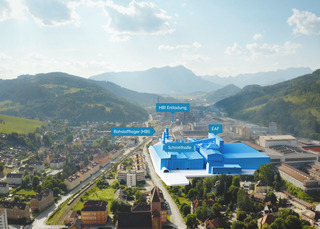
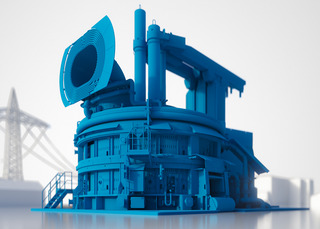
The Linz site is home to the world's first industrial demonstration plant capable of combining two innovative processes: hydrogen-based direct reduction for ultrafine iron ores (HYFOR®) and an electric smelting process (smelter).The industrial-scale demonstration plant is scheduled to commence first production by the end of the 2027 calendar year, with the research project ending in 2030. The total costs amount to around EUR 170 million. Hy4Smelt is therefore the largest climate action research project in Austria.
Successful further development of existing research projects: The HYFOR® (hydrogen-based fine-ore reduction) process has been in operation at a pilot plant at the voestalpine site in Donawitz since 2021 (see below). The hydrogen required for direct reduction at the Hy4Smelt plant comes from the world’s longest-running PEM electrolysis plant H2FUTURE at the Linz site (see below).
Hy4Smelt project partners
H2FUTURE-Follow-up
The existing H2FUTURE hydrogen pilot plant is being expanded at our site in Linz. The new H2FUTURE follow-up research project focuses on the compression, purification, storage and loading of green hydrogen. To this end, the existing electrolysis plant is being expanded to include additional components such as a purification and compression system and five storage tanks.
The aim is to further improve the quality of the hydrogen produced and to exploit its potential uses in industrial processes. The plant will remain active on the balancing energy market and thus contribute to stabilizing the electricity grid - an important step towards large-scale implementation.
H2FUTURE-Follow-up project partner
SuSteel
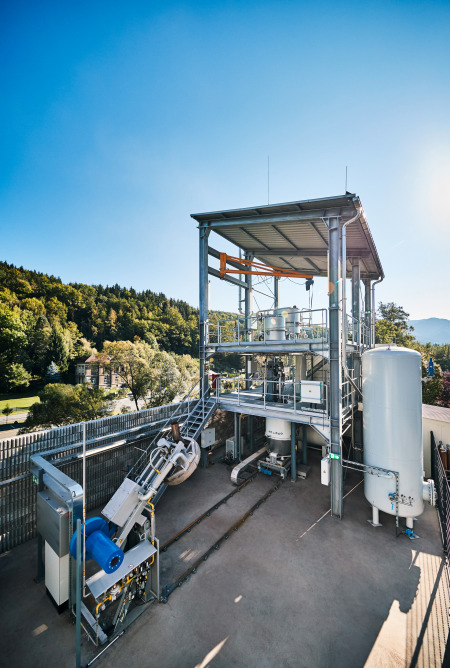
A testing facility is currently being established at the Donawitz site in Styria as part of the SuSteel (Sustainable Steelmaking) project. Here research will be undertaken into the carbon-neutral production of crude steel in a single process step using novel hydrogen plasma technology. In a form of electric arc furnace, steel is produced using hydrogen plasma to reduce ores, omitting the pig iron stage. The advantage is that climate-neutral water vapor is the only end product, allowing CO2 emissions to be avoided completely. This basic research project being run by the K1-MET metallurgy competence center has a very long-term implementation timeframe. The project involves voestalpine Stahl GmbH, voestalpine Stahl Donawitz GmbH, and the Montanuniversität Leoben.
- Reducing ores using innovative hydrogen plasma technology
- CO2 emissions could be completely avoided
- International showcase project
SuSteel project partners
ZEUS
The aim of the ZEUS project (Zero Emissions throUgh Sectorcoupling) is to establish and provide a cross-sectoral demonstration of a climate-neutral process chain, encompassing all elements from the production and treatment of green hydrogen to capturing carbon from industrial emissions and its subsequent conversion into valuable, storable products (CCU research project). To achieve this, various pilot plants are being looked into in an industrial environment (H2FUTURE plant, carbon capturing, catalytic methanation, CO2 electrolysis) and interconnected to create holistic process chains.
voestalpine.jpg)