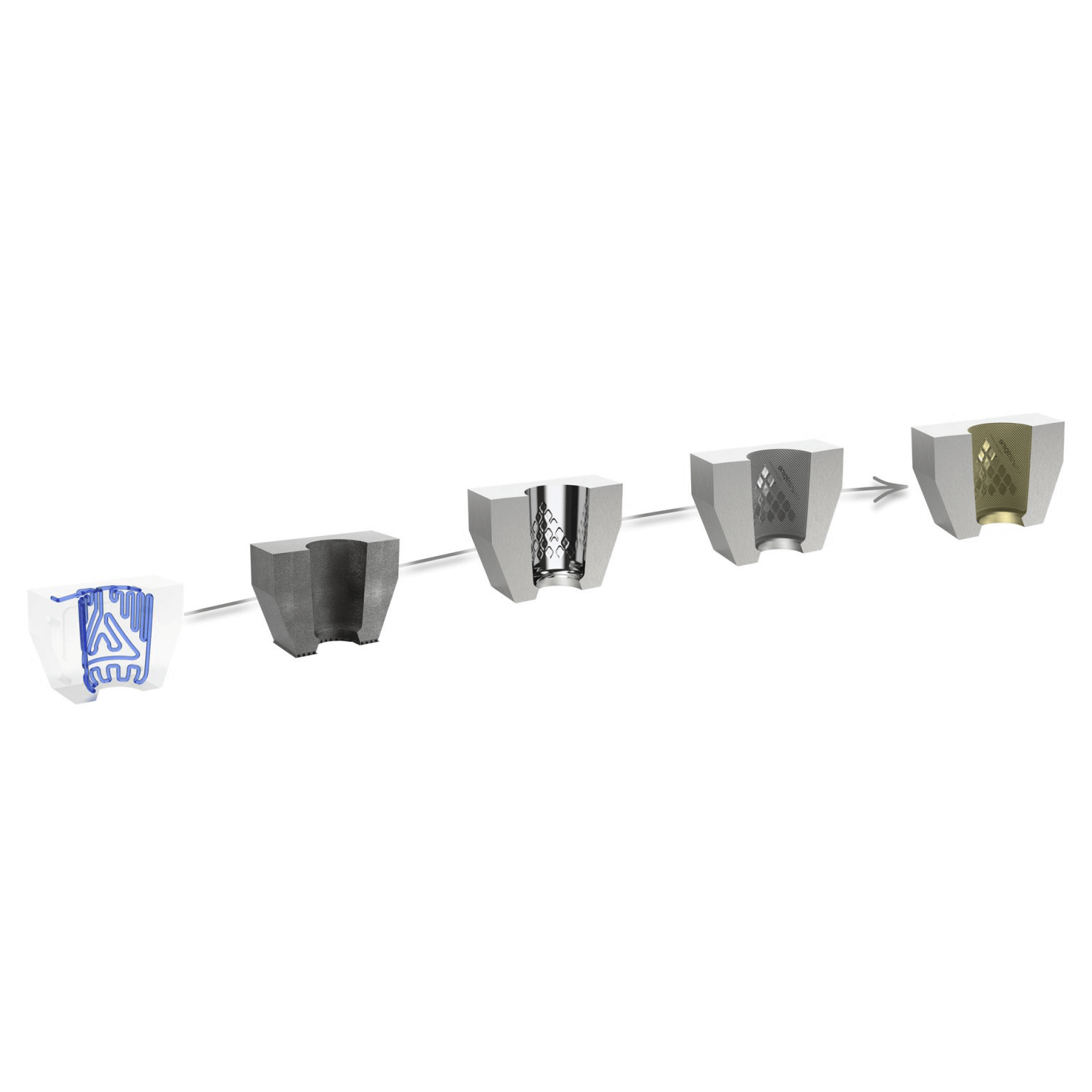
End to End Value Chain
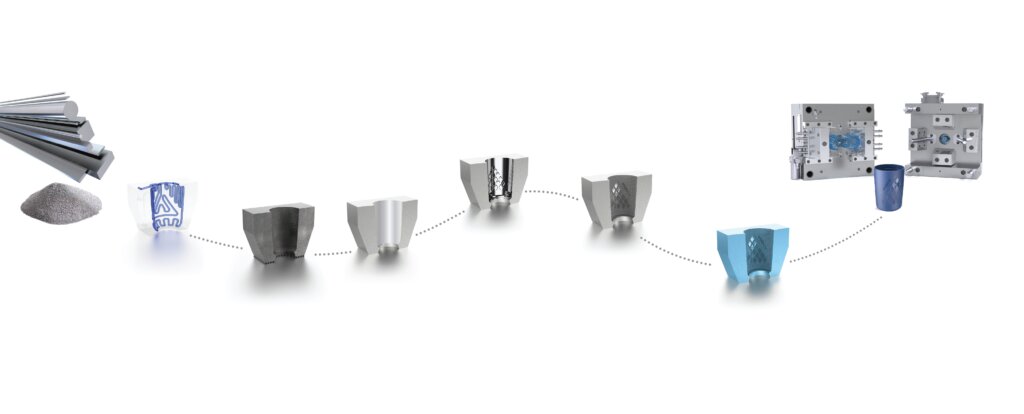
Injection molding is a high production molding procedure where a liquid thermoplastic or thermoset material is injected under high pressure into a mold for solidification. The molds can be extremely complicated and expensive.
A substantial part of the total tooling cost is connected to the manufacturing of the mold. It is therefore of great importance that the mold making process should be as straight-forward as possible.
There is a high demand on the steel supplier when it comes to steel quality and properties as well as availability. The mold steel should be free from defects, easy to machine and polish, stable in heat treatment and suitable in many cases for EDM and/or photo-etching.
All material supplied by voestalpine has been subjected to various external and internal inspection procedures, including ultrasonic testing. This en sures that high and even quality standards are met.
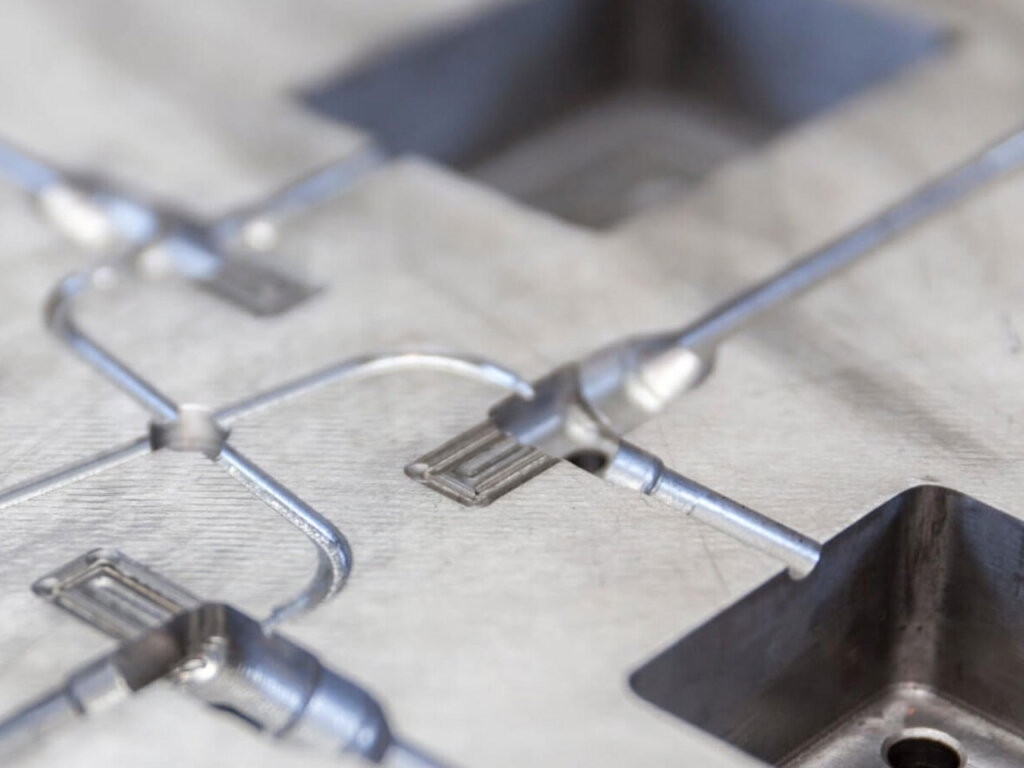
The most commonly used steel types are pre-hardened mold steel, through-hardened mold steel and thermoset plastics. The requirements of the mold material depends on factors such as the number of shots, plastic material used, size of the mold and desired surface finish.
The following basic mold material properties must be considered: strength and hardness, toughness, wear resistance, cleanliness, corrosion resistance, thermal conductivity
The important properties of steel for mold making is primarily, the machinability of the steel, its polishability, heat treatment and surface treatment properties
Polishing sometimes accounts for up to 30% of the total mold cost. This is no suprise, since it is a very time consuming and expensive process.
The result obtained depends to a large extent on the polishing techniques and a few other factors, such as the cleanliness of the steel, i.e. the type, distribution, quantity and size of non-metallic inclusions, the homogeneity of the steel, the hardness of the steel and, for hardened steel, how the heat treatment has
been carried out.
Non-metallic inclusions are reduced to a minimum if the steel is vacuum-degassed and Electro Slag Remelted (ESR process) during production. The ESR treatment results in improved homogeneity and mini-mal amount of inclusions compared to conventional steel production processes.
The purpose of heat treatment of a finished tool is to obtain suitable mechanical properties such as hardness, toughness and strength. However, there are some problems associated with heat treatment. Problems like distortion and dimensional changes has to be solved
Plastic moldings with a textured surface have become increasingly popular. Texturing by photo etching is frequently used as a finish on molding tools instead of polishing.
The photo-etching process gives the product
an attractive, easily held surface, relatively
insensitive to minor scratches and damage
The coatings from voestalpine eifeler Coating enable precise adjustment of the surface properties and thus targeted optimization of injection molding tools. The individually tailored product solution for each customer application reduces wear and thus significantly extends the tool life.