
From Housing to System: The Integral Battery Box
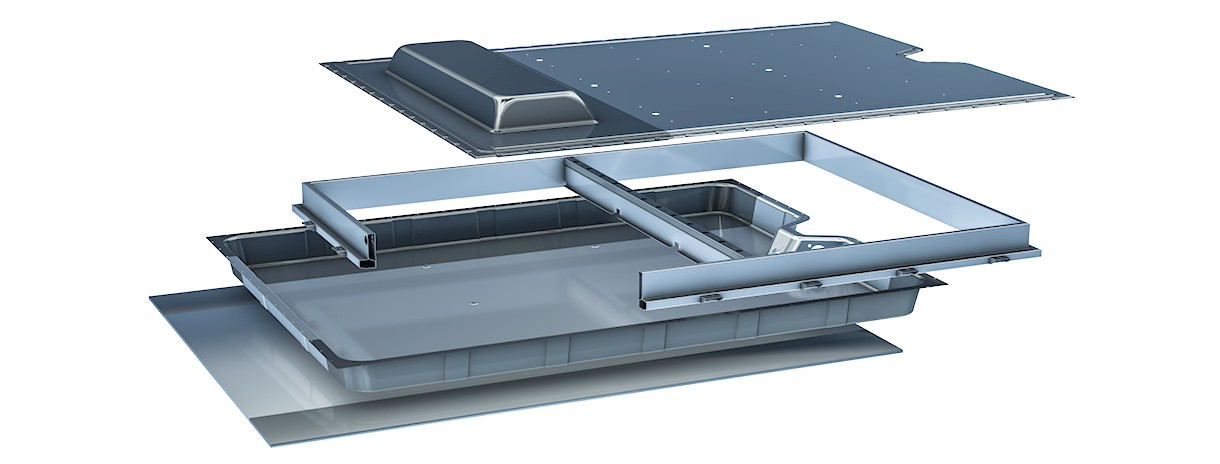
Industry Trend: Functional Integration in the Battery Box
Functional integration—i.e., designing crash and stiffness contributions together with sealing and NVH (noise/vibration/harshness) performance, as well as interfaces to thermal management and the E/E (electrical/electronic) architecture—is a clear industry trend. It is driven by market requirements, regulation, and platform strategies. Under cost pressure, steel-based solutions are increasingly coming into focus because they combine availability, design freedom, and a compelling cost–benefit ratio. This trend is not created by any single company; it is emerging across the entire industry—what matters is robust, repeatable implementation in series production. At the same time, lightweight design is not “bound” to one specific material: by using high- and ultra-high-strength steels in a targeted way, leveraging smart component geometries, and consistently integrating functions, steel concepts can be optimized for weight. In other words, steel does not have to be heavy—at equal performance, it can enable a production-ready lightweight solution.
From Design to Series Production: Implementation Expertise & Manufacturing Depth
This is exactly where the Automotive Components group within the Metal Forming Division comes in: we translate the trend toward functional integration into series-capable body-in-white solutions with an integrated battery box. Design and digital validation flow seamlessly into manufacturing; springback management, suitable joining technologies, sealing concepts, and corrosion-protection-compatible surfaces ensure reproducible quality. The manufacturing depth available within the voestalpine Automotive Components group—from cutting and blanking through forming and stamping processes to welding, bonding, sealing, surface protection, assembly, as well as leak and functional testing—reduces interfaces, shortens lead times, and stabilizes costs.
Structure as a Lever: In-House Profile Expertise & Materials Know-How
A particular advantage lies in our structure: the Business Unit Automotive Components provides an automotive specialist with system and series-production expertise. In parallel, the Business Unit Tubes & Sections delivers tailored profiles in-house—efficiently, reliably on schedule, and without interface losses. This is complemented by materials expertise from the Steel Division, enabling steel grade selection, coatings, and processing windows to be aligned optimally with performance and cost targets. Experience gained from load-bearing structural components—for example, rockers/sills—feeds directly into load paths, mounting points, and safety functions of the battery box, supporting lightweight, robust, and platform-ready designs.
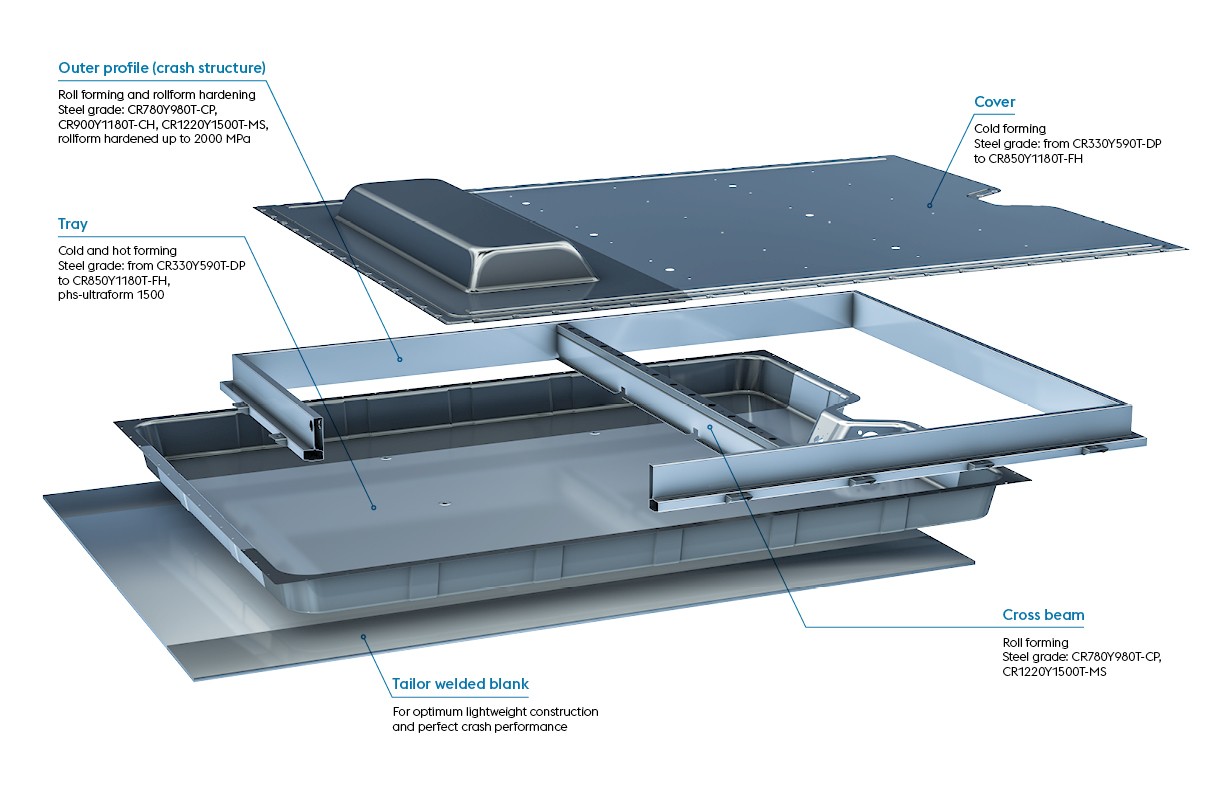
Early Co-Engineering: Added Value in the Joint Concept Phase
Anyone planning a new EV platform or preparing a facelift benefits in particular from early co-engineering in the shared concept phase. This is how the advantages of the industry trend toward functional integration are combined with our implementation capability—measurably improving performance, reducing complexity, and optimizing cost, from the initial concept to series production.