Use Case: NextGen Pipette Rack Mold
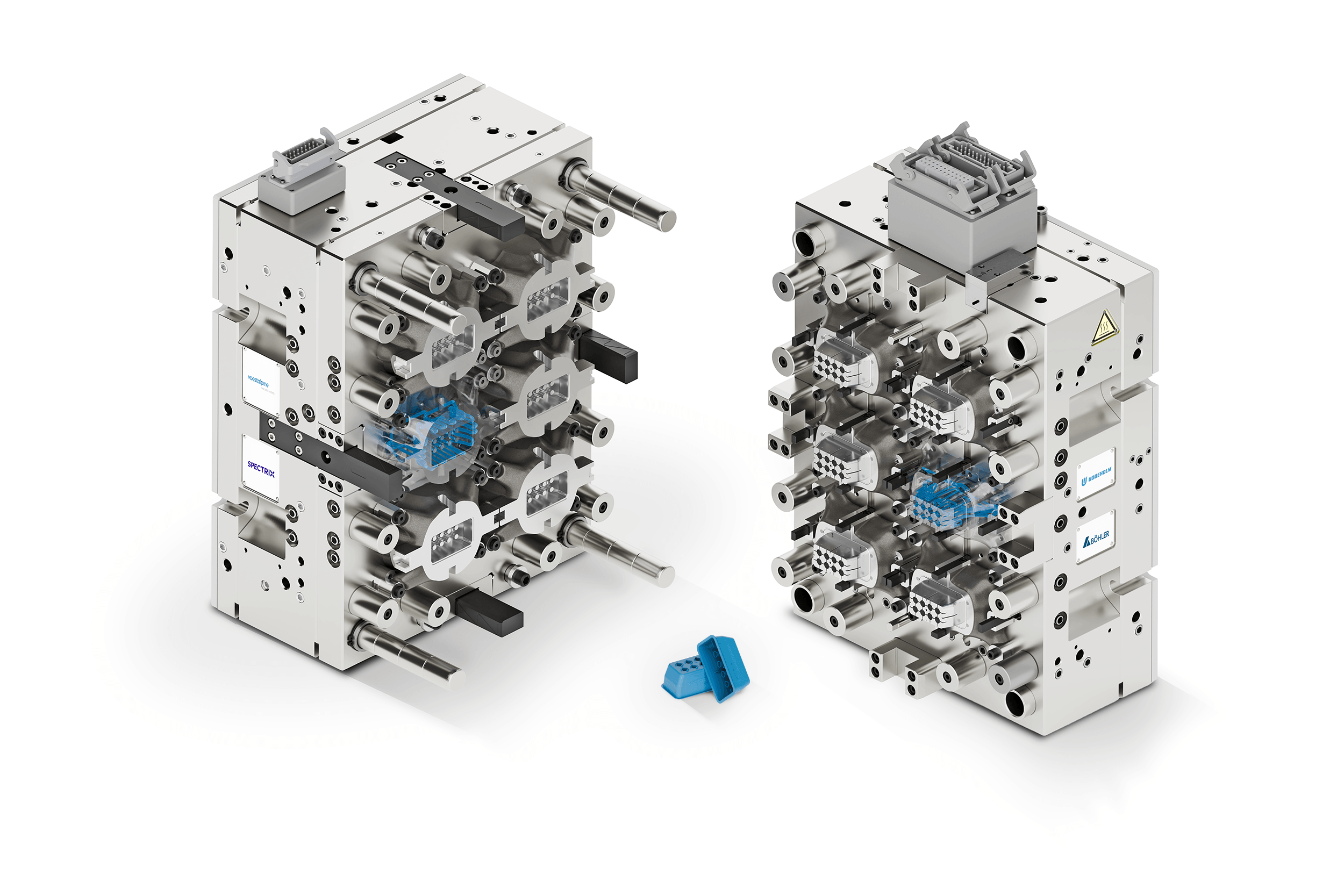
NextGen Pipette Rack Mold
New potentials for multi-cavity molds through additive manufacturing and topology optimization
The requirements for modern injection molds continue to increase. Particularly in applications with high quality demands, short cycle times, and large production volumes, molds must ensure maximum precision, process stability, and cost efficiency over millions of cycles.
Together with SPECTRIX, voestalpine developed the NextGen Pipette Rack Mold to investigate how additive manufacturing and innovative mold design can sustainably improve the performance of multi-cavity molds.
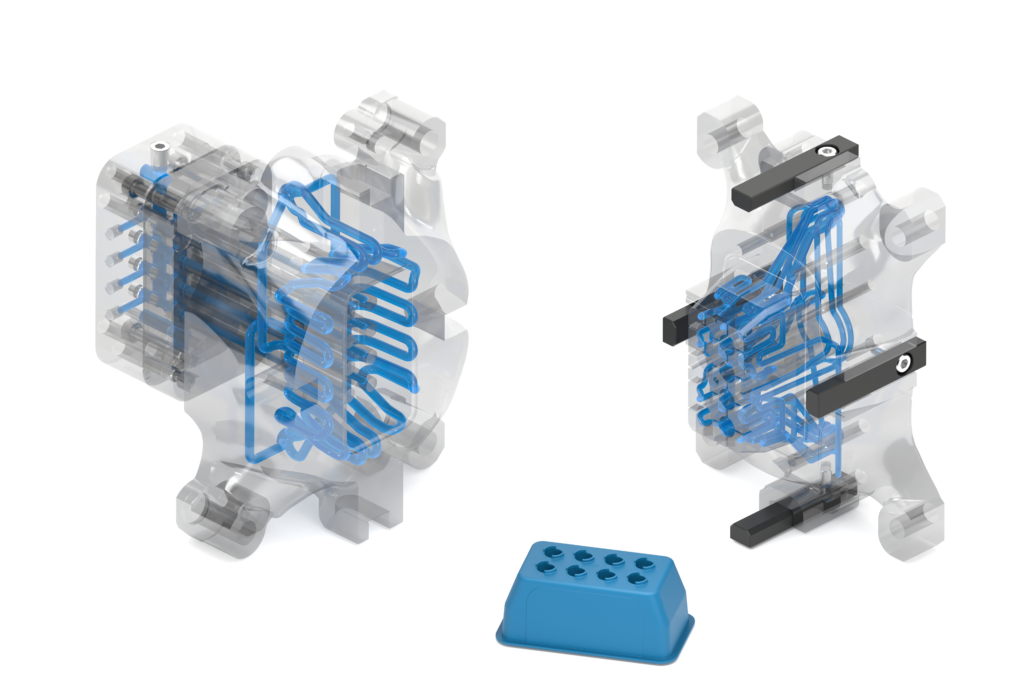
The result is a novel mold concept that combines the advantages of additively manufactured inserts, conformal cooling, and topology optimization to reduce total cost of ownership across the entire mold life time.
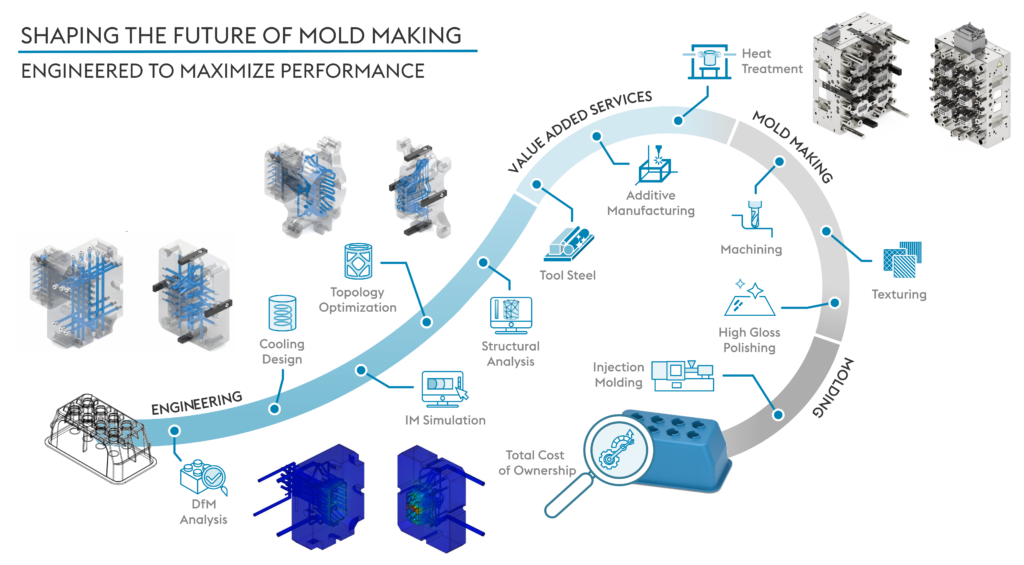
Conformal cooling as the key to productivity
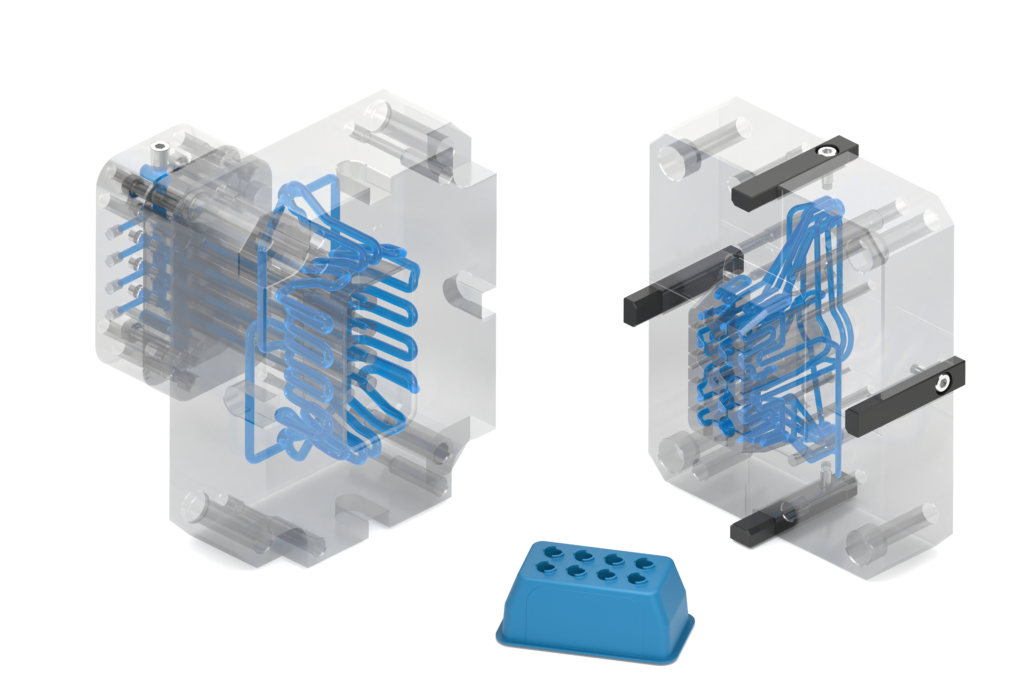
One of the greatest advantages of additive manufacturing is the ability to design cooling channels along the actual component geometry. In contrast to conventionally drilled channels, conformal cooling enables:
- more uniform cavity wall temperatures
- faster heat dissipation
- minimizing hotspots
- higher plastic part quality
- more stable processes
Simulation-driven cooling channel design significantly improved thermal performance in the project.
Result: 28% shorter cycle time compared to a conventional mold design.
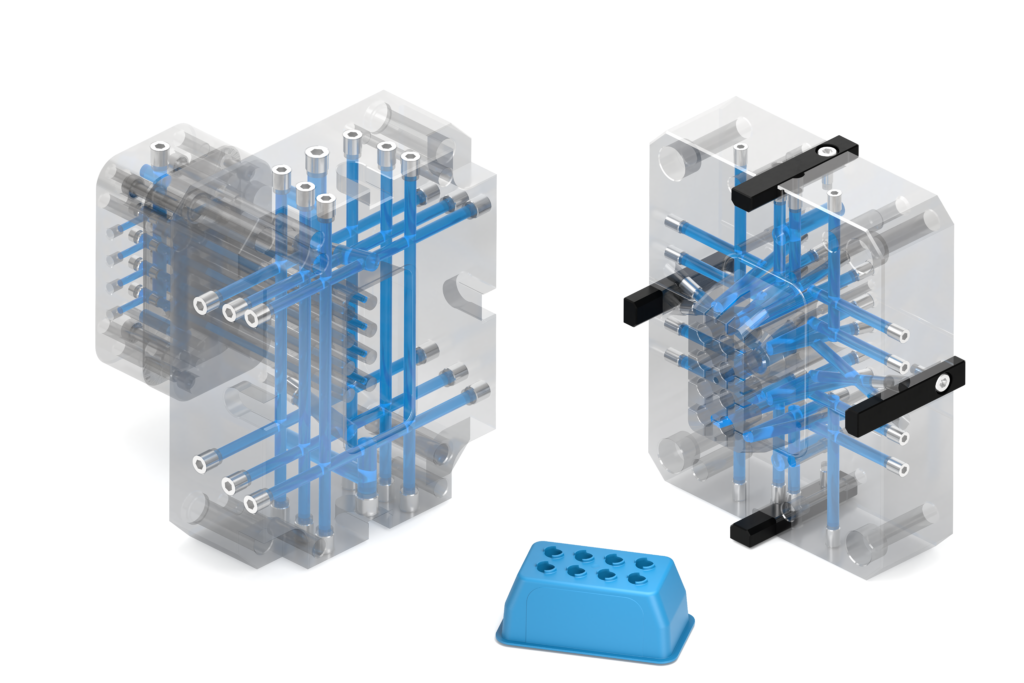
Comparison of Conventional and Conformal Cooling: The animations show one complete cycle in 5 seconds.
Conventional Cooling
Conformal Cooling
Where high-precision toolmaking meets additive design
Not every mold function benefits equally from additive manufacturing. For this reason, the approach deliberately combines both technologies. The basic mold insert structure is built additively using Laser Powder Bed Fusion (LPBF). The high-precision functional surfaces are then finished with established processes: milling, EDM, and polishing. This results in entirely new mold inserts that meet both the design flexibility of additive manufacturing and the requirements of high-precision mold making.
Leveraging hidden potentials by utilizing additive manufacturing’s design freedom
Additive manufacturing offers greater design flexibility for mold inserts. In many applications, however, this potential is not fully realized because existing conventional mold insert designs are retained and only the cooling system is modified. As a result, important optimization opportunities remain unused:
- unnecessary material usage
- longer production times
- unnecessarily large mold inserts
- limited cost efficiency
The NextGen Pipette Rack Mold project therefore follows a different approach: the mold architecture was developed from the ground up for the possibilities of additive manufacturing.
Lightweight design for heavy cost savings
At the heart of the development is a consistent topology optimization approach. Material is selectively removed from areas that are not required for the mold function. At the same time, all relevant functional areas are fully preserved:
- cavity surfaces
- sealing surfaces
- screw connections
- media connections
- mechanical interfaces
The result is not a lighter conventional mold insert but a structure specifically developed for the requirements of the injection molding process:
- 27.8% lower mass per insert pair
- optimized material efficiency
- comparable stiffness and fatigue strength
- reduced hard machining effort
Particularly cost-effective for high cavity molds
The advantages of topology-optimized mold inserts are especially evident in multi-cavity molds. The development and optimization effort is performed once and can then be transferred to any number of identical cavities. As cavity count increases, users benefit from:
- reduced material demand
- more efficient manufacturing
- better build space utilization
- reduced production costs
- potential for higher cavity counts on the same mold size
- opportunities to reduce mold size
This improves the cost efficiency of the concept with every additional cavity.
Material expertise for demanding applications
The mold inserts were manufactured from Uddeholm Tyrax® ESR (Original Insert Design) and Uddeholm Tyrax® for AM (ToPo Insert Design). The materials combine:
- high corrosion resistance
- high wear resistance
- excellent polishability
- high process reliability in demanding plastic applications
This enables additive mold inserts to be used even where high corrosion and wear resistance requirements have previously been a challenge.
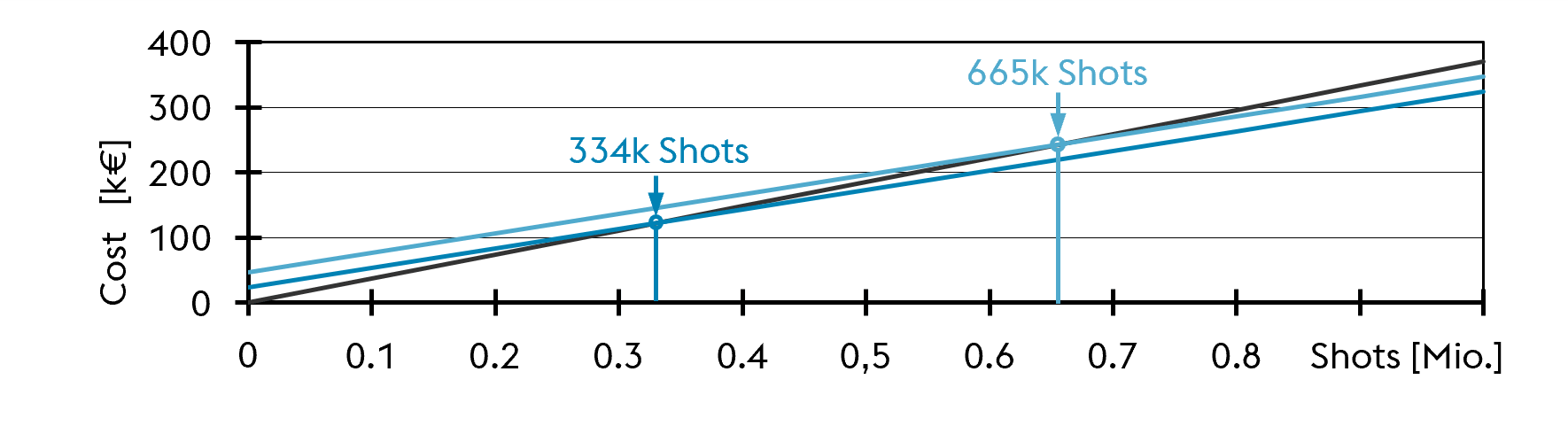
Total Cost of Ownership – 6 Cavity-Mold
Original Insert Design
Original Insert Design
ToPo Insert Design
milled bar material
conventional cooling
additive manufacturing
conformal cooling
additive manufacturing
conformal cooling
Insert Cost per Cavity
Cycle Time
Cost Savings
TCO (1 Mio Shots, 6 Cavity-Mold)
Reference
9.85 s
Reference
Reference
+ 7,763 €
7.05 s
– 0.07 € / shot
– 23,400 €
+ 3,891 €
7.05 s
– 0.07 € / shot
-46,700 €
Results at a glance
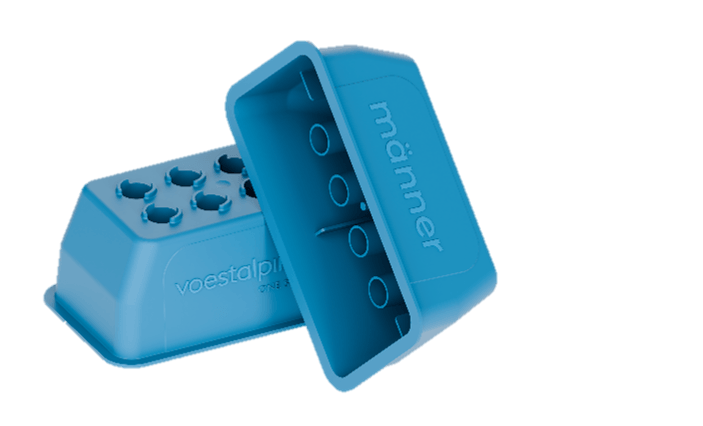
- Application: Pipette tip rack
- Mold: 6-cavity single-face
- Material: Uddeholm Tyrax® for AM
- Manufacturing process: LPBF + precision machining
- Weight reduction per insert pair: 27.8%
- Conventional cycle time: 9.85 s
- Additive cycle time: 7.05 s
- Cycle time reduction: 28%
We would like to thank our project partner

Please fill out this contact form for further information
Fields marked with * are mandatory.